









What a 3D Printed Part Costs
There is no rate card that is honest, because the same geometry costs four different amounts on four different processes. So here is the next best thing: exactly what moves the price, six real jobs with the prices paid, and the eight changes that make a part cheaper without making it worse.
Trusted, recognised and featured











Six Variables, In Order of How Much They Matter
Almost every quote is decided by the first three. The last three explain the difference between two quotes that look like they should match.
01 · Volume of material
Not the bounding box — the actual cubic centimetres of plastic in the part, plus its supports. Hollowing a solid block is the single biggest saving available to most parts.
02 · The process
The same geometry costs very different amounts on FDM, SLS, MJF, SLA and vacuum casting. Choosing the process is choosing most of the price.
03 · Machine time
Driven by height in Z more than by volume: a part twice as tall takes twice as many layers. Lay it down and it gets cheaper.
04 · The material
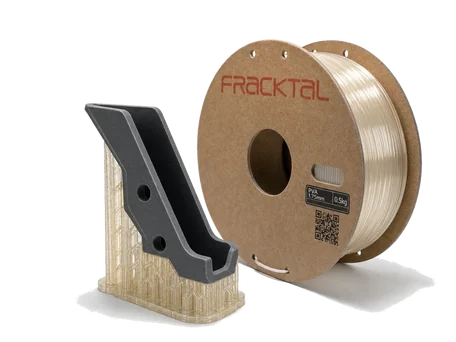
PLA and PET-G are the cheap end; PC, CF-Nylon and PVA are several times that. Match the material to the failure you are avoiding, not to the datasheet.
05 · The finish
As-printed is included. Sanding, blasting, dyeing, priming, painting, inserts and assembly are each real labour and each add days as well as rupees.
06 · Quantity
On FDM, ten parts cost about ten times one. On SLS and MJF they do not — a full build chamber costs little more than an empty one, so quantity is where powder-bed gets cheap.
Six Parts We Have Made, and What They Cost
Published prices for real orders rather than a rate card. Your part will differ — but these are not estimates, and they bracket most of what comes through the door.
| Process | Size | Material | Price |
|---|---|---|---|
| HP MJF | 200 × 200 × 50 mm | Nylon 12, painted black | ₹35,000 |
| HP MJF | 150 × 150 × 20 mm | Nylon 12 | ₹21,000 |
| SLA | 60 × 100 × 30 mm | Clear resin | ₹6,000 |
| FDM | 40 × 100 × 80 mm | CF-Nylon | ₹2,600 |
| FDM | 200 × 100 × 50 mm | ABS | ₹1,400 |
| FDM | 150 × 150 × 30 mm | PLA | ₹950 |
How the Processes Compare on Price
Cost per part relative to the same geometry in FDM PLA, which is the cheapest thing we can make. The point is the ordering, not the multiplier.
| Process | Relative cost | Cheap when | Expensive when |
|---|---|---|---|
| FDM · PLA / PET-G | Baseline | The part is large, simple and one-off | You need hundreds of them |
| FDM · engineering polymers | Higher | The material is the requirement | The material was chosen from a datasheet, not a failure |
| SLS | Higher still | The build chamber is full and the geometry is complex | You need exactly one small part |
| HP MJF | Higher still | Quantity is real — tens to a thousand | Quantity is one |
| SLA | High per cm³ | The part is small and detail is the requirement | The part is large — resin volume is what you pay for |
| Vacuum casting | Tooling + per part | You need 10–25 identical parts with a moulded finish | You need fewer than five |
| CNC machining | Highest | The part must be metal or hold ± 0.1 % | A printed part would have done |
Eight Changes That Cut the Price
In rough order of how much they save. None of them make the part worse; several make it better.
Hollow it out
A solid block is mostly plastic you are paying for and do not need. 3 mm walls with 25 % gyroid infill is stiffer per gram and a fraction of the cost.
Lay it down
Machine time follows height in Z. A part printed lying down instead of standing up can halve the build — and it usually gets stronger, because the load stops acting across the layers.
Design the supports out
Supports are material you pay for and labour to remove. Chamfer overhangs to 45°, turn holes into teardrops, and split a part that cannot avoid them.
Do not over-specify the material
CF-Nylon costs several times PET-G. If the part is not stiffness-limited, PET-G will do it — and the DFM review will say so.
Only finish what is seen
Mask and finish the visible faces. A part sanded and painted all over costs the same whether or not anyone will ever see the back of it.
Batch it on the right process
Ten parts on FDM is ten jobs; ten parts nested in an SLS chamber is nearly one. Above about ten, ask about powder bed.
Loosen tolerances you do not need
Call out the three dimensions that matter and leave the rest at process standard. Everything on a drawing with a tolerance gets checked, and checking is time.
Send STEP, not STL
STEP carries real geometry. A coarse STL faceted at export has to be repaired before it can be printed, and repair is billable time nobody wanted to spend.
The Ones We Are Asked Most
Why will you not publish a per-gram rate?
Is there a minimum order?
What is included in the price?
Do you charge for the DFM review?
Do students get a discount?
How does shipping work?
Can you match a cheaper quote?
Where the Money Goes, Process by Process


Vacuum Casting
One tooling cost, then twenty-five cheap moulded-looking parts.

Finishing & Assembly
Priced by level, so you can buy exactly as much finish as the part needs.
Get the real number
Upload the file and tell us the quantity, the material if you know it and what the part has to survive. You will get a design-for-manufacturability review and a price — and the review is free whether or not you order.