








Robotics Parts
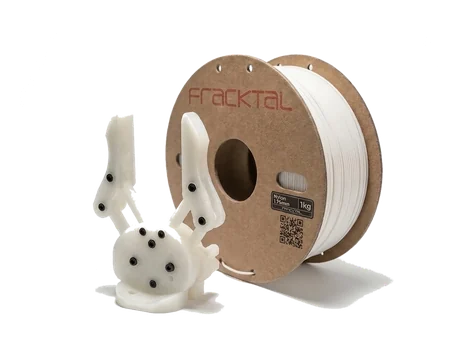
A gripper is only as good as its fit to the thing it grips. Printing it means the jaw is the shape of the part, not the nearest shape a catalogue had.

Trusted, recognised and featured











Every Gram at the Wrist Is a Gram Off the Payload
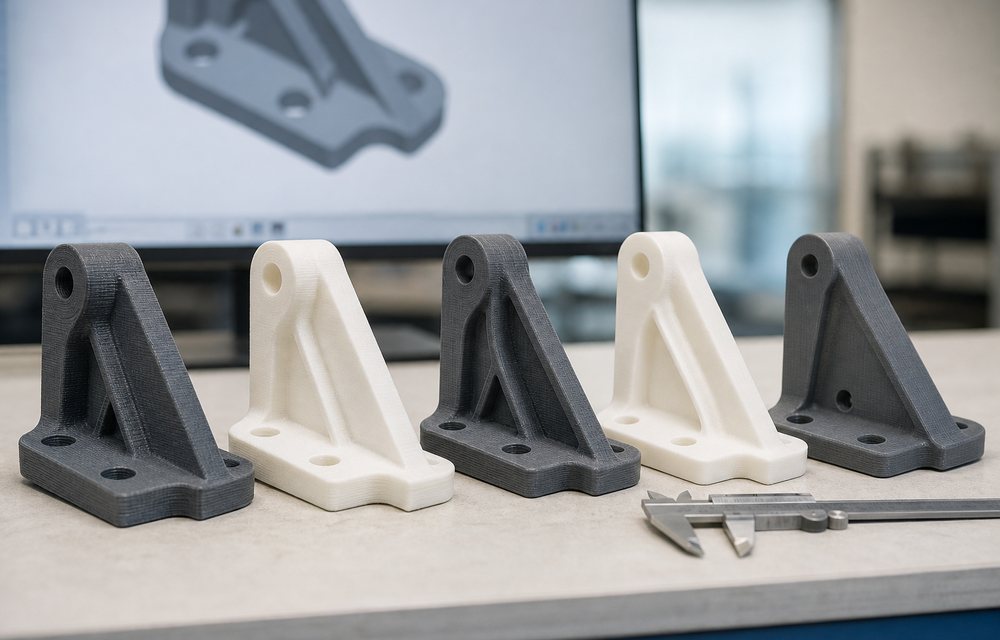
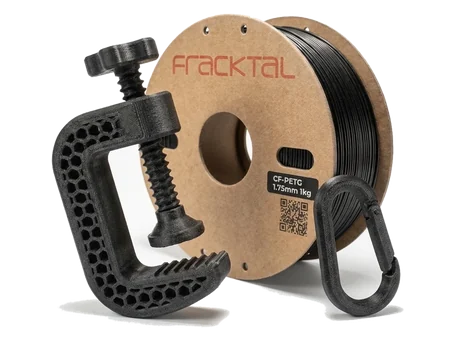
End-of-arm tooling is carried through every cycle for the life of the cell, so its mass comes straight out of the payload budget and straight off the achievable speed. Machined aluminium tooling is stiff and heavy; printed CF-Nylon gets most of the stiffness at a fraction of the mass.
It is also the part most likely to change. A new component, a new orientation, a new fixture and the jaw is wrong — which is survivable when the jaw is a night’s work and expensive when it is a machining order.
Six Things That Decide Whether It Works
The mistakes that come back to us, and how to design them out before the file is sent.
Print the negative of the part
Conformal nests hold an awkward component in one orientation with no clamping force at all.
Soft where it touches
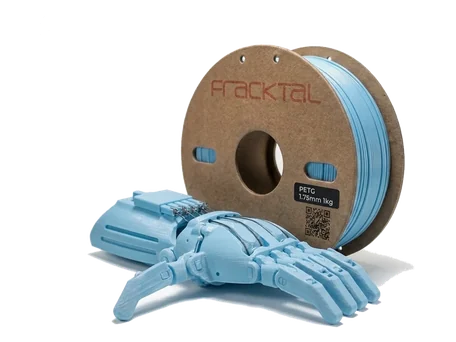
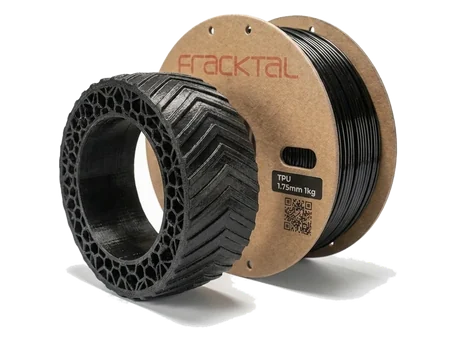
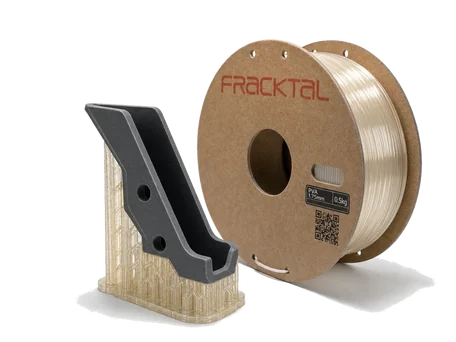
A TPU face or a printed bellows grips a finished surface without marking it. Two materials, one tool.
Stiff where it carries
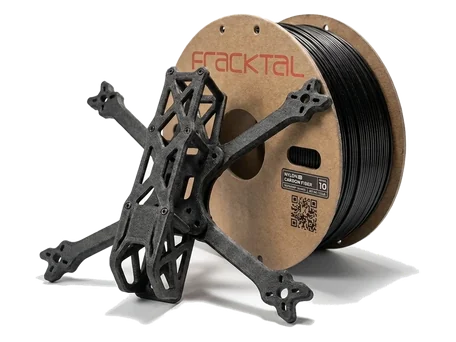
CF-Nylon in the structural path, nylon where it wears, TPU where it touches.
Mind the layer boundary at the wrist
The highest bending moment is at the mounting flange. Orient so that joint is not printed across its layers.
Heat-set inserts for anything that unbolts
Printed threads fail after a few cycles; brass inserts do not.
Leave room for the sensor
Design the cable route and the sensor pocket in, rather than cable-tying them on afterwards.
Which Material for Which Part
| The part | Process & material | Why |
|---|---|---|
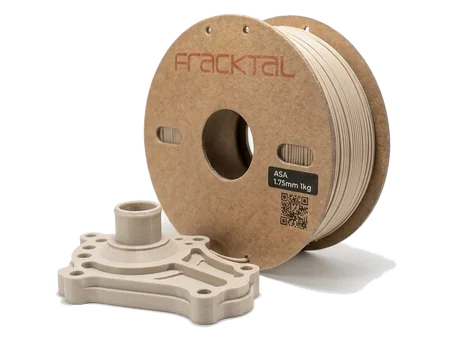
| Gripper structure | FDM · CF-Nylon | Stiff and light at the wrist |
| Complex EOAT | SLS · Nylon 12 | Consolidated, with internal vacuum channels |
| Contact faces / pads | FDM · TPU 95A | Grips without marking |
| Wear parts and bushes | FDM · Nylon PA12 | Low friction, tough |
| Guards and covers | FDM · PET-G | Tough and semi-translucent |
| Hot-area brackets | FDM · Polycarbonate | Near welders and heaters |
How We Would Make It


SLS 3D Printing
Nylon powder bed. No supports, so geometry stops being the constraint.


Vacuum Casting
Moulded-looking parts in colour, without a steel tool.

Finishing & Assembly
Sanded, painted, inserted and assembled before it ships.
People Who Print This Also Print

Jigs & Fixtures
The single highest-return thing anyone prints. A fixture is needed in ones, changes constantly and is used hard — every property that makes machining it expensive makes printing it obvious.

Drone & UAV Parts
An airframe is an argument between stiffness and mass, settled in grams. Carbon-fibre nylon wins it more often than anything else we print — and it can be re-argued next week.

Manufacturing Aids
Nothing that keeps a factory running is bought in useful quantities. One guard. Two guides. A pusher that was modified twice this year. Printing them changes the unit of time from weeks to hours.
Send us the part
Upload the file, tell us the quantity and say what the part has to survive. What comes back is a price and a design-for-manufacturability review.