








Manufacturing Aids
Nothing that keeps a factory running is bought in useful quantities. One guard. Two guides. A pusher that was modified twice this year. Printing them changes the unit of time from weeks to hours.

Trusted, recognised and featured











Stop Designing Around the Catalogue
Line-side parts get bought from whatever catalogue has something close, and then the line gets adjusted to suit the part. That compromise is invisible because it happened years ago and nobody writes it down.
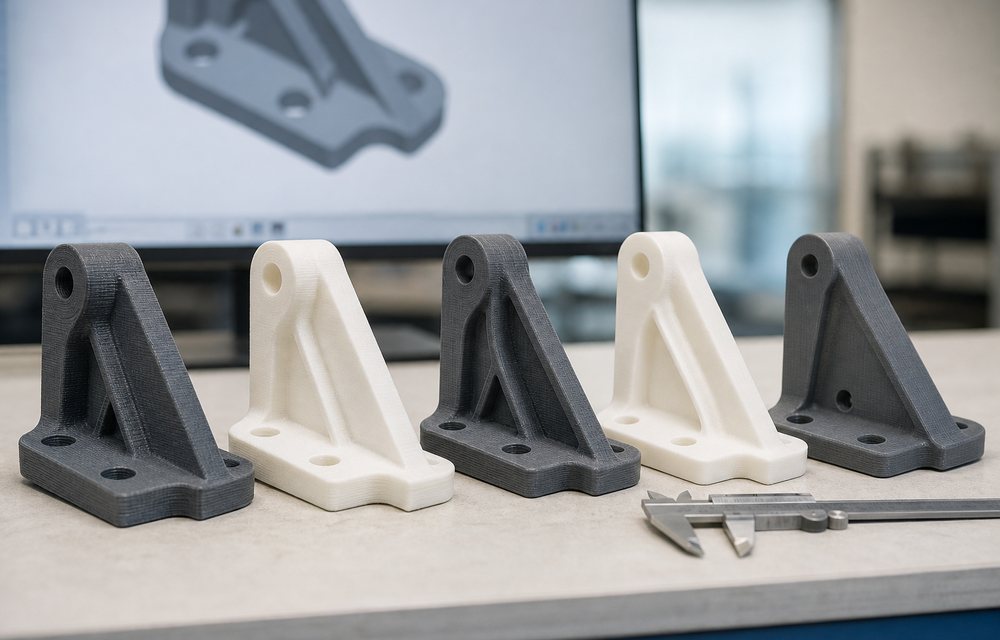
When the part can be printed, the compromise disappears: the guide fits this conveyor, the nest fits this component, the guard fits this machine and not a machine like it. And when the line changes, the part changes with it instead of outlasting the reason it existed.
Six Things That Decide Whether It Works
The mistakes that come back to us, and how to design them out before the file is sent.
Guards want PET-G, not PLA
PET-G is tough and does not shatter; it is also translucent enough to see the machine through.
Make poka-yoke physical
A go / no-go feature that makes the wrong assembly impossible beats a laminated instruction nobody reads.
Print the spare before it fails
The low-runner part with a six-week lead time should be modelled now, not the morning it breaks.
Watch the temperature near machinery
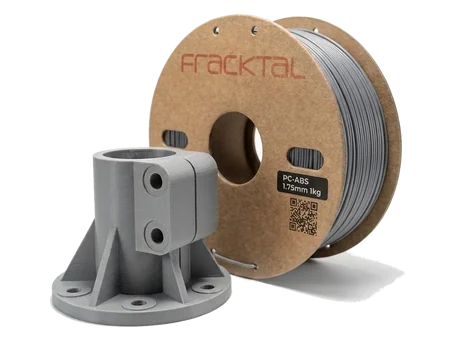
PLA at 53 °C is not a shop-floor material. PET-G, ABS or PC, depending on how hot it gets.
Washdown lines want PP
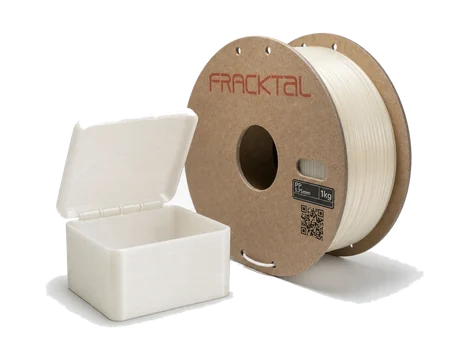
PP absorbs essentially no moisture and is inert to most cleaning chemistry.
Design for replacement, not for eternity
A part that takes one night to remake does not need to last ten years. Make it cheap and make it again.
Which Material for Which Part
| The part | Process & material | Why |
|---|---|---|
| Machine guard | FDM · PET-G | Tough, large-format, semi-translucent |
| Conveyor guide / pusher | FDM · Nylon PA12 | Low friction and wear resistant |
| Poka-yoke gauge | FDM · CF-Nylon | Dimensionally stable so the check stays true |
| Washdown-area part | FDM · PP | Waterproof and chemically inert |
| Complex spare | SLS · Nylon 12 | Geometry a mould could not have released |
| Soft handling face | FDM · TPU 95A | Grips the product without marking it |
How We Would Make It


SLS 3D Printing
Nylon powder bed. No supports, so geometry stops being the constraint.


Vacuum Casting
Moulded-looking parts in colour, without a steel tool.

Finishing & Assembly
Sanded, painted, inserted and assembled before it ships.
People Who Print This Also Print

Jigs & Fixtures
The single highest-return thing anyone prints. A fixture is needed in ones, changes constantly and is used hard — every property that makes machining it expensive makes printing it obvious.

End-Use Parts
Somewhere between ten parts and ten thousand, tooling stops making sense. Additive fills that gap with parts that go into the product, not into a review.

Robotics Parts
A gripper is only as good as its fit to the thing it grips. Printing it means the jaw is the shape of the part, not the nearest shape a catalogue had.
Send us the part
Upload the file, tell us the quantity and say what the part has to survive. What comes back is a price and a design-for-manufacturability review.