







Cosplay & Props
A prop has to survive one thing: being looked at. Right shape, takes paint convincingly, and light enough to wear for eleven takes or a whole convention day.

Trusted, recognised and featured











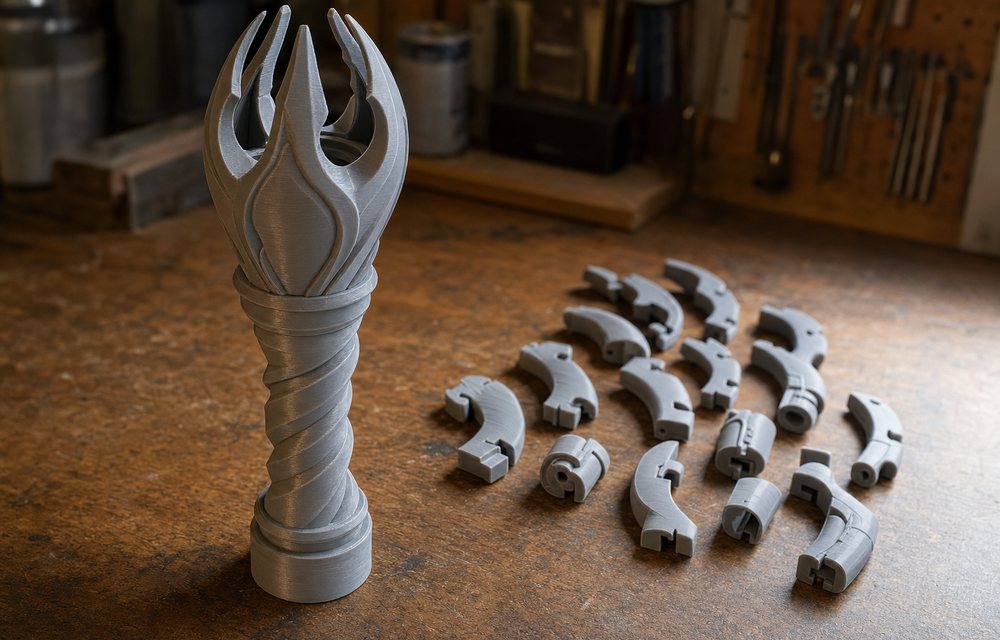
Fewer Seams Beats a Better Sander
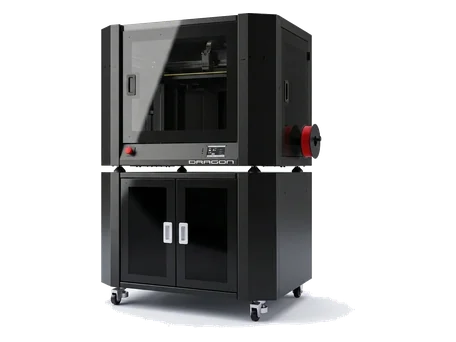
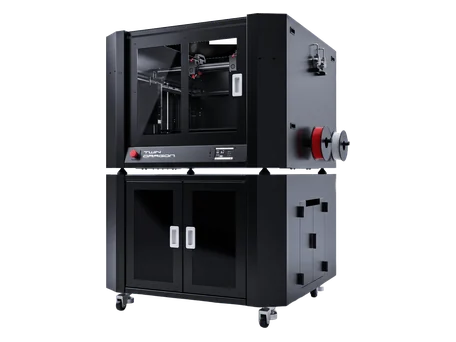
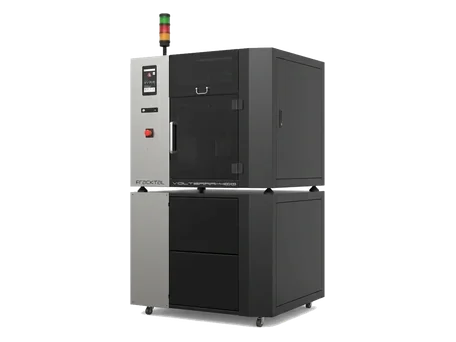
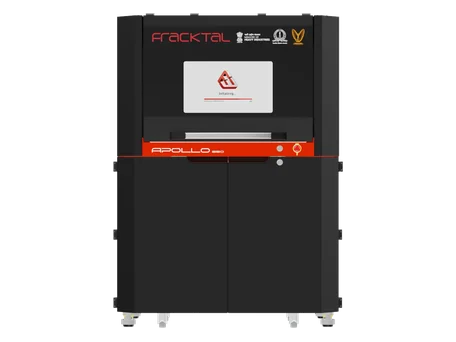
Most of the work in a printed prop is filling and sanding the joins between pieces, so the cheapest way to a good finish is to print fewer pieces. A 700 × 400 × 400 mm envelope takes most helmets, pauldrons and weapon bodies in one go.
Where a piece genuinely must be split, split it on a design line — a panel edge, a trim strip, a rivet row — so the seam reads as part of the design instead of as a repair.
Six Things That Decide Whether It Works
The mistakes that come back to us, and how to design them out before the file is sent.
Split on design lines, never through a face
A seam on a panel edge disappears; a seam across a curved surface never does.
Flexible where it has to move
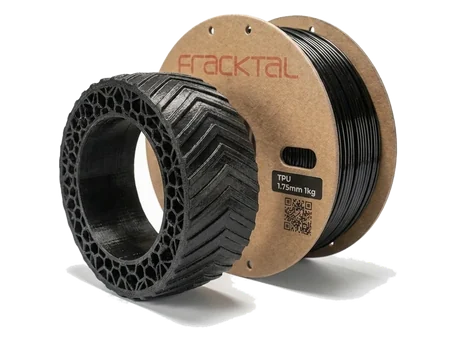
TPU 95A for joints, gussets and anything that must not crack when the wearer sits down.
Wearable armour wants PET-G, not PLA
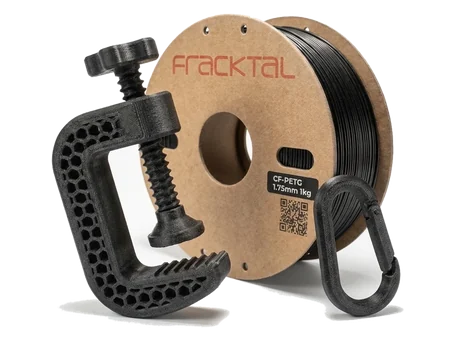
PLA is brittle and softens in a hot car. PET-G survives both the drop and the drive.
Print curved shells face-down
Layer lines that follow the surface sand out in a fraction of the time of lines that cut across it.
Budget filler primer, not sanding
Two coats of filler primer and a light sand beats an hour of sanding raw plastic.
Cast the multiples
Beyond about five identical pieces, a silicone tool from one finished master is faster and matches better.
Which Material for Which Part
| The part | Process & material | Why |
|---|---|---|
| Helmets and large shells | FDM · PET-G | Tough, big, sands and paints well |
| Fine surface detail | SLA · resin | Detail that survives a close-up |
| Flexible joints and gussets | FDM · TPU 95A | Bends and returns; safe against a performer |
| Light, complex pieces | SLS · Nylon 12 | Wearable and strong with no supports |
| Clear elements | SLA · clear resin, polished | Lenses, visors, light pipes |
| Matching multiples | Vacuum casting | Up to 25 identical, in colour |
How We Would Make It


SLS 3D Printing
Nylon powder bed. No supports, so geometry stops being the constraint.


Vacuum Casting
Moulded-looking parts in colour, without a steel tool.

Finishing & Assembly
Sanded, painted, inserted and assembled before it ships.
People Who Print This Also Print
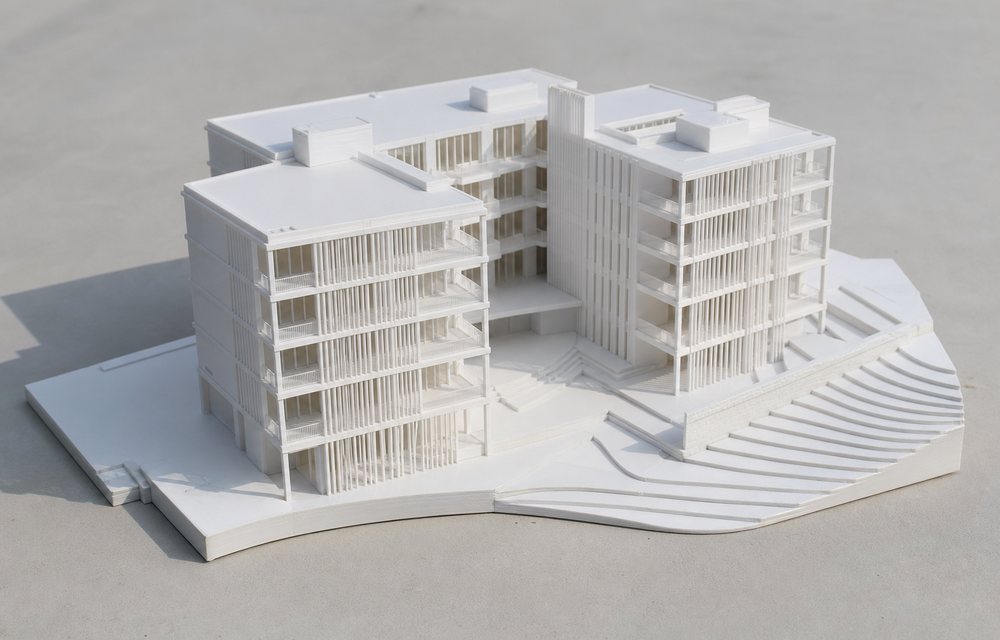
Architectural Models
A massing model at 1:200 has to hold detail at a millimetre and be on the table on Thursday. Printing it is the only route that does both.

Functional Prototyping
A prototype earns its cost by telling you that you were wrong, quickly. Printed in the polymer the production part will use, it tells you that under load rather than on a screen.

End-Use Parts
Somewhere between ten parts and ten thousand, tooling stops making sense. Additive fills that gap with parts that go into the product, not into a review.
Send us the part
Upload the file, tell us the quantity and say what the part has to survive. What comes back is a price and a design-for-manufacturability review.