








End-Use Parts
Somewhere between ten parts and ten thousand, tooling stops making sense. Additive fills that gap with parts that go into the product, not into a review.

Trusted, recognised and featured











Where the Tool Never Pays Back
An injection tool is a fixed cost paid before the first part exists, and it is only rational if enough parts follow it. Below that break-even — a product still finding its market, a spare with a demand of forty a year, a variant that exists for one customer — the tool is the reason the part does not get made.
Additive removes the fixed cost entirely. The hundredth part costs about what the first one did, which is bad economics at volume and excellent economics below it. It also means the design can change on part 41 without scrapping anything.
Six Things That Decide Whether It Works
The mistakes that come back to us, and how to design them out before the file is sent.
Design for the process, not around it
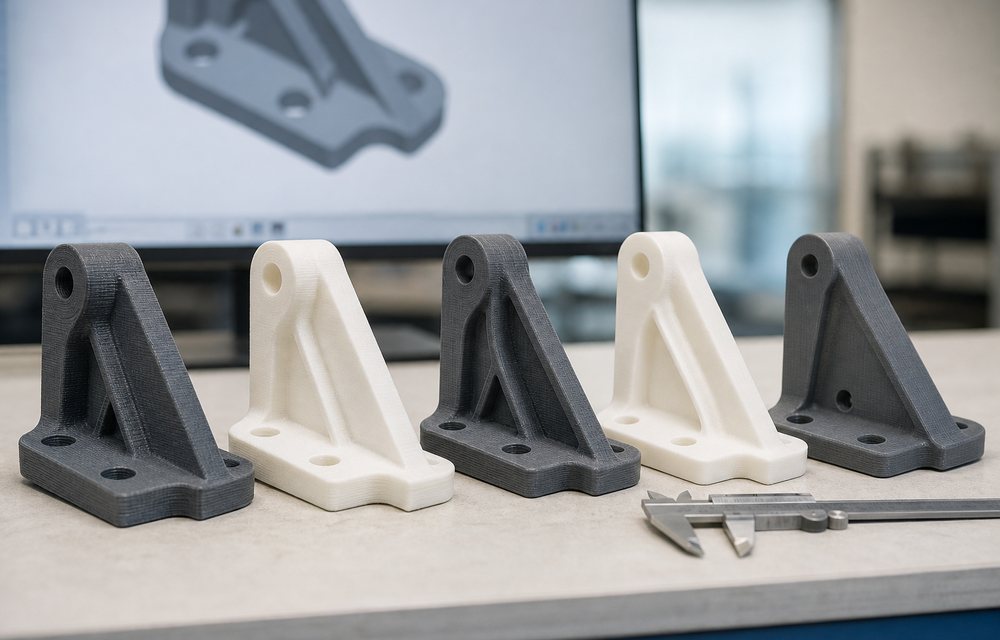
A part redesigned for additive — consolidated, ribbed rather than solid, supports designed out — is cheaper, lighter and stronger than a moulded part reprinted as-is.
Pick the process for consistency, not speed
For runs, HP MJF and SLS give far more repeatable properties part-to-part than any extrusion process.
Specify inspection up front
Tell us the critical dimensions before the run, not after. First-article inspection on part one is cheap; discovering it on part 200 is not.
Fix the material and record the batch
For an end-use part the feedstock batch is recorded per job, so a good run can be reproduced deliberately.
Decide the finish before the run
Dyeing an SLS or MJF batch is uniform and permanent; painting one is neither, and it costs more.
Consolidate assemblies
The cheapest end-use part is the three parts and two fasteners it replaced.
Which Material for Which Part
| The part | Process & material | Why |
|---|---|---|
| 10–50 parts | SLS or vacuum casting | Nesting or a silicone tool both beat one-at-a-time |
| 50–1000 parts | HP MJF · Nylon 12 | Layer-at-a-time fusing: a full chamber is the cheap case |
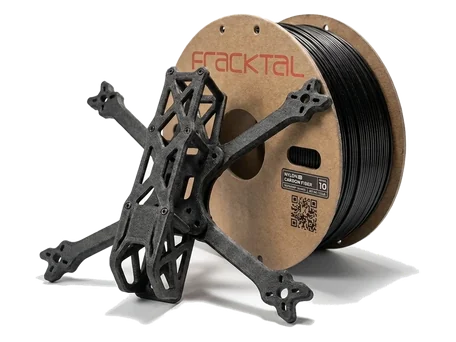
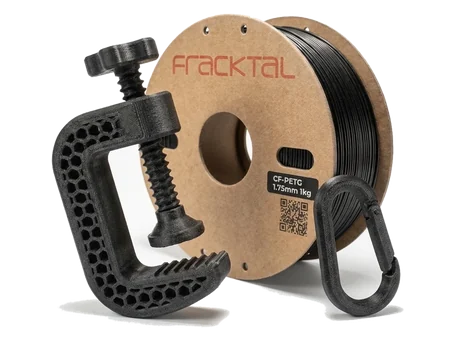
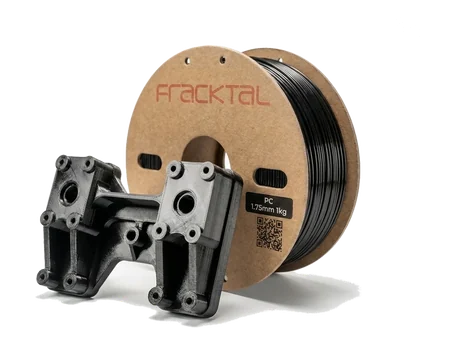
| Large single parts | FDM · CF-Nylon or PC | Up to 700 × 400 × 400 mm in one piece |
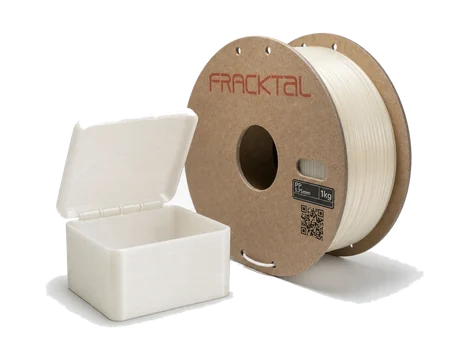
| Chemically exposed | FDM · PP | Inert to most acids, alkalis and solvents |
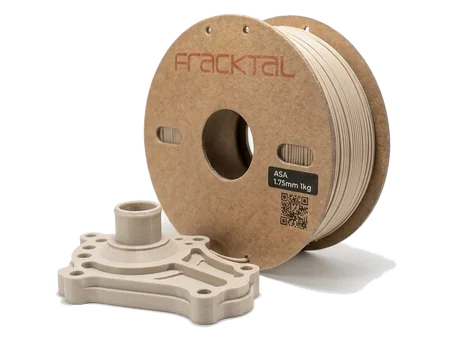
| Outdoor service | FDM · ASA | UV-stable for years, not seasons |
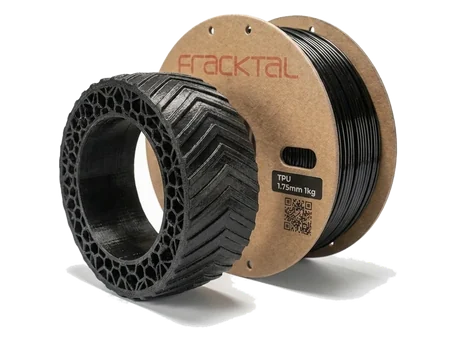
| Flexible parts | FDM · TPU 95A | Gaskets, bumpers, grips and dampers |
How We Would Make It


SLS 3D Printing
Nylon powder bed. No supports, so geometry stops being the constraint.


Vacuum Casting
Moulded-looking parts in colour, without a steel tool.

Finishing & Assembly
Sanded, painted, inserted and assembled before it ships.
People Who Print This Also Print

Functional Prototyping
A prototype earns its cost by telling you that you were wrong, quickly. Printed in the polymer the production part will use, it tells you that under load rather than on a screen.

Manufacturing Aids
Nothing that keeps a factory running is bought in useful quantities. One guard. Two guides. A pusher that was modified twice this year. Printing them changes the unit of time from weeks to hours.
Automotive Prototypes
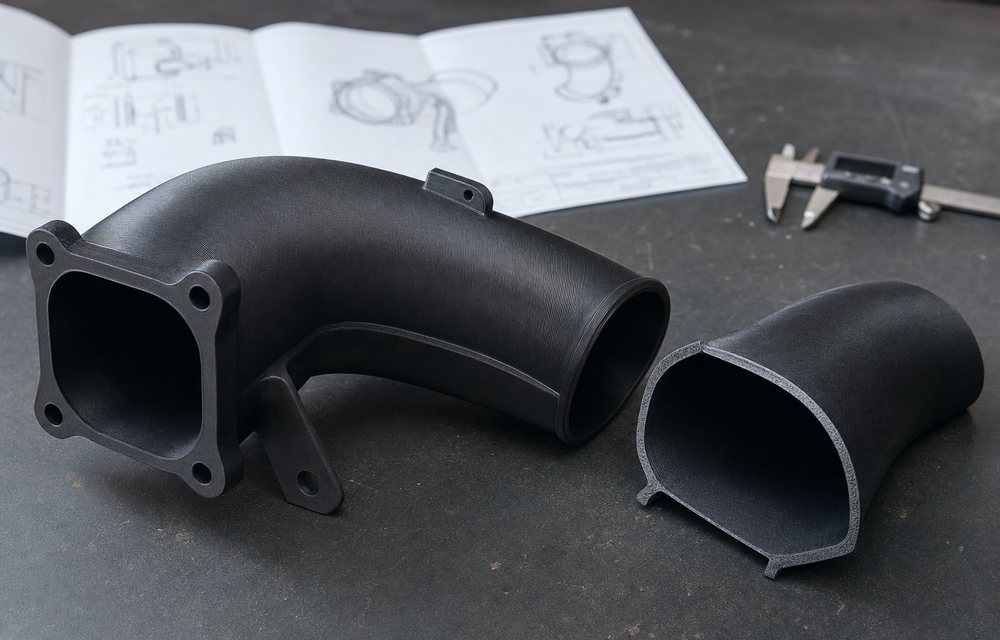
Automotive was the first industry to put additive to work and still uses it hardest — mostly not on the car, but on everything used to build and validate the car.
Send us the part
Upload the file, tell us the quantity and say what the part has to survive. What comes back is a price and a design-for-manufacturability review.