











Industrial 3D Printers, Built in India
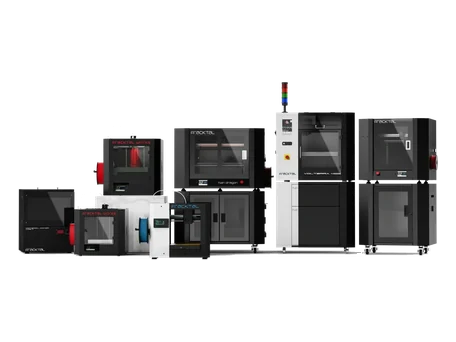
Four machines that exist because a desktop printer could not do the job: size, speed, temperature or geometry. All designed and built in Bengaluru, and supported from there.

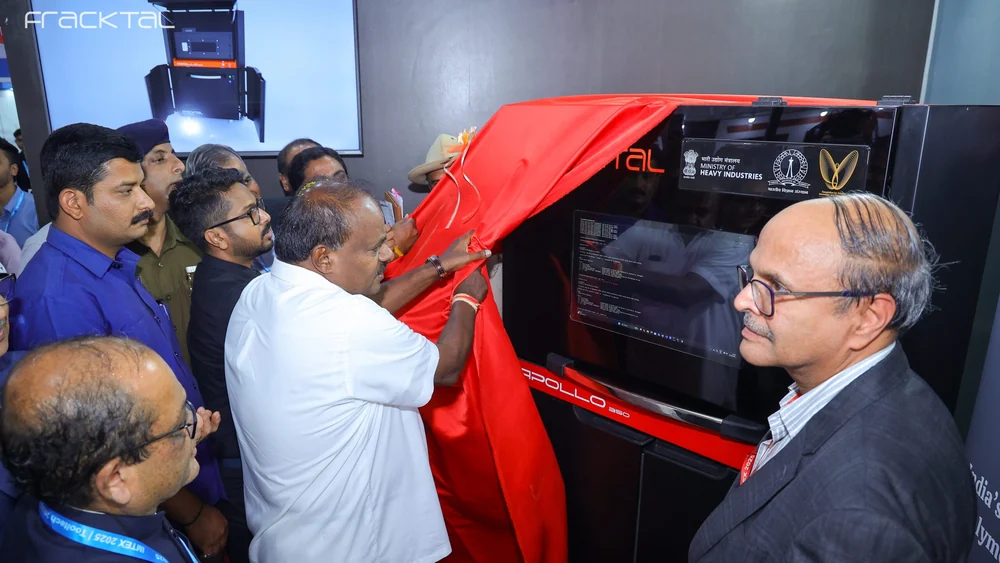
Trusted, recognised and featured











Four Things, and None of Them Is the Price
“Industrial” is an unregulated word. These are the differences that actually change what a machine can do.
A managed thermal environment
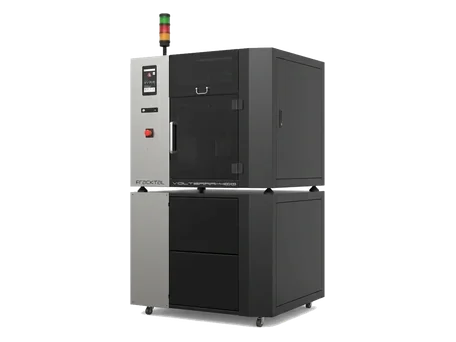
An enclosure that holds temperature — passively on Dragon and Twin Dragon, actively to 90 °C on Volterra. This is what stops a large engineering part warping off the plate at hour six.
Motion that survives the speed
Dragon’s hybrid CoreXY drives the XY gantry with four motors rather than two — less belt stretch, less ringing, and accuracy that does not collapse at 600 mm/s.
The sensors that save a long print
Filament runout and flow detection, an automatic door lock during high-temperature operation, and a 5 MP camera. An eleven-hour build has to be trustworthy for eleven hours.
A material path that reaches the material
450 °C nozzles, hardened steel for abrasives, an integrated filament pre-heater on Volterra, and nozzles from 0.25 to 1.2 mm. Most ‘industrial’ machines stop at 300 °C and brass.
Envelope you can plan production around
Up to 700 × 400 × 400 mm on Dragon and 600 × 600 × 400 mm on Twin Dragon — big single parts, or a plate packed with a batch.
Fleet-ready connectivity
USB, Wi-Fi and LAN on every machine, with a job queue in Fracktory. A machine that cannot be fed over the network is a machine someone has to walk to.
The Four Industrial Machines
| Dragon | Twin Dragon | Volterra | Apollo SLS | |
|---|---|---|---|---|
| Process | FFF | FFF · IDEX | FFF · IMEX dual | Selective laser sintering |
| Build volume | to 700×400×400 mm | to 600×600×400 mm | 400×400×400 mm | Powder bed |
| Max print speed | 600 mm/s | — | — | — |
| Nozzle temperature | High-temp capable | High-temp capable | 450 °C | n/a |
| Chamber | Passive heated | Enclosed | 90 °C actively heated | Enclosed process |
| Build plate | Heated | Heated | 150 °C | n/a |
| Extruders | 1 | 2, independent | 2, IMEX retracting | n/a |
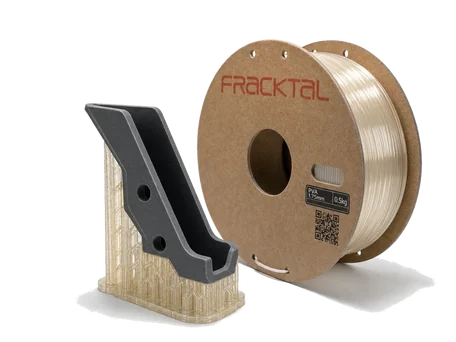
| Supports | Yes | Soluble available (PVA) | Soluble available | None — powder supports the part |
| Nozzle diameter | 0.4 – 1.2 mm | 0.25 – 1.2 mm | 0.25 – 1.2 mm | n/a |
| Materials | PLA to CF-Nylon | PLA to CF-Nylon + PVA | PC, PA, CF-PA, ASA, ABS, composites | Nylon 12 |
| Best at | Speed and size | Two materials at once | The hardest polymers | Geometry nothing else can make |
The Industrial Range
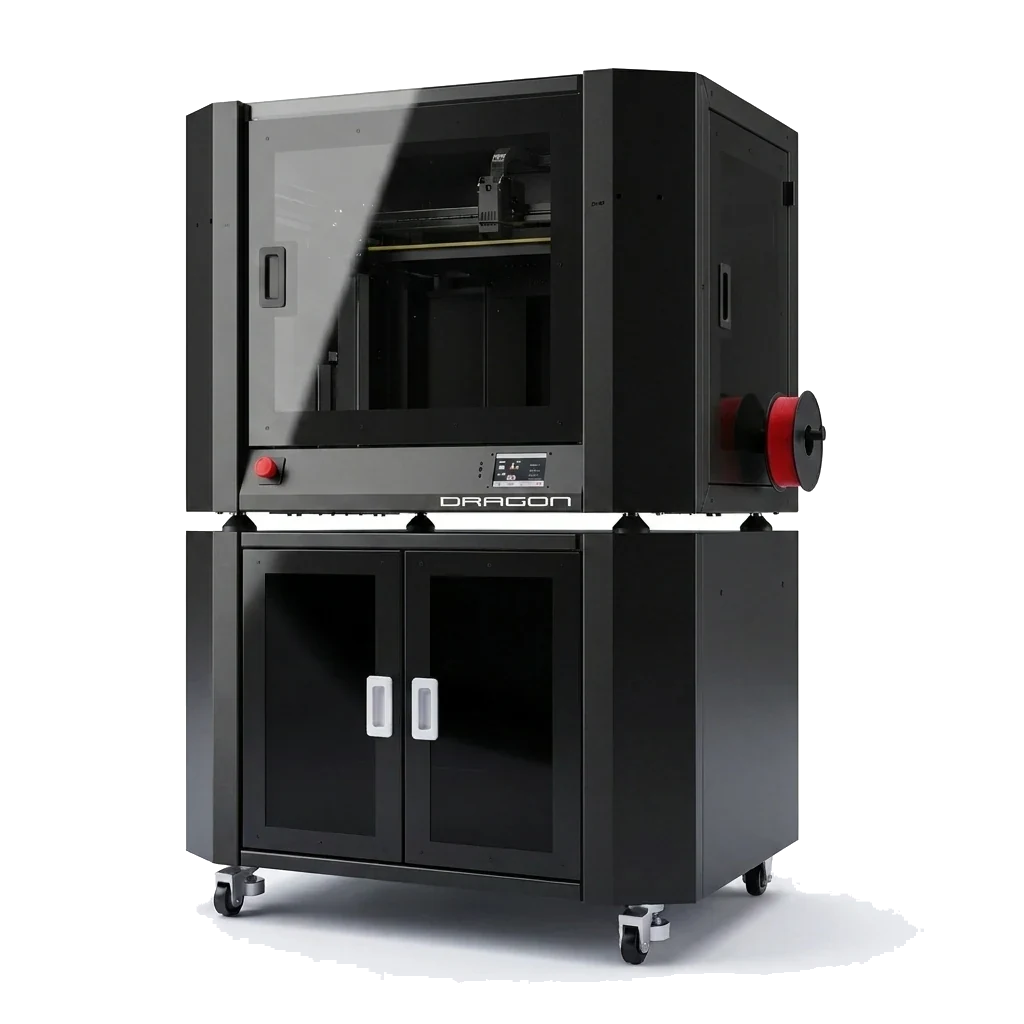
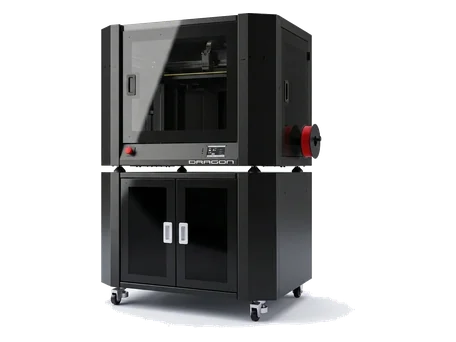
Dragon
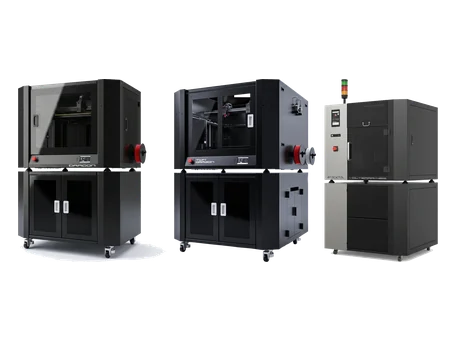
Up to 600 mm/s on a hybrid CoreXY, in three sizes to 700 × 400 × 400 mm.
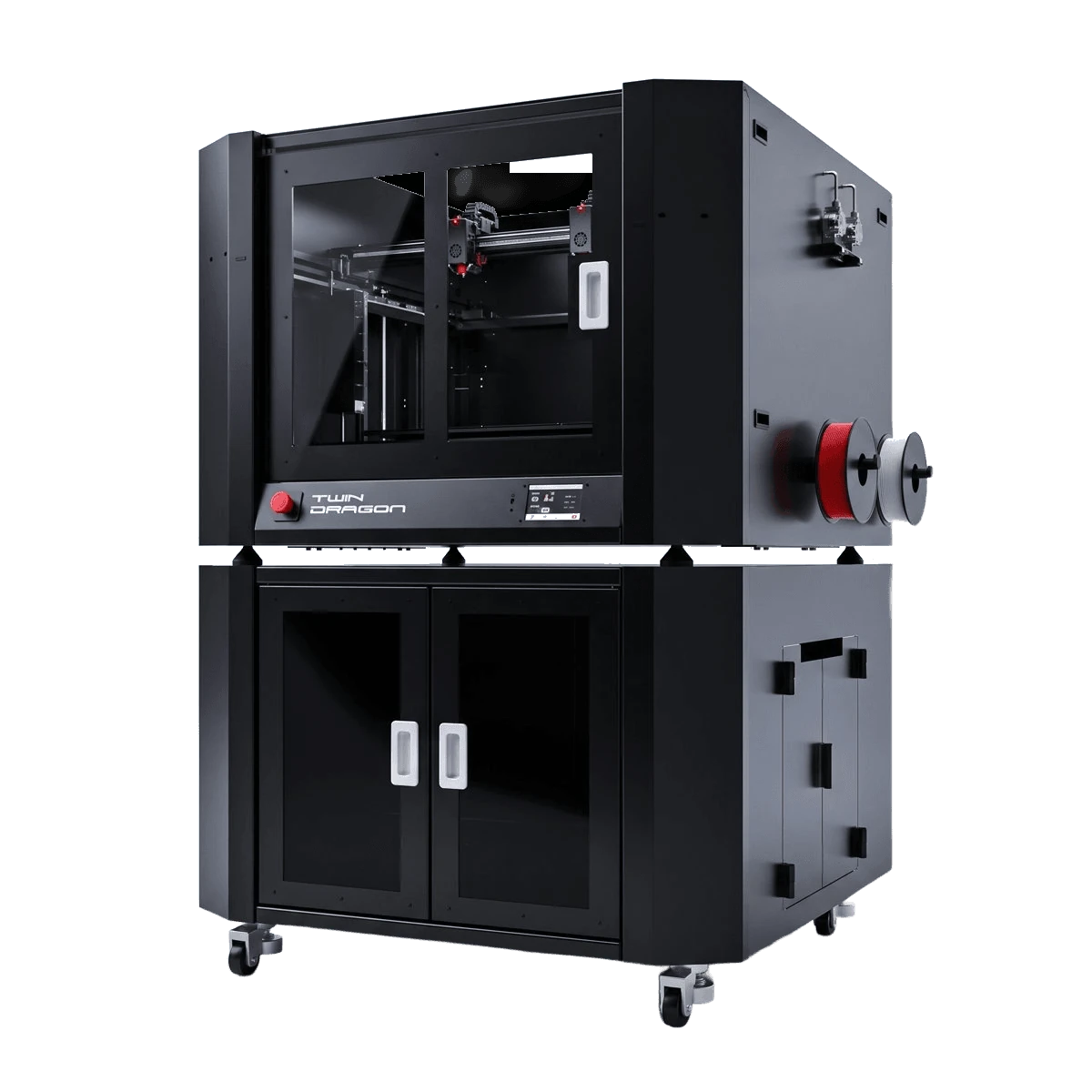
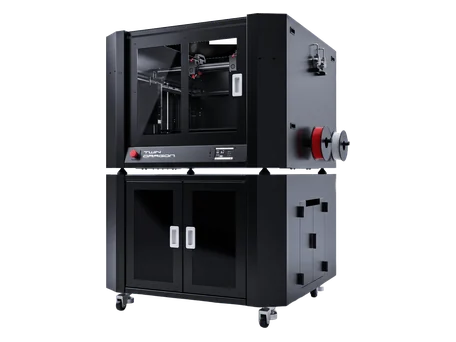
Twin Dragon
Two independent extruders to 600 × 600 × 400 mm — dual material, mirror and duplication.
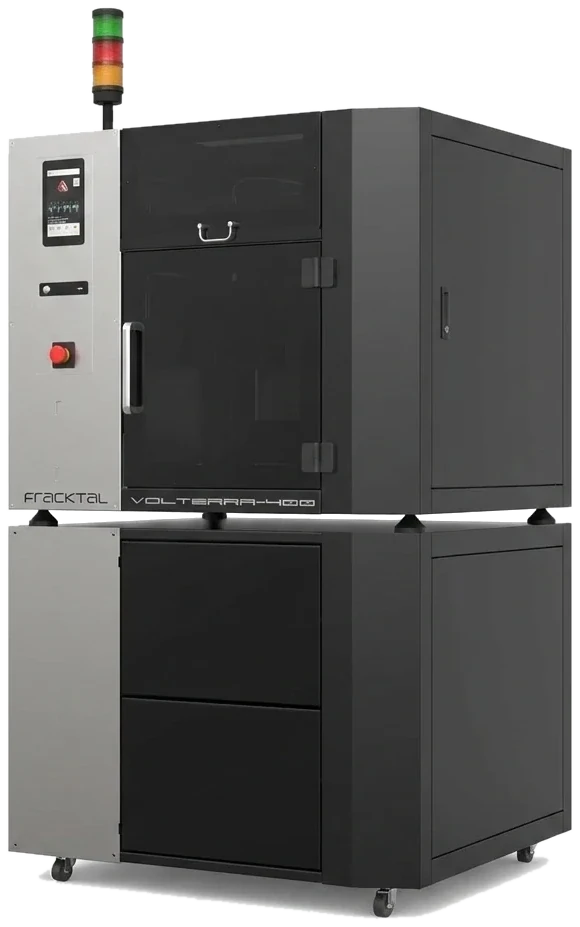
Volterra
450 °C hotend, 90 °C heated chamber and a 150 °C plate for PC, PA and composites.
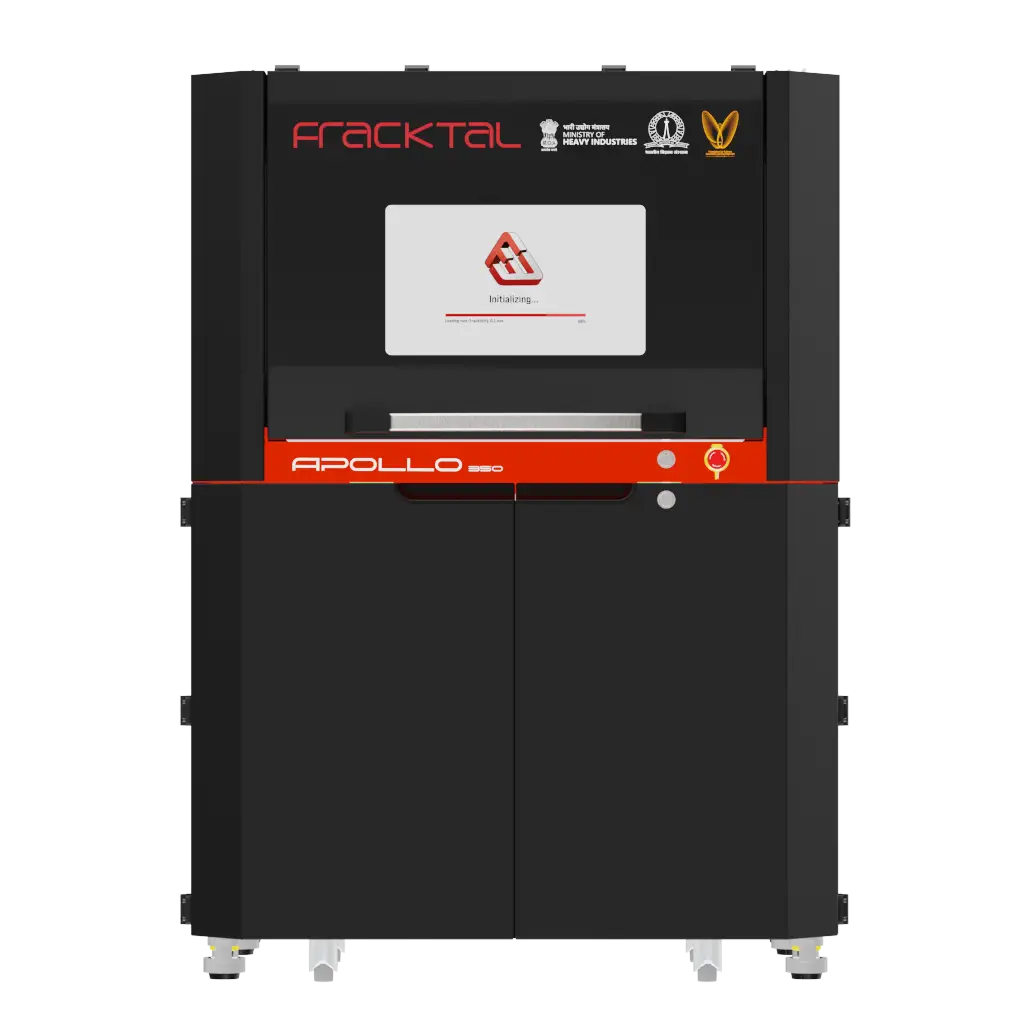
Apollo SLS
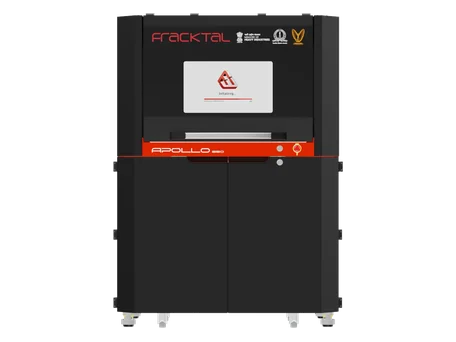
Selective laser sintering — nylon parts with no supports and full geometric freedom.

Material Dryer
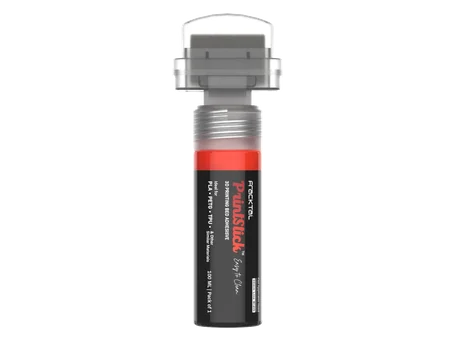
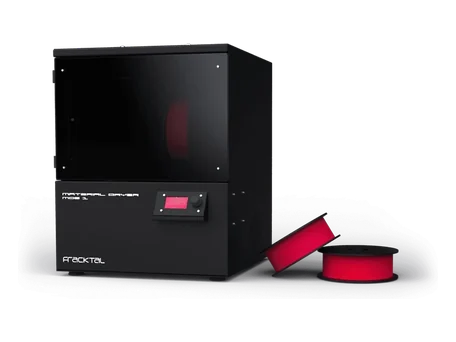
MDS1 dries up to three 1 kg spools at once, so the material stops being the variable.
What Buyers Ask Us
Which one for carbon-fibre and engineering polymers?
What do I actually get from IDEX?
When is SLS worth it over FFF?
Can these run unattended?
What about installation and training?
Specify the machine around the part
Tell us the largest part, the material it has to be made in and how much of the week the machine will run. That answers the specification faster than a feature list does.