











3D Printing for Packaging: Prototypes, Tooling, Line Parts

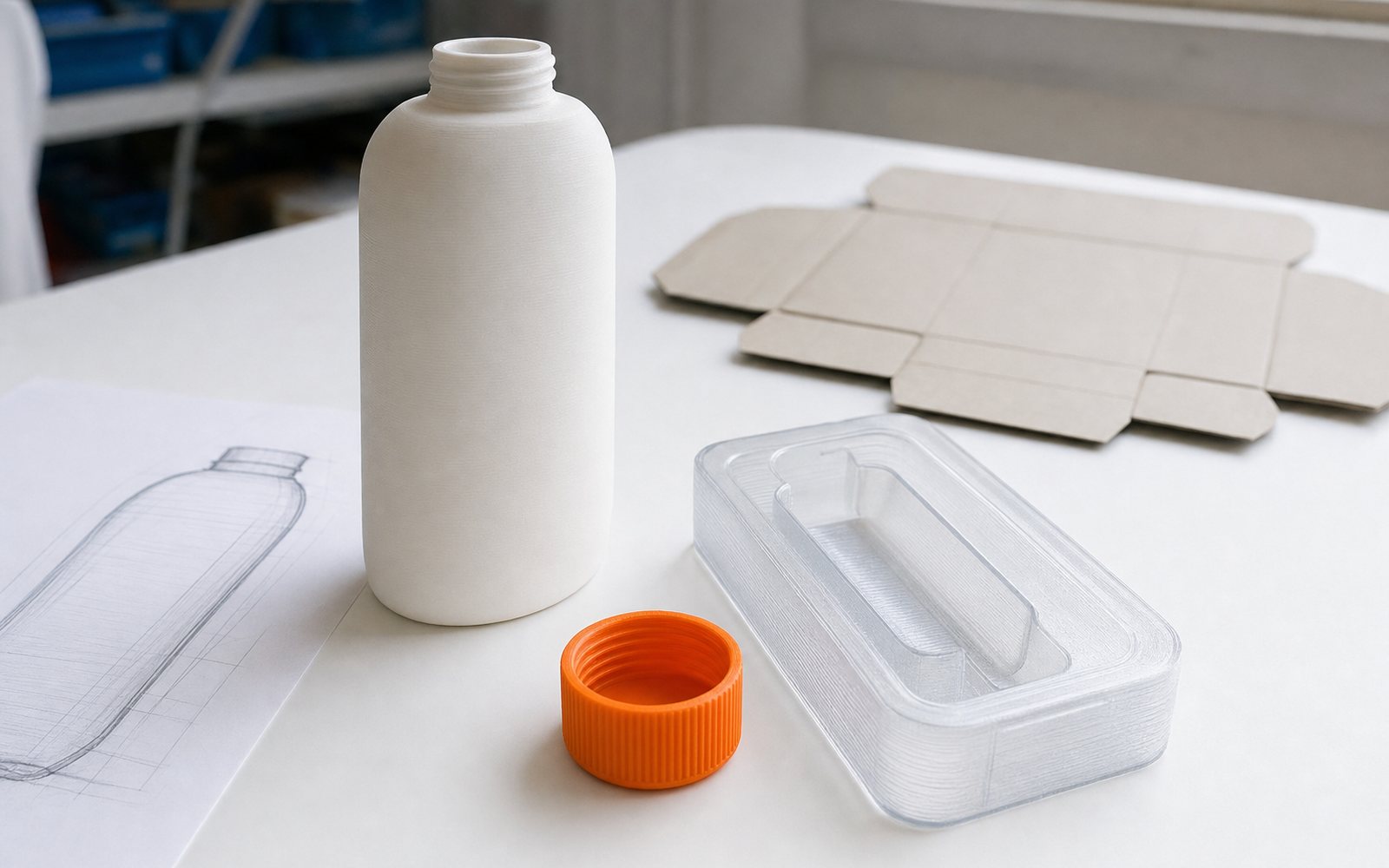
3D printing for packaging rarely means printing the packaging. It means printing the bottle before the mould exists, the closure that has to be tested in a hundred hands, the change parts that let a filling line switch from one container to the next, and the display that a retailer wants in twenty units for a trial. Packaging is a high-volume industry whose development and tooling happen in small numbers, and that is where a printer pays.
Prototypes: the bottle in the hand before the tool is cut
A blow-mould or injection tool for a container costs lakhs and takes weeks. Every decision that could be tested before it is cut, should be, and a printed prototype is how.
- Form and feel. A bottle, jar, tub or closure printed in SLA resin has the surface and the detail of a moulded part. It sits on the shelf next to the competition, goes into consumer panels, and gets photographed for the pitch.
- Fit. Does the closure thread onto the neck? Does the tub fit the lid, the lid fit the tray, the tray fit the carton? These are the errors that are cheap in a printed part and ruinous in a tool.
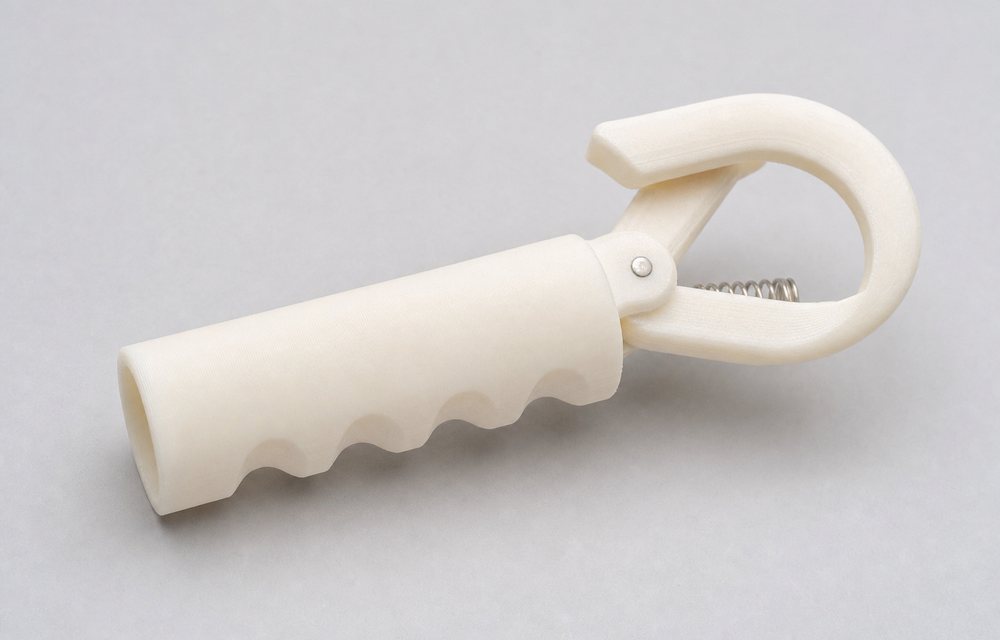
- Function. Flip-top hinges, dispensing pumps, tamper bands and child-resistant closures can be printed close enough to their production material to test the mechanism, using flexible resins and TPU for the living hinges.
- Line trials. A short run of printed containers goes down the actual filling line to find the jams before the production tool is committed.
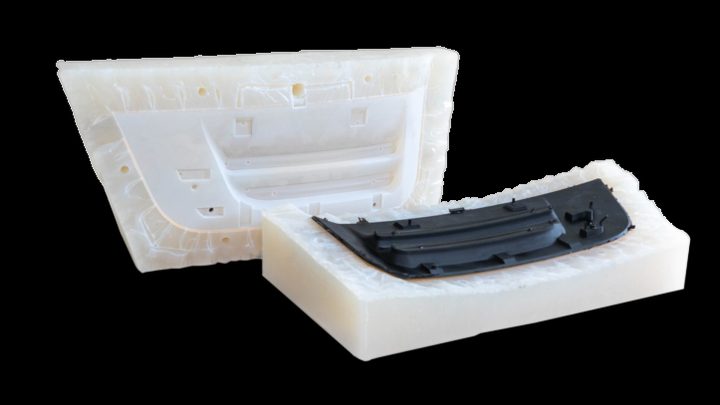
For a run of twenty to fifty in the final material’s look and colour, an SLA master and vacuum casting give moulded-quality polyurethane parts without a steel tool.
Change parts: the tooling that keeps a line moving
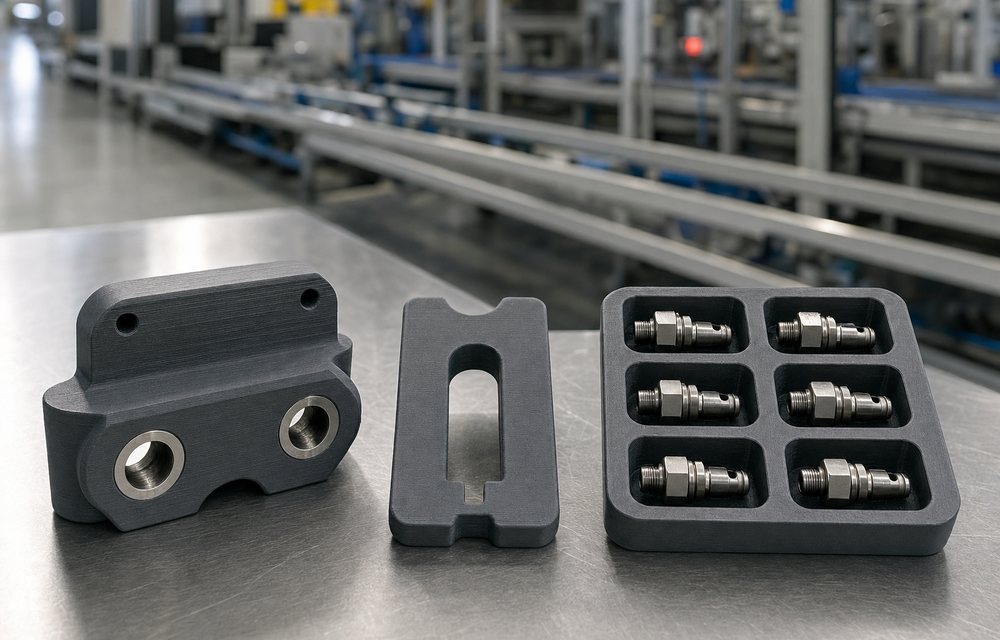
A packaging line is built to handle one container. When the container changes, so must the star wheels, guide rails, pucks, gripper fingers, cap chutes and labeller parts that touch it. These change parts are made in small numbers, fitted in a hurry, and modified constantly, which makes them the highest-return printed part on the floor.
- Star wheels and timing screws in nylon, printed to the exact container profile.
- Pucks and nests that hold an odd-shaped container upright through the line.
- Guide rails and side guides in a low-friction material.
- Gripper fingers and suction plates on pick-and-place and case packers.
- Cap chutes, sorting bowls and escapements that are otherwise machined from a block.
Nylon 12 by SLS is the usual material: tough, low-friction, food-contact grades available, and a full set of change parts prints in one build. Our manufacturing aids page shows the shapes we make most often.
Thermoforming and blister tooling
Trays, blisters and clamshells are thermoformed over a tool, and for prototypes and short runs that tool can be printed. A tool printed in a heat-resistant material such as polycarbonate or a high-temperature resin survives dozens to hundreds of pulls, which is enough to validate a tray design, produce samples for a customer, or run a pilot batch. Vent holes are printed in rather than drilled.
Displays, point-of-sale and short-run products
Retail displays, counter-top dispensers, promotional items and limited-edition packaging components are wanted in tens or hundreds, usually at short notice, and usually with a change after the first ten. That is a batch job for SLS or MJF, where a hundred parts cost a fraction per unit of the first, or for vacuum casting when the finish has to look moulded. The end-use parts page explains where each process wins.
Materials that meet packaging’s rules
Packaging has requirements a bracket does not.
- Food contact. Printed parts that touch food need a food-contact grade and a finish without open pores. SLS nylon and certain resins are available in those grades; FDM parts are generally used where the product is already sealed.
- Cleaning. Change parts get washed down. Nylon and PETG tolerate the usual detergents; PLA does not tolerate the hot water.
- Static and abrasion. Guides on a high-speed line wear. Nylon and PETG wear slowly; where a part must last for years, a printed prototype validates the geometry and a machined part follows.
What a packaging project looks like with us
The typical sequence: a container concept printed in SLA within days; three revisions in two weeks; a vacuum-cast batch of thirty for the consumer panel and the sales pitch; then, when the tool is cut, a set of printed change parts so the line is ready for the new container on the day it arrives. Each step is quoted separately, and each is quicker than the previous way of doing it.
Send the container file or the change-part drawing through the quote page and tell us the quantity and whether it touches product. An engineer chooses the process and material before we price it.