










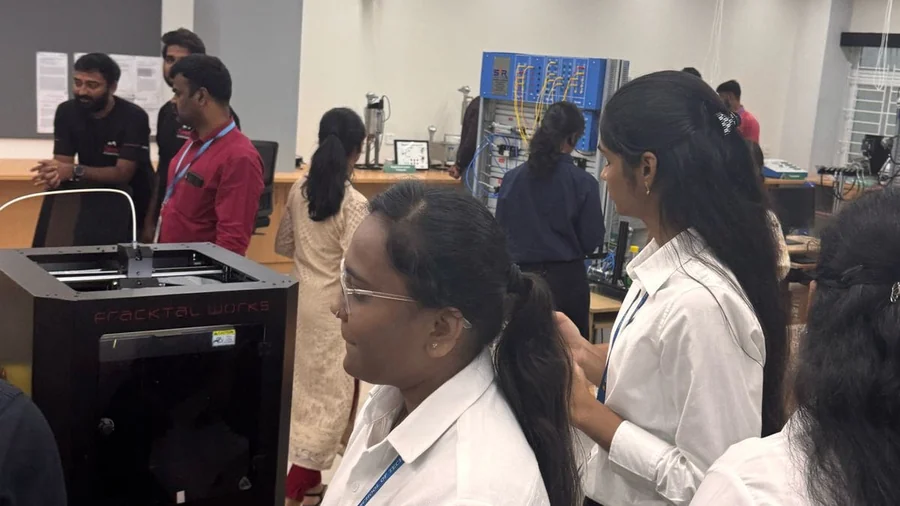

3D Printing in the Railway Industry

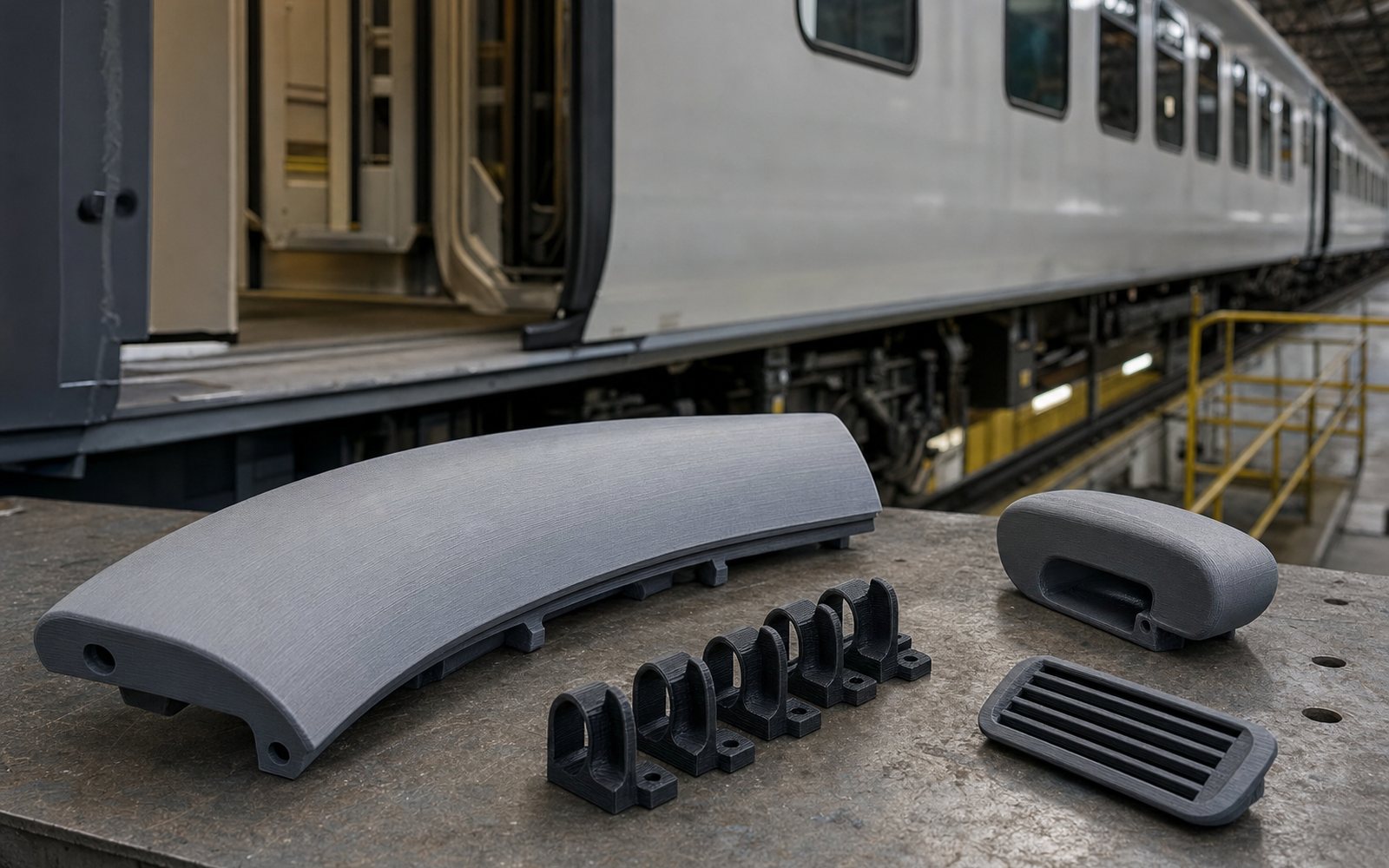
A passenger coach is built to run for thirty or forty years. The company that moulded its armrest end caps may not last ten. Somewhere in the second half of that life, every railway ends up with the same problem: a part that costs a few hundred rupees to make, is needed a handful of times a year, and can no longer be bought from anyone.
That gap is where additive manufacturing earns its place in rail. Not as a way to print a bogie, but as a way to keep a fleet in service when the original supply chain has moved on.
Why rail is a spare-parts problem before it is anything else
Three things make railway maintenance unusual. Rolling stock outlives its suppliers. Demand for any one part is sporadic, so nobody wants to hold stock, but a missing part can take a coach out of revenue service. And a large share of what fails is not structural at all: it is interior trim, clips, covers, handles, brackets and vents, damaged by use or vandalism rather than by load.
Conventional tooling is a poor fit for that pattern. An injection mould for a trim panel is worth making for ten thousand pieces, not for twelve. So depots improvise: they cannibalise withdrawn coaches, hold obsolete parts in a store that nobody audits, or run without.
Printing changes the arithmetic. The cost of the first part and the hundredth part are almost the same, there is no tooling to amortise, and the drawing lives as a file rather than as a steel die in a supplier’s warehouse. A part that is needed twice a year can be made twice a year.
What actually gets printed
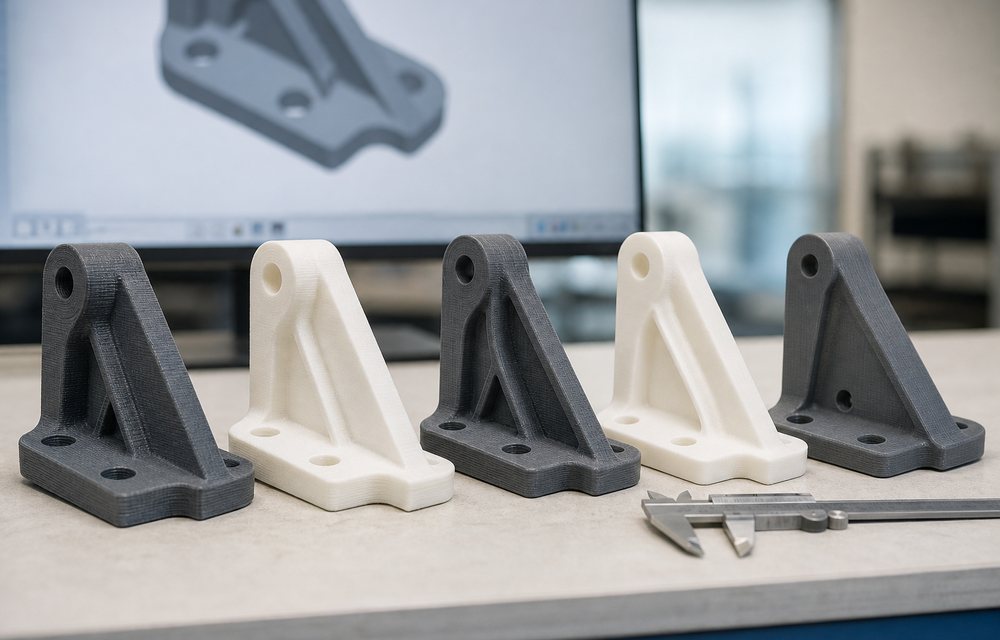
The parts that make sense for FDM in a rail context share a profile: moderate size, low volume, non-structural or lightly loaded, and expensive to source conventionally. In practice that covers a lot of a coach interior.
- Interior trim and covers. Panel sections, corner pieces, seat-back fittings, table edges and end caps: the parts that break when a coach is full and that no supplier will quote for in tens.
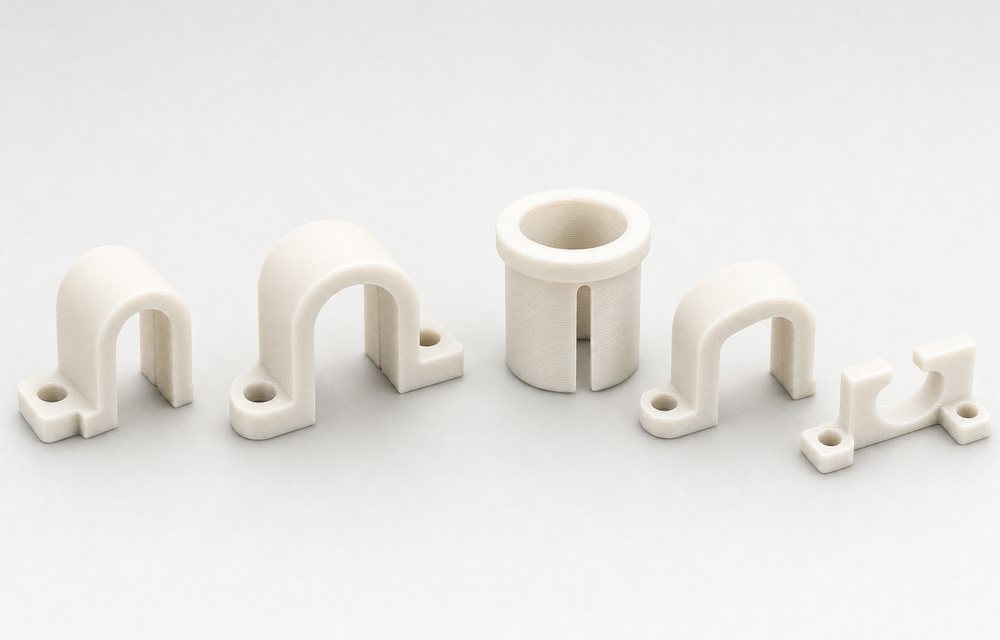
- Cable and pipe management. Clips, saddles, grommets and guides, often obsolete on older stock, and simple enough to reverse-engineer from a worn original.
- HVAC and ventilation parts. Louvres, diffusers and duct adaptors, where a printed polycarbonate part replaces a moulding that has not been available for years.
- Depot tooling. Jigs for drilling and alignment, gauges for checking wear, protective caps and covers used during overhaul, and holders that keep a specific tool where it is needed. This is usually the first thing a depot prints, because it needs no approval process and pays back in weeks. Our jigs and fixtures page covers the design rules.
- Accessibility and signage. Tactile signs, Braille plates and handle profiles that are specific to one fleet and never available off the shelf.
The material question is the real one
Anything fitted inside a passenger vehicle has to meet fire, smoke and toxicity requirements. In Europe that is EN 45545-2; Indian operators specify their own requirements against comparable standards. This is the point where enthusiasm usually meets a wall, and it should. A part printed in ordinary PLA has no business in a coach interior.
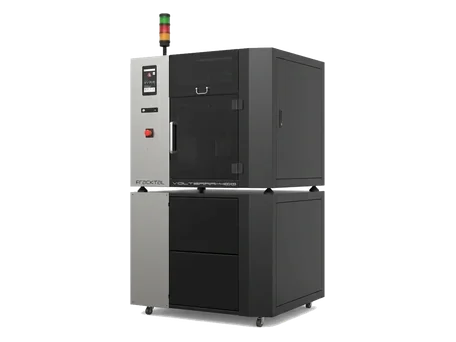
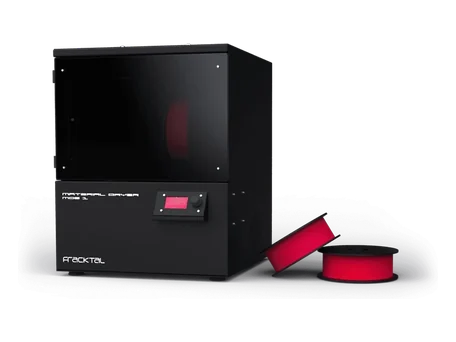
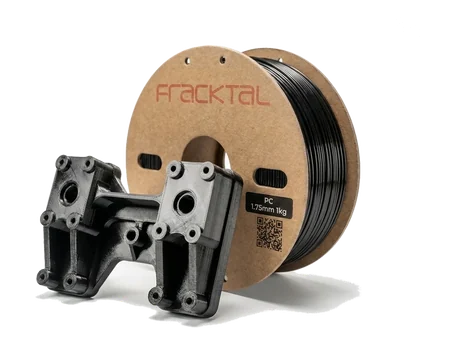
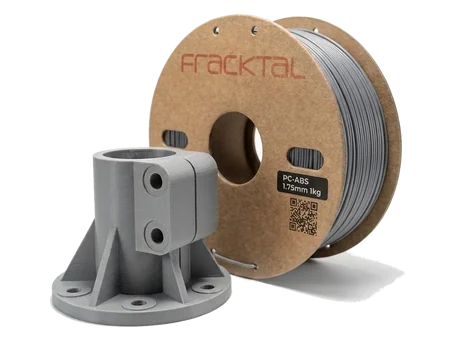
The materials that do have a place are the engineering polymers: polycarbonate, PC-ABS blends and flame-retardant grades of ABS and nylon, chosen against the operator’s specification and with test certificates from the material supplier. Those materials print reliably only on a machine with an enclosed, heated chamber and a hot end that holds temperature. That is the difference between a desktop printer and an industrial one, and it is the reason we build the Volterra with a 450 °C nozzle, a 90 °C chamber and a 150 °C plate. Polycarbonate and carbon-fibre nylon are the two materials we are asked about most for this kind of work.
For parts that are outside the passenger compartment, or that are tooling rather than fitted equipment, the constraint relaxes and the material choice becomes an engineering one: stiffness, temperature, wear.
Reverse engineering the parts nobody has drawings for
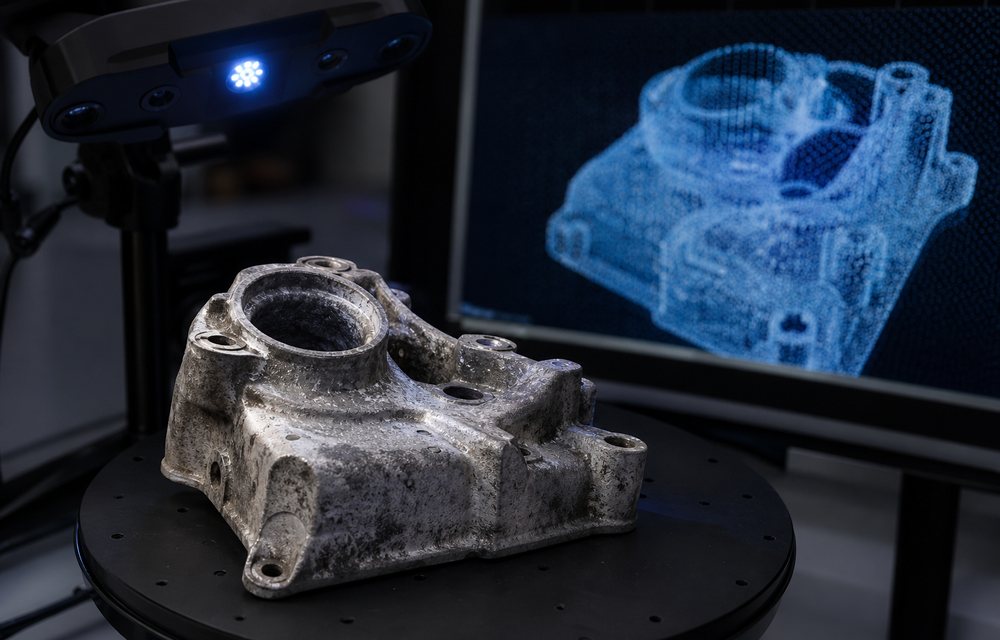
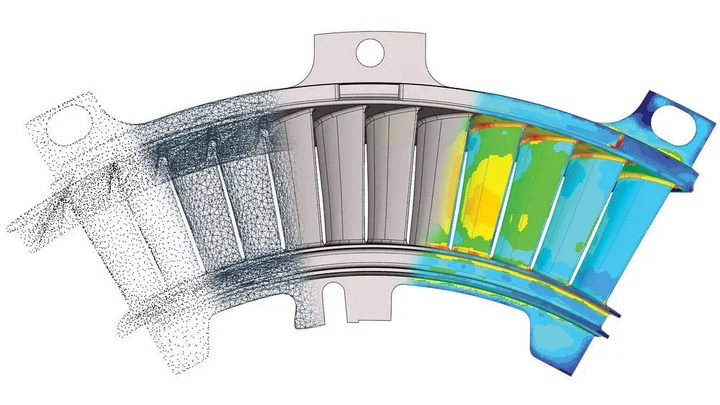
Older fleets rarely come with CAD. The working method is to take a worn or broken original, scan or measure it, model it, and correct the design while you are there: thicker where it cracked, a fillet where it split, a different fastener if the original is also obsolete. The printed part is then not a copy of the old one but a better version of it, and the file is the new master.
Two disciplines matter here. Keep the file under change control, the same way a drawing would be. And validate the first batch properly: fit, function, and where the part is load-bearing, a test to failure so the safety margin is known rather than assumed.
Where to start
The depots that get the most from this do not start with the hardest part. They start with tooling and covers, build a library of proven files, and only then move to fitted interior components with the certification work that those need. A single industrial FDM machine, a small stock of the right materials and one engineer who owns the file library is enough to change how a depot handles obsolescence. European operators industrialised the same idea years ago: Deutsche Bahn’s spare-parts programme grew into Mobility goes Additive, an operator network for sharing qualified part files.
If you would rather see how a specific part behaves before committing to a machine, our manufacturing floor in Bengaluru prints in the same materials, with a design check by an engineer before anything is quoted. Send the worn original or the file through the quote page and we will tell you honestly whether printing is the right answer for it.