










Drone & UAV Parts
An airframe is an argument between stiffness and mass, settled in grams. Carbon-fibre nylon wins it more often than anything else we print — and it can be re-argued next week.

Trusted, recognised and featured











Stiffness Per Gram Is the Only Number
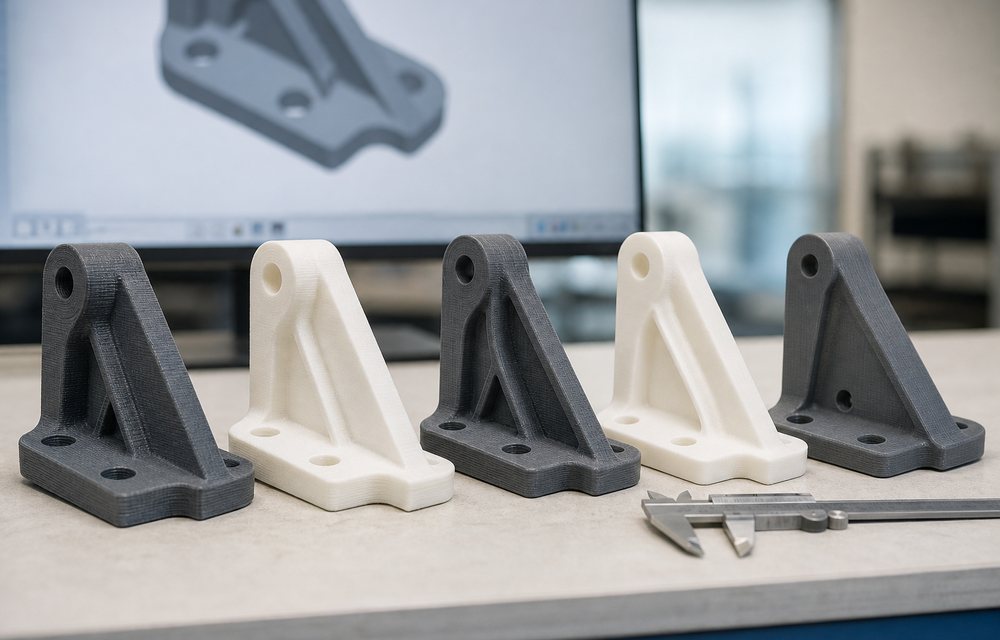
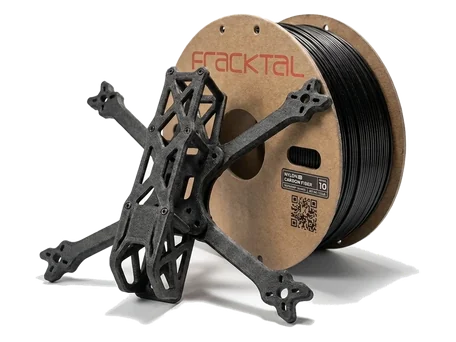
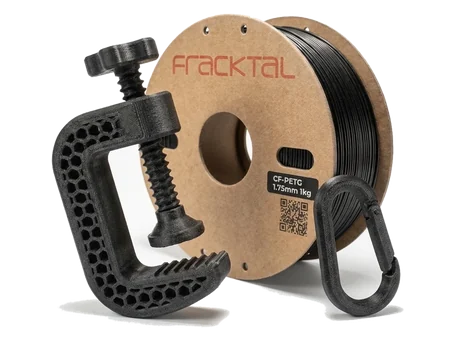
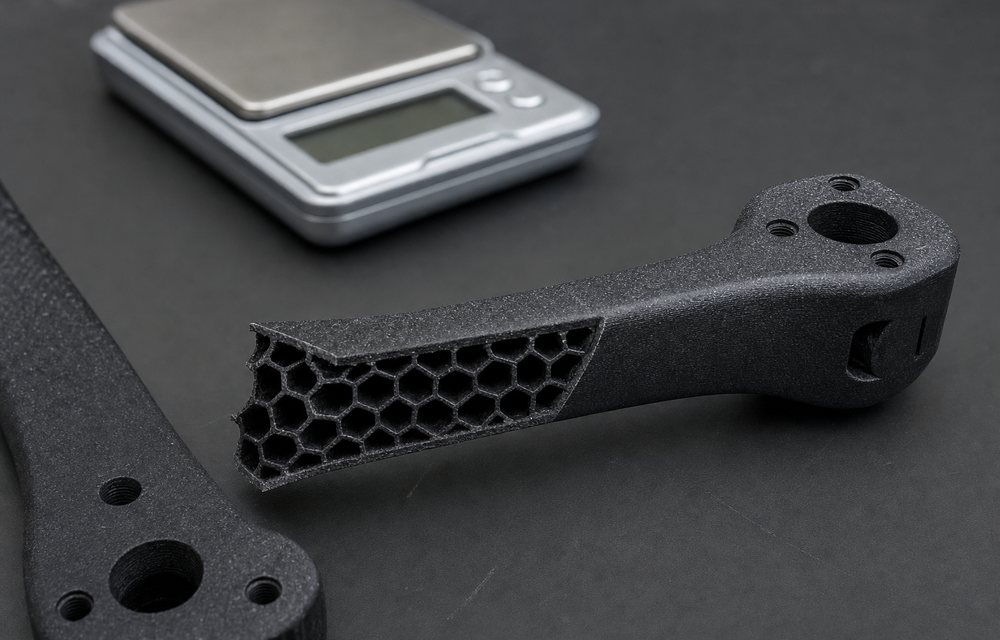
Absolute strength barely matters on an airframe; what matters is how much stiffness you get for the mass you spend. Carbon-fibre nylon gives 82 MPa at 1.10 g/cm³ — the highest specific stiffness in the range — and it damps vibration in a way aluminium does not, which shows up directly in flight-controller noise.
SLS nylon is the other answer, and it wins whenever the part is complex: internal ducting, integrated cable routes, lattice cores and mounts consolidated into one piece with nothing to bond and no supports to pull out of a channel.
Six Things That Decide Whether It Works
The mistakes that come back to us, and how to design them out before the file is sent.
Ribs, not solid walls
Stiffness scales with the cube of section depth. A 2 mm ribbed shell beats a 4 mm solid one at half the mass.
Orient arms along the layer, never across
An arm loaded in bending across its layers will delaminate at the boundary. Lay it flat along the load path.
Dry the nylon, every time
Wet CF-Nylon loses stiffness and surface. It is dried before it goes on a machine and stored in a dry box between jobs.
Consolidate the mount
Every fastener is mass and a failure point. SLS lets a motor mount, cable route and antenna boss become one part.
Design for the crash
Prototype airframes fail. Make the arm the sacrificial part and keep the fasteners accessible.
Keep vibration paths short
A stiff, damped path between motor and flight controller does more for flight quality than tuning does.
Which Material for Which Part
| The part | Process & material | Why |
|---|---|---|
| Arms and booms | FDM · CF-Nylon | Highest specific stiffness, damps vibration |
| Complex airframe body | SLS · Nylon 12 | Consolidated, light, no supports |
| Payload and gimbal mounts | FDM · CF-Nylon | Stiff and dimensionally stable |
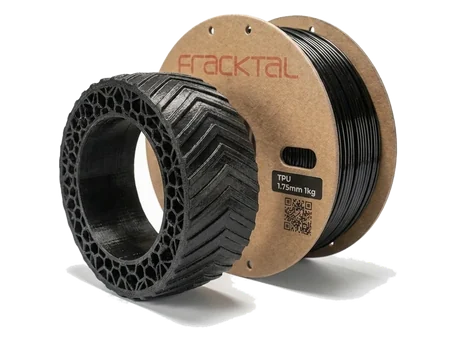
| Vibration isolators | FDM · TPU 95A | Tuned compliance where you want it |
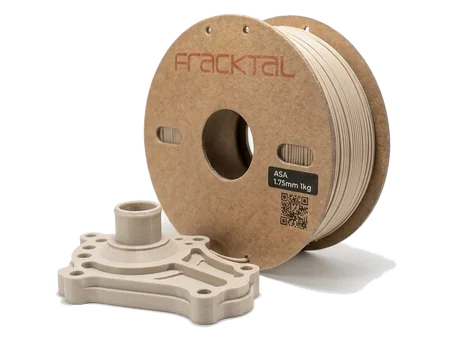
| Canopies and fairings | FDM · PET-G or ASA | Tough; ASA if it lives in the sun |
| High-temperature areas | FDM · Polycarbonate | Near ESCs and motors |
How We Would Make It


SLS 3D Printing
Nylon powder bed. No supports, so geometry stops being the constraint.


Vacuum Casting
Moulded-looking parts in colour, without a steel tool.

Finishing & Assembly
Sanded, painted, inserted and assembled before it ships.
People Who Print This Also Print
Drone Manufacturing in India
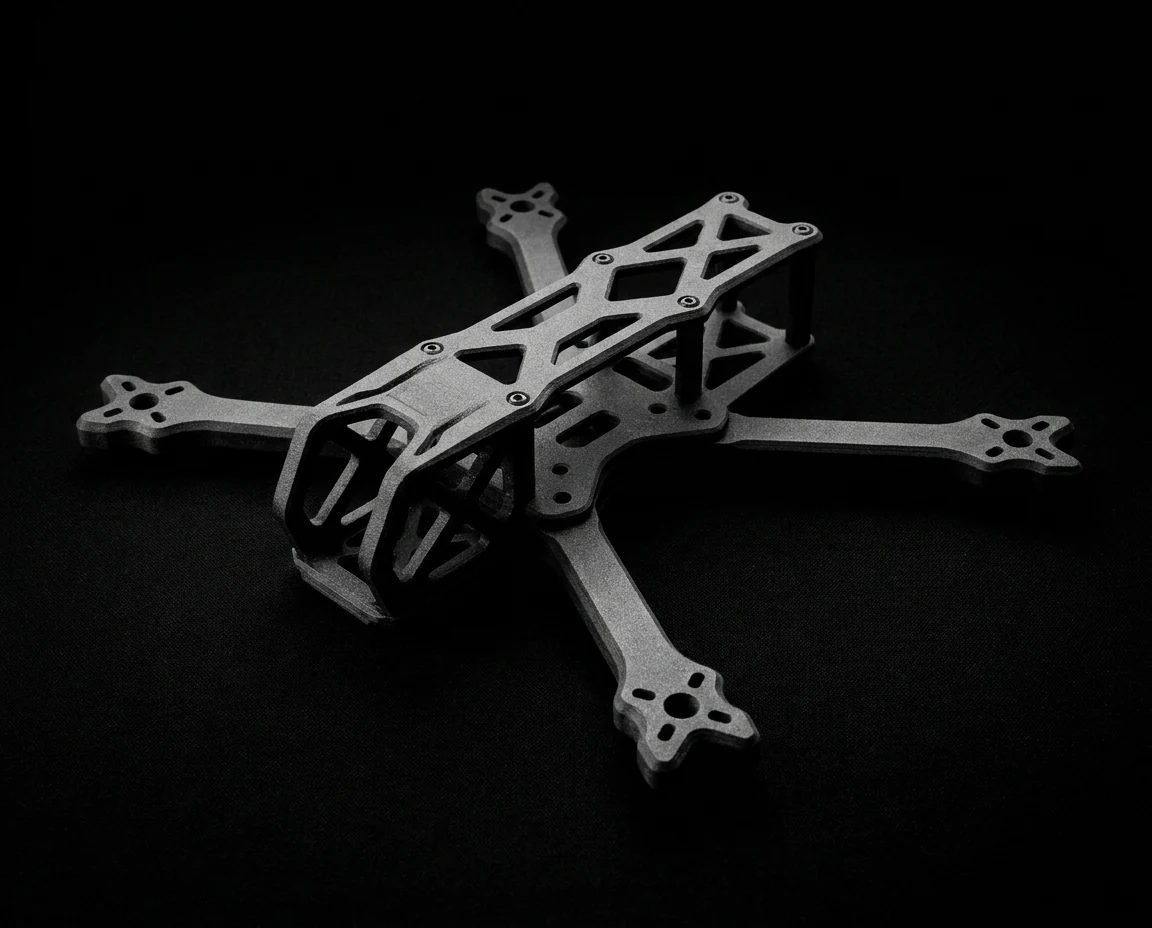
The import prohibition, the PLI scheme and the defence pull have made drone manufacturing an Indian industry. Where 3D printing fits in it — and why the machine being indigenous matters too.

Robotics Parts
A gripper is only as good as its fit to the thing it grips. Printing it means the jaw is the shape of the part, not the nearest shape a catalogue had.

Functional Prototyping
A prototype earns its cost by telling you that you were wrong, quickly. Printed in the polymer the production part will use, it tells you that under load rather than on a screen.

End-Use Parts
Somewhere between ten parts and ten thousand, tooling stops making sense. Additive fills that gap with parts that go into the product, not into a review.
Send us the part
Upload the file, tell us the quantity and say what the part has to survive. What comes back is a price and a design-for-manufacturability review.