









What People Actually Print
Ten use cases, each with the material choice, the design rules and the mistakes that come back to us. An industry page tells you what a sector prints; these tell you how to make it work.

Trusted, recognised and featured











Pick the One That Sounds Like Your Part

Functional Prototyping
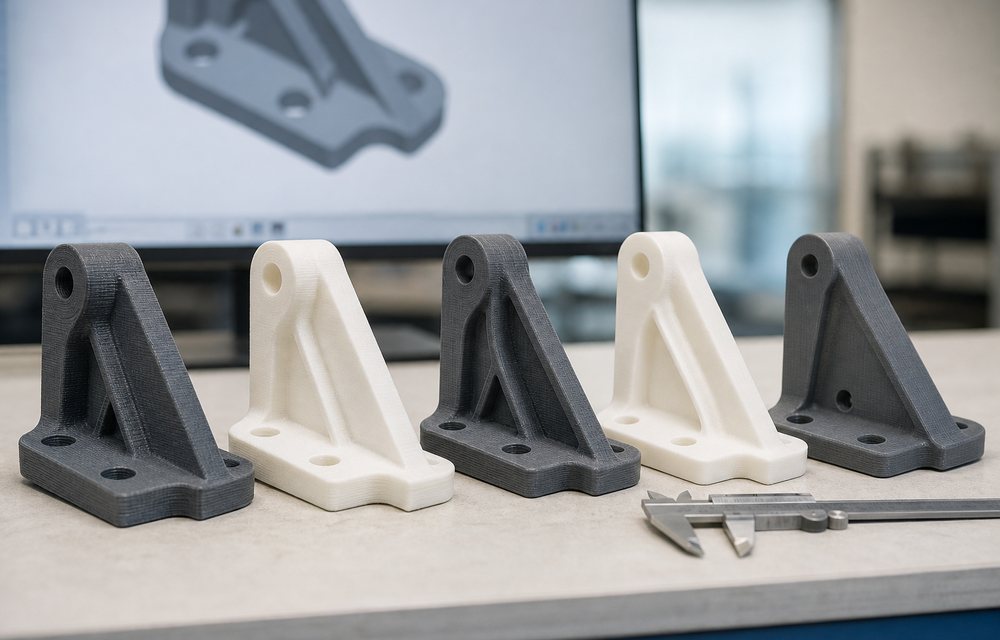
A prototype earns its cost by telling you that you were wrong, quickly. Printed in the polymer the production part will use, it tells you that under load rather than on a screen.

End-Use Parts
Somewhere between ten parts and ten thousand, tooling stops making sense. Additive fills that gap with parts that go into the product, not into a review.

Jigs & Fixtures
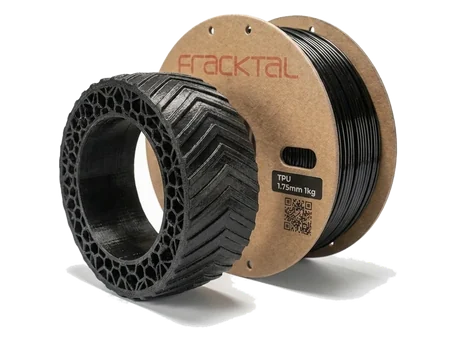
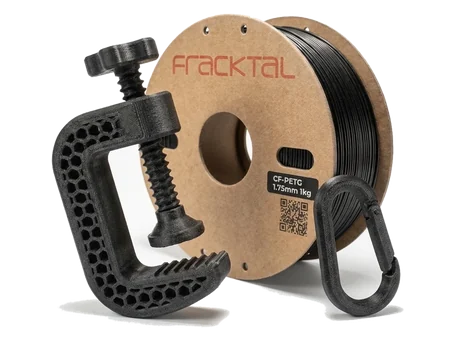
The single highest-return thing anyone prints. A fixture is needed in ones, changes constantly and is used hard — every property that makes machining it expensive makes printing it obvious.

Manufacturing Aids
Nothing that keeps a factory running is bought in useful quantities. One guard. Two guides. A pusher that was modified twice this year. Printing them changes the unit of time from weeks to hours.
Automotive Prototypes
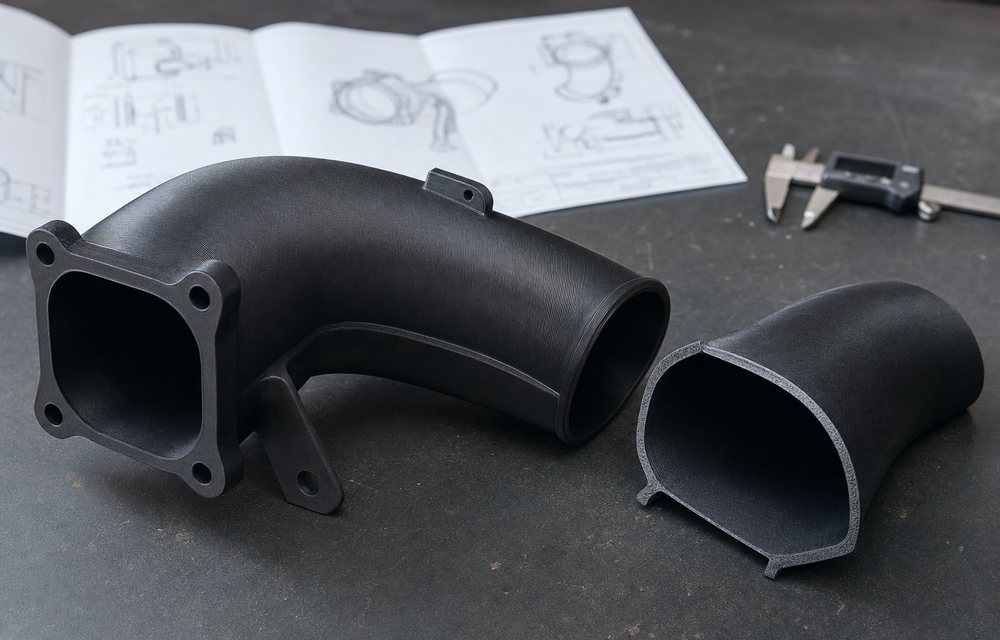
Automotive was the first industry to put additive to work and still uses it hardest — mostly not on the car, but on everything used to build and validate the car.

Robotics Parts
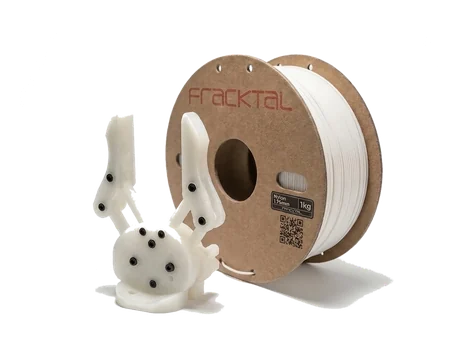
A gripper is only as good as its fit to the thing it grips. Printing it means the jaw is the shape of the part, not the nearest shape a catalogue had.

Drone & UAV Parts
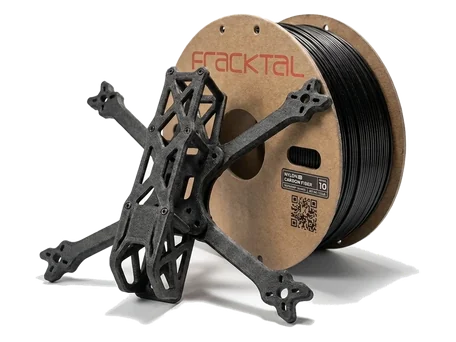
An airframe is an argument between stiffness and mass, settled in grams. Carbon-fibre nylon wins it more often than anything else we print — and it can be re-argued next week.

Architectural Models
A massing model at 1:200 has to hold detail at a millimetre and be on the table on Thursday. Printing it is the only route that does both.

Medical & Anatomical Models
Every patient is a different shape, so every patient-specific model is a production run of one. Conventional manufacturing is bad at that; additive does not notice.

Cosplay & Props
A prop has to survive one thing: being looked at. Right shape, takes paint convincingly, and light enough to wear for eleven takes or a whole convention day.
Six Things True of Every Printed Part
Whatever the application, these six decide more than the machine does.
Orientation is a design decision
A printed part is weakest across its layers. How it is laid on the plate changes its strength, its surface, its supports and its price — so it belongs in the design, not in the slicer.
Start from the failure, not the datasheet
Heat, sunlight, chemicals, impact, wear or weight — decide which one would make the part unacceptable and the material list shortens itself.
Hollow beats solid
Ribbed 3 mm walls with 25 % infill are stiffer per gram than a solid block and cost a fraction as much. Solid is almost never the right answer.
Design the supports out
Chamfer overhangs to 45°, teardrop the horizontal holes, and split what cannot be fixed. Supports are material you pay for and labour to remove.
Dry the material
Wet nylon loses a third of its strength and all of its surface. Every hygroscopic material we run is dried before it goes on a machine.
Call out only the dimensions that matter
Three toleranced features and process standard everywhere else is cheaper, faster and more likely to pass than a fully dimensioned drawing.
The Same Question, By Industry

Automobile
Checking fixtures, end-of-arm tooling, cabin and under-bonnet prototypes.

Engineering
Functional prototypes in production polymers, and short-run end-use parts.

Manufacturing
Line-side tooling, guards, gauges and on-demand spares, printed overnight.

Healthcare
Anatomical models for surgical planning, training aids and lab fixtures.

Entertainment
Hero props, costume components, set pieces and matching multiples.

Every Industry
Eight sectors, each with its own process and material guidance.
Not on the list?
These are the ten we are asked for most, not the ten we can do. Send the file and what the part has to survive, and we will tell you how to make it.