






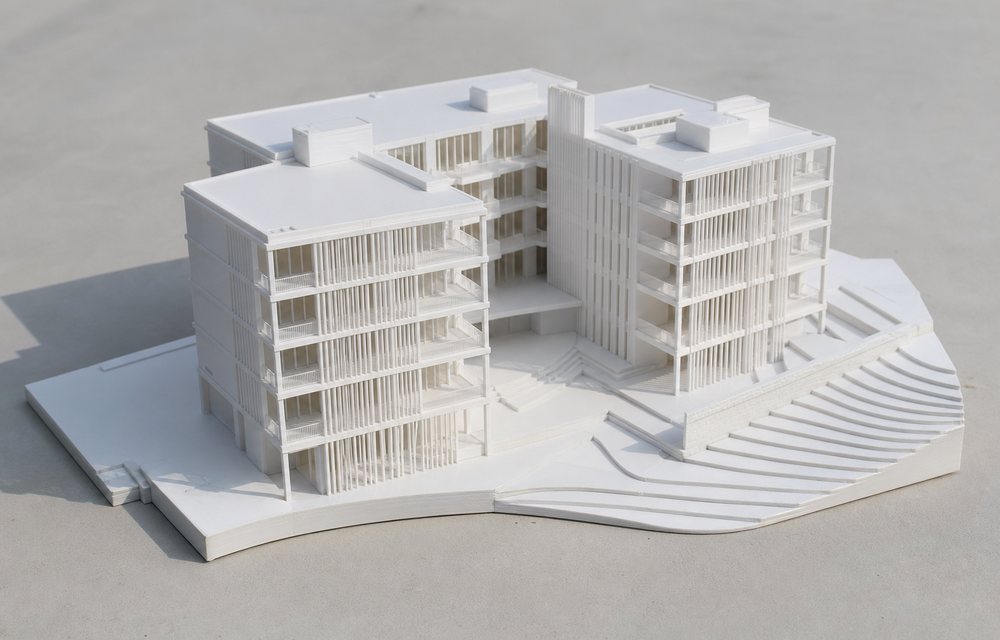


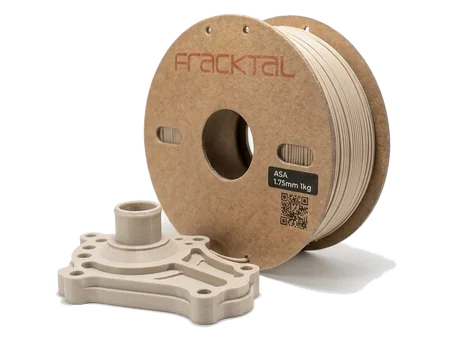



PLA vs ABS vs PETG
Three filaments that cover most of what an FDM printer is ever asked to do. They are not interchangeable, and the difference is not quality. It is what the part has to survive. Here are the measured numbers, the settings each one needs, and how to tell which one your part wants.
What Each One Is For
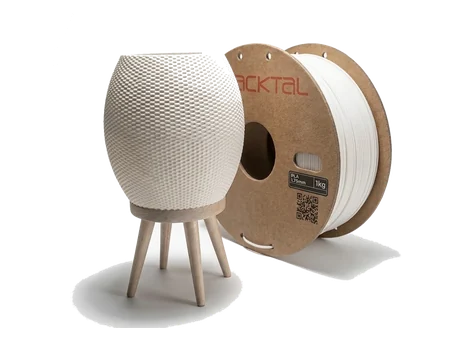
PLA — the easy one
Stiffest of the three on paper (56 MPa tensile) and by far the easiest to print: no enclosure, an unheated bed is acceptable. Heat is where it gives that up. It softens from about 53 °C, so a PLA part left in a parked car is a lesson, not a part.
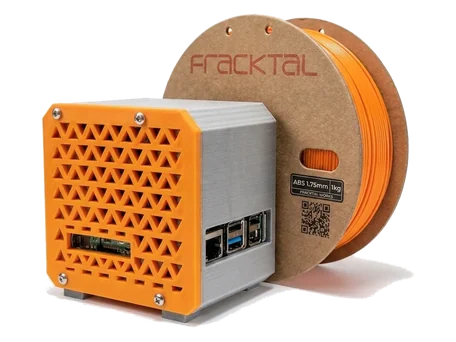
ABS, the tough and hot one
Holds its shape to 96 °C and takes a hit (20 kJ/m², the highest here). The price is process: it wants 95–110 °C of bed and an enclosure, because it warps and splits when it cools unevenly.
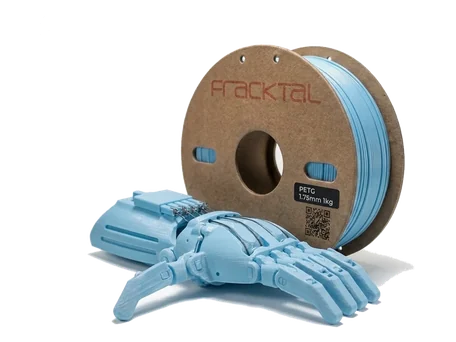
PETG, the middle that works
Most of ABS’s toughness (8.0 kJ/m²) and most of PLA’s manners, with no enclosure needed. It bends before it snaps (18 % elongation), which is usually what you want from a bracket that gets dropped.
The Comparison Table
| PLA | ABS | PETG | |
|---|---|---|---|
| Tensile strength | 56 MPa | 38 MPa | 48 MPa |
| Impact, Izod notched | 3.5 kJ/m² | 20 kJ/m² | 8.0 kJ/m² |
| Elongation at break | 4 % | 15 % | 18 % |
| Heat deflection (HDT) | 53 °C | 96 °C | 70 °C |
| Density | 1.24 g/cm³ | 1.05 g/cm³ | 1.27 g/cm³ |
| Nozzle temperature | 190–220 °C | 220–250 °C | 225–250 °C |
| Bed temperature | 0–60 °C | 95–110 °C | 60–85 °C |
| Enclosure | Not needed | Required | Not needed |
| Minimum wall | 0.8 mm | 1.0 mm | 0.8 mm |
| Overhang limit | 55° from vertical | 45° from vertical | 50° from vertical |
| Unsupported bridge | 30 mm | 15 mm | 20 mm |
How to Choose in One Question
Will it sit in heat or sun?
Then not PLA. ABS at 96 °C or PETG at 70 °C both survive a closed car or an enclosure; PLA at 53 °C does not.
Will it be dropped or flexed?
Then not PLA either. It is the stiffest and the most brittle, at 4 % elongation. ABS and PETG both bend first.
Is it a model, jig or fit check?
Then PLA, every time. Best dimensional behaviour, no enclosure, no warping, and the fastest route from file to part in your hand.
PLA, ABS and PETG: Common Questions
Which is the strongest of the three?
Can I print ABS without an enclosure?
Is PETG just better than PLA?
Do these need drying before printing?
Which do you print production parts in?
The Full Data on Each
- PLA in fullEvery measured property, with charts
- ABS in fullEvery measured property, with charts
- PETG in fullEvery measured property, with charts
- All 12 materials, one tableCompare every filament side by side
- FDM vs SLA vs SLSChoose the process before the material
- Design for 3D printingWall thickness, overhangs, tolerances
Not Sure Which One Your Part Wants?
Send us the file and what it has to survive. We print in all three every week and will tell you which we would run it in, including when the answer is none of them.