At Fracktal Works, we don’t just push boundaries , we shatter them with bold innovation
We’re thrilled to share an exciting milestone in our journey a groundbreaking partnership with the Department of Archaeology, Museums and Heritage (DAMH) in Karnataka, India. Together, we’re embarking on a mission to redefine heritage conservation through the transformative power of 3D technology.
Reimagining Monument Preservation: A New Dimension in Heritage Conservation
Our collaboration with DAMH marks a monumental leap forward in safeguarding Karnataka’s cultural treasures. Through cutting-edge AI-based 3D scanning and printing technology, we’re set to recreate 530 of Karnataka’s most esteemed monuments with unprecedented precision. But this isn’t just about restoring structures; it’s about breathing new life into cultural preservation, offering future generations an immersive experience of Karnataka’s rich history.
The impact of our project extends beyond iconic landmarks. We’re also recreating museum artifacts, paving the way for interactive and accessible museums. Imagine visitors, including those with visual impairments, being able to touch and feel recreated artifacts, fostering a deeper connection with history than ever before.
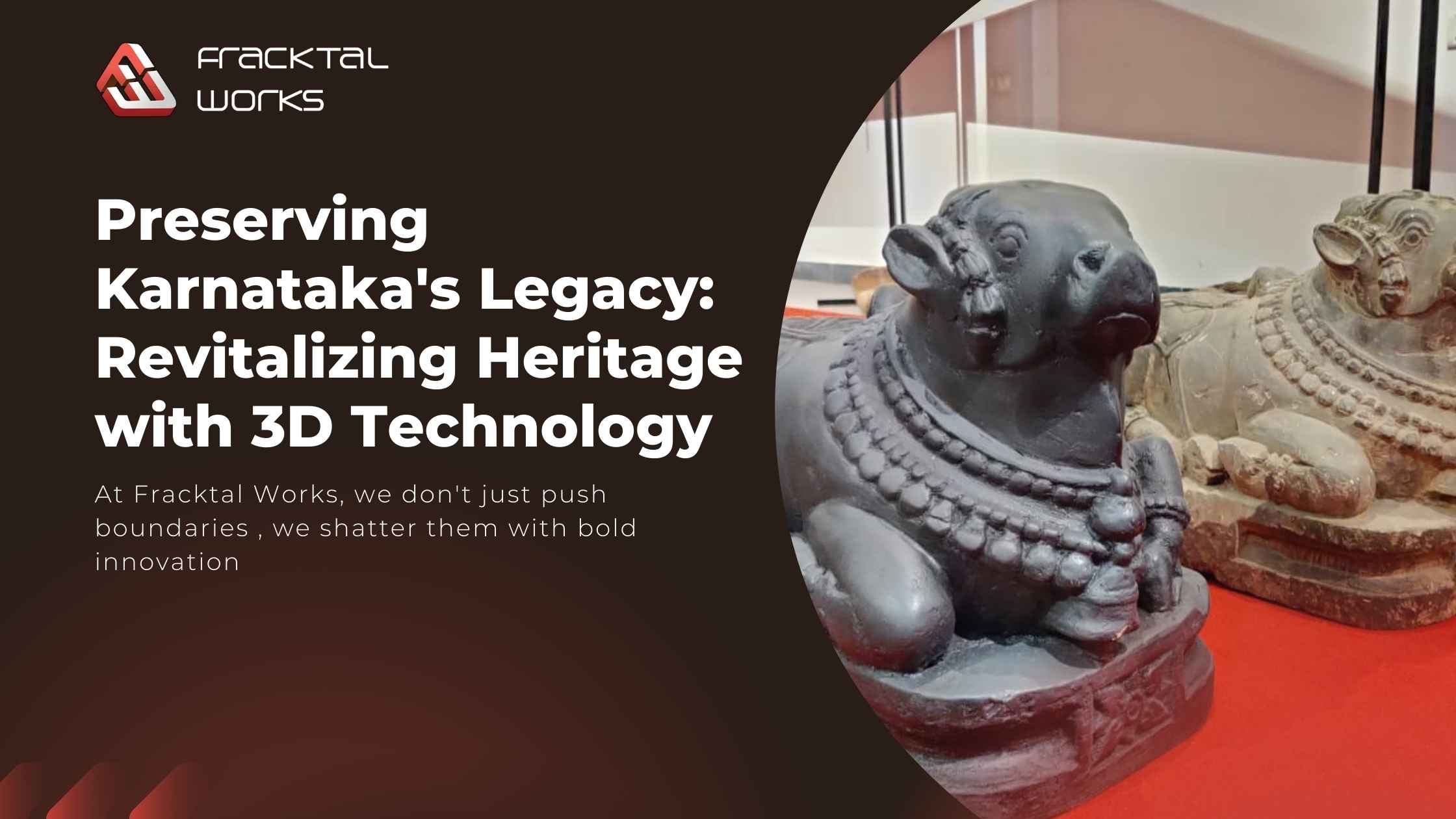
A recent presentation to the Karnataka Tourism Minister showcased the mesmerizing 3D replica of a 10th-century Hoysala Nandi sculpture. The intricate details captured with unparalleled precision offer a vivid glimpse into the past, highlighting the transformative power of our initiative.
A Beacon of Hope for Lost Monuments
Our project offers more than just preservation – it’s a beacon of hope for lost monuments. With the ability to recreate structures lost to natural disasters or destruction, we’re providing invaluable documentation for restoration efforts, ensuring the integrity of original structures while safeguarding our cultural heritage.
Sustainability is at the core of our project. Utilizing biodegradable thermoplastics derived from corn starch, we’re taking a responsible approach to preserving our cultural legacy for future generations.
A Pioneering Application: From Medical Marvels to Monumental Preservation
While we’ve made our mark in medical and general engineering applications, this project signifies a historic first – the large-scale application of our technology in monument conservation. We’re venturing into uncharted territory, forging a new path for responsible and innovative cultural preservation.
Our initiative forms a vital part of EVinyasa, a collaborative project dedicated to safeguarding India’s heritage treasures. Together with DAMH and the Indian Heritage Cities Network Foundation (IHCNF), we’re creating a future where Karnataka’s rich history remains accessible, inspiring, and a source of wonder for all.
This project is more than just technological innovation; it’s a testament to the power of collaboration. Join us on this extraordinary journey as we redefine cultural preservation for the ages.