










Functional Prototyping
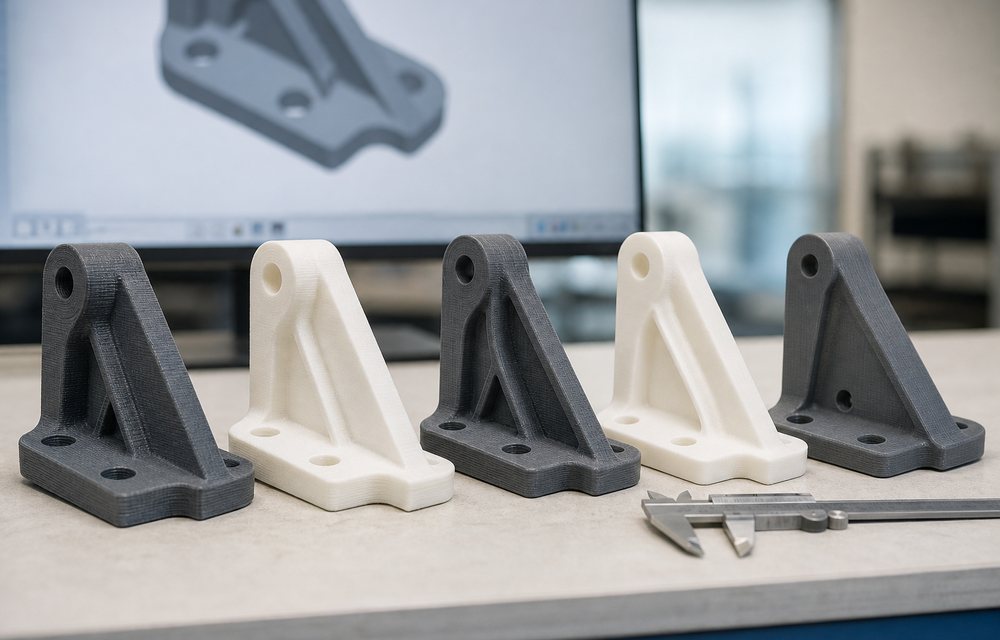
A prototype earns its cost by telling you that you were wrong, quickly. Printed in the polymer the production part will use, it tells you that under load rather than on a screen.

Trusted, recognised and featured











Prototype in the Material You Will Ship In
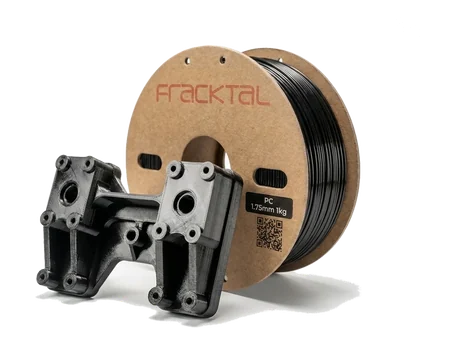
An appearance model can be printed in anything. A functional prototype cannot: if the production part will be polycarbonate, a PLA version tells you about the shape and nothing about whether it survives. The stiffness, the creep, the notch sensitivity and the temperature at which it goes soft are all properties of the polymer, not of the geometry.
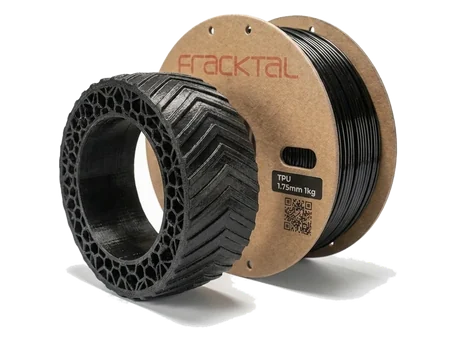
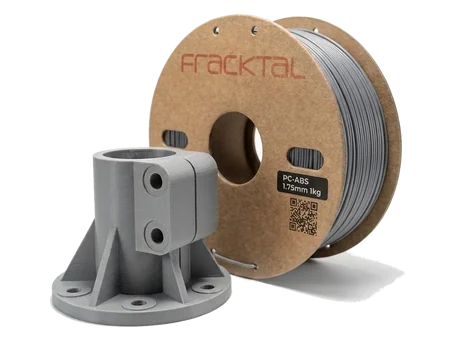
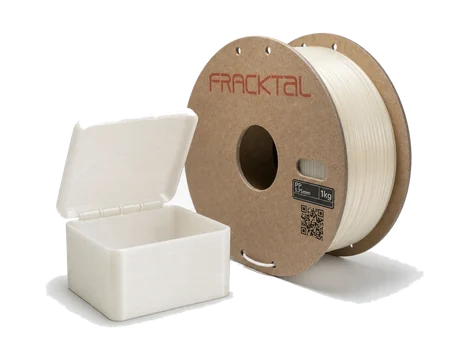
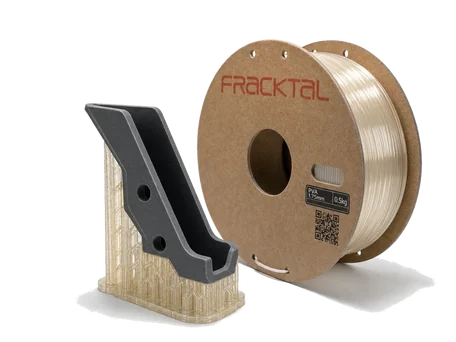
So we print functional prototypes in the same twelve materials we publish measured properties for. Polycarbonate behaves like polycarbonate. Carbon-fibre nylon is stiff for the same reason the production part will be. What you learn transfers.
Six Things That Decide Whether It Works
The mistakes that come back to us, and how to design them out before the file is sent.
Orient for the load, not for the build time
A printed part is weakest across its layers. Lay the part out so the load acts along the layers and not on the boundary between them — this single decision is usually worth more than a material change.
Derate the Z axis
Plan for roughly 60–80 % of the in-plane strength in Z. If the prototype has to prove a margin, prove it on the weak axis.
Match the failure mode, not the datasheet
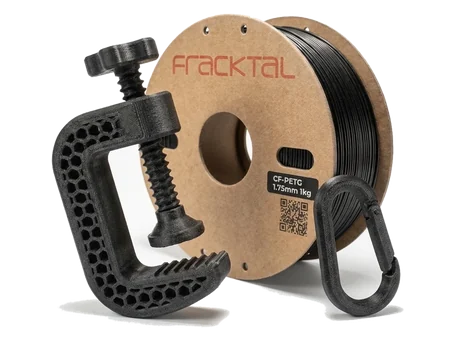
A part that must not crack wants PET-G or PP; a part that must not bend wants CF-Nylon. Peak tensile strength is rarely the number that decides it.
Check the service temperature
Heat deflection is where prototypes quietly lie. PLA softens at 53 °C — a car cabin in an Indian summer beats that.
Dry the filament first
A wet nylon prototype can lose a third of its strength and all of its surface. Every hygroscopic material we run is dried before it goes on a machine.
Send a drawing with critical dimensions
If a dimension decides the test, call it out and we will inspect against it rather than against the model.
Which Material for Which Part
| The part | Process & material | Why |
|---|---|---|
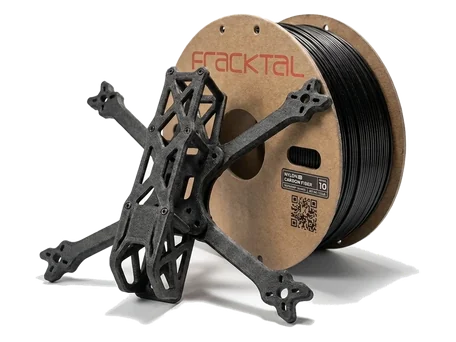
| Stiff and light | FDM · CF-Nylon | 82 MPa at 1.10 g/cm³ — the highest specific stiffness we publish |
| Tough, must not crack | FDM · PET-G or PP | Ductile: dents and deforms rather than fracturing |
| Hot environment | FDM · Polycarbonate or PC-ABS | 134 °C and 108 °C heat deflection |
| Complex geometry | SLS · Nylon 12 | No supports, near-isotropic, real nylon behaviour |
| Appearance plus function | SLA · tough resin | Best finish, but derate for long-term load |
| Outdoors | FDM · ASA | UV-stable — holds colour and surface in direct sun |
How We Would Make It


SLS 3D Printing
Nylon powder bed. No supports, so geometry stops being the constraint.


Vacuum Casting
Moulded-looking parts in colour, without a steel tool.

Finishing & Assembly
Sanded, painted, inserted and assembled before it ships.
People Who Print This Also Print

End-Use Parts
Somewhere between ten parts and ten thousand, tooling stops making sense. Additive fills that gap with parts that go into the product, not into a review.

Jigs & Fixtures
The single highest-return thing anyone prints. A fixture is needed in ones, changes constantly and is used hard — every property that makes machining it expensive makes printing it obvious.

Robotics Parts
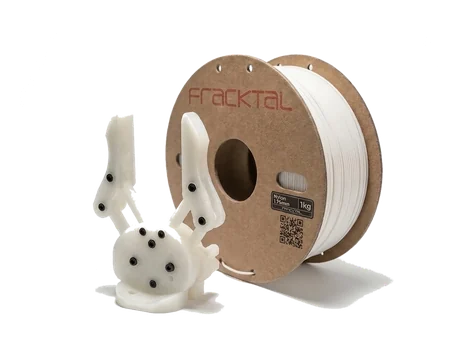
A gripper is only as good as its fit to the thing it grips. Printing it means the jaw is the shape of the part, not the nearest shape a catalogue had.
Send us the part
Upload the file, tell us the quantity and say what the part has to survive. What comes back is a price and a design-for-manufacturability review.