












Bed Temperature, Material by Material
The bed has one job: keep the base of the part near its softening point so it stays compliant instead of setting hard and pulling. Too cold and the first layer never bonds; too hot and the base bulges outward or fuses to the plate. Below are Fracktal’s published figures for twelve materials — the same numbers the material pages and the slicer profiles read.

Bed and Nozzle Temperature, Twelve Materials
| Material | Bed | Nozzle | Enclosure | Recommended plate | Adhesive |
|---|---|---|---|---|---|
| PLA | 0–60 °C | 190–220 °C | Not needed | PEI, or glass | Rarely needed |
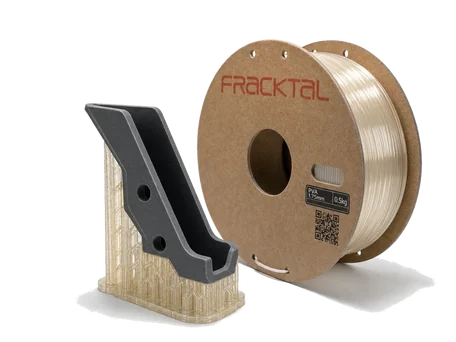
| PVA | 45–60 °C | 190–215 °C | Not needed | PEI, or glass | Standard |
| TPU 95A | 0–60 °C | 215–240 °C | Not needed | PEI, or glass | Standard |
| PET-G | 60–85 °C | 225–250 °C | Not needed | PEI | As a release layer |
| CF-PET-G | 70–85 °C | 240–265 °C | Optional | PEI | Standard |
| Nylon PA12 | 60–100 °C | 240–270 °C | Helps on large parts | Garolite G10 | Plus |
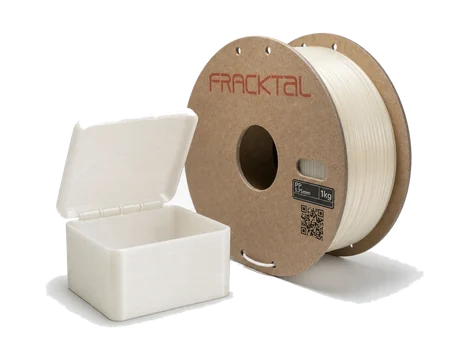
| PP | 80–100 °C | 220–245 °C | Required | PP sheet or PP tape | Neither — PP tape |
| CF-PA | 80–110 °C | 260–285 °C | Required | Garolite G10 | Plus |
| ABS | 95–110 °C | 220–250 °C | Required | PEI, or Kapton | Plus |
| ASA | 95–110 °C | 240–260 °C | Required | PEI, or Kapton | Plus |
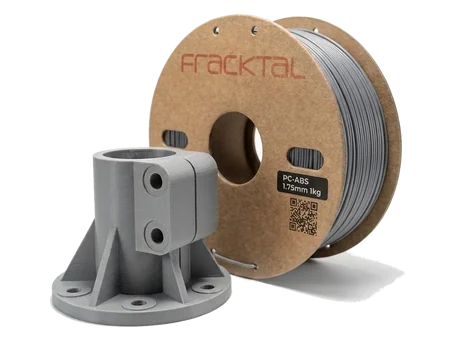
| PC-ABS | 100–115 °C | 250–275 °C | Required | PEI | Plus |
| Polycarbonate | 80–120 °C | 265–310 °C | Required, heated | PEI | Plus |
The Bed Is a Temperature Control, Not a Sticky Surface
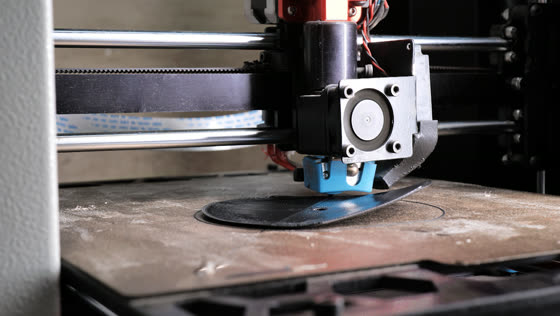
Each polymer has a glass transition — the temperature at which it stops behaving like a solid and starts to soften. PLA’s is around 60 °C, ABS’s around 105 °C. A bed set near that point keeps the first few millimetres of the part soft enough to relieve the stress of cooling rather than store it, which is why the recommended bed range tracks the glass transition rather than the nozzle temperature.
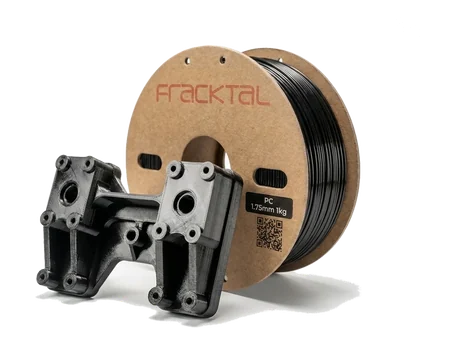
It also explains the most common profile mistake in the whole of FDM: dropping the bed temperature after the first layer. That is a habit carried over from PLA, where it is harmless. On ABS, ASA, PC-ABS or PC it removes the one thing keeping the base compliant, and the corners lift some hours later.
Too Cold, and Too Hot, Look Different
Both fail, and they fail in ways you can tell apart by looking at the base of the part.
Bed too cold
The first layer will not wet the plate. Strands stay round and separate instead of merging into a sheet, corners curl within the first few millimetres, and the part often comes away on its own before the print is a quarter done. On a shrinking material the whole base may detach cleanly with the plate texture barely imprinted on it. Raise the bed toward the top of the material’s range and give it five minutes to stabilise before starting.
Bed too hot
The opposite problem: the base stays molten too long and spreads under the weight of the layers above, so the first few millimetres bulge outward — elephant’s foot. On PET-G and PLA a too-hot bed also fuses the part to bare PEI or glass hard enough to pull chips out of the sheet when you remove it. Come down in 5 °C steps, and use a release layer rather than more heat.
Nylon, CF-PA, PC, PC-ABS, CF-PET-G, TPU and PVA are all hygroscopic, and several are mandatory-dry. A wet spool prints a crackling, foamed first layer that cannot bond at any bed temperature. If the nozzle is popping or the extrusion looks underfed, dry the spool first: 45 °C for PLA and PVA, 65 °C for TPU and CF-PET-G, 70 °C for ABS and ASA, 80 °C for Nylon and CF-PA, 90 °C for PC-ABS, 120 °C for PC.
80 °C Is the Line Between the Two Adhesives
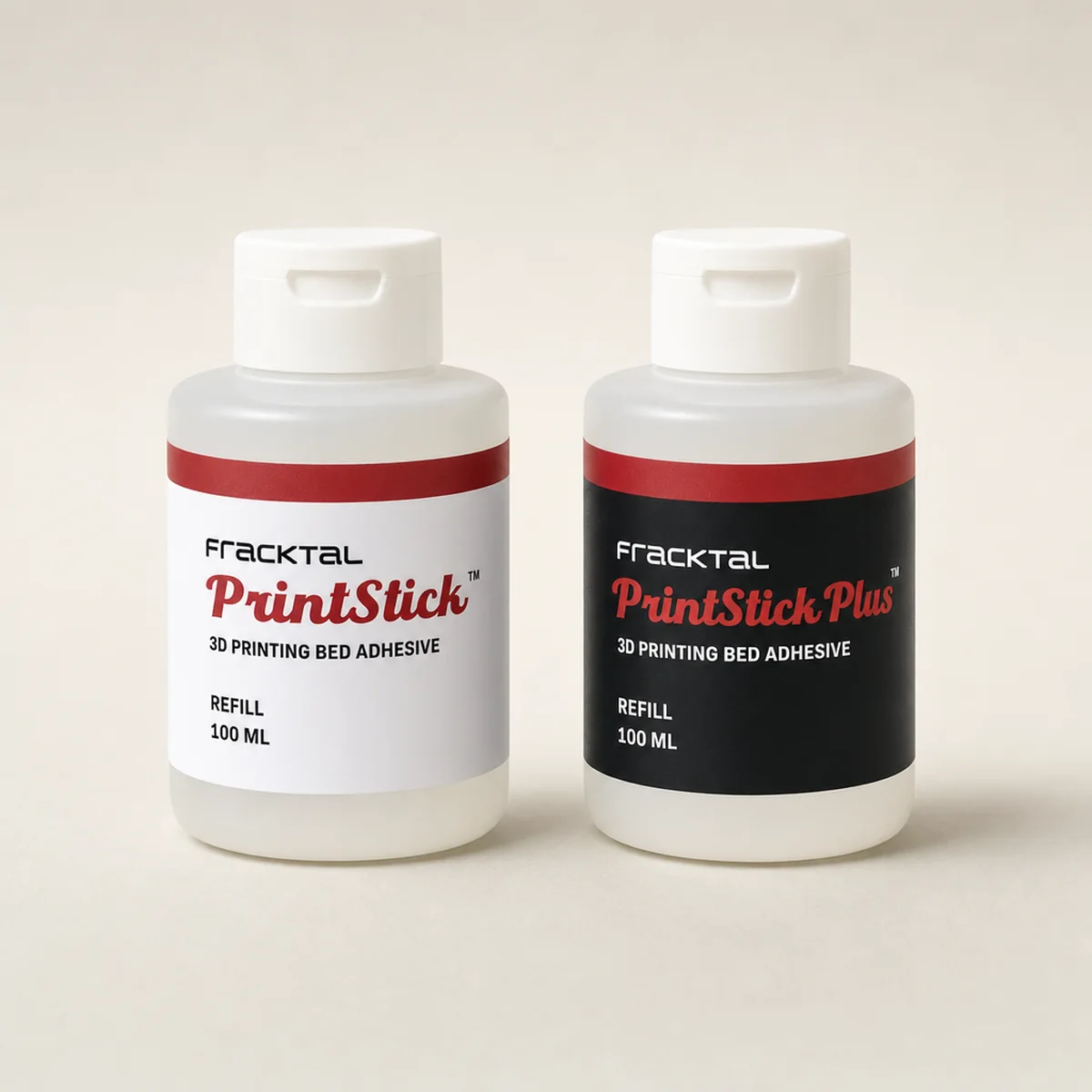
Read the chart as two halves. PLA, PVA, TPU, PET-G and CF-PET-G all sit at or below 85 °C, where a room-temperature adhesive chemistry works. That is PrintStick Standard. Nylon, PP, CF-PA, ABS, ASA, PC-ABS and Polycarbonate run from 80 °C to 120 °C, where a paper glue stick softens and bakes rather than holding.
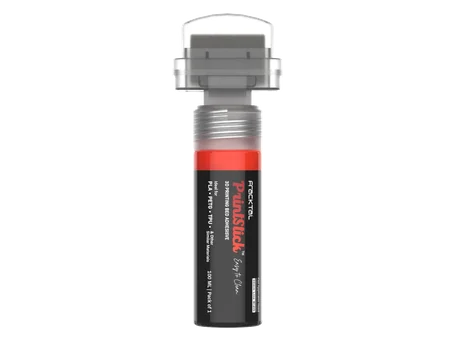
PrintStick Plus is formulated for the upper half, holding from 80 up to 115 °C and releasing as the plate cools. The applicator, the 30 mm felt head and the 50 ml volume are identical; only the chemistry differs. Polypropylene is the one material neither formula helps — it bonds to almost nothing but itself.
Questions About Bed Temperature
What bed temperature should I use for PLA?
What bed temperature does ABS need?
What bed temperature is right for PET-G?
Should I lower the bed temperature after the first layer?
Can the bed be too hot?
Does a heated bed remove the need for an adhesive?
Twelve Materials, Measured
Every figure on this page comes from Fracktal’s materials database — tensile, flexural and impact to ASTM methods, with the print parameters that produced them. Each material has its own page.