











Why 3D Prints Warp, and How to Stop It
Every thermoplastic shrinks as it cools. If the base of a part is stuck to the plate and the top is cooler, the part has to bend to absorb that contraction, and the bend appears as corners lifting off the bed. So warping is a temperature problem wearing an adhesion problem’s clothes: a stronger bond decides whether the corner peels or the part cracks internally, but it never removes the force. The five levers below reduce the force itself.

Shrinkage and Arm Length, Not Glue
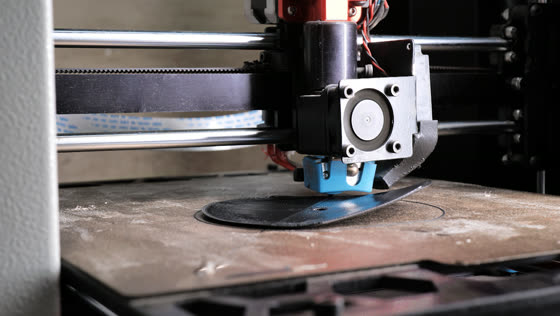
A polymer leaves the nozzle between 190 and 310 °C depending on what it is, and ends at room temperature. It contracts the whole way. On a 200 mm part, ABS’s roughly 0.8 % linear shrinkage is 1.6 mm of length the part no longer has, and it has to come from somewhere. Held flat at the base, the part curls instead.
Two things decide whether you see it. The first is how much the material shrinks — PLA at around 0.3 % rarely warps, ABS and PP at the other end warp on almost any open machine. The second is the shape: a long flat footprint with sharp corners concentrates all of that contraction where there is least material to resist it, which is why the corners always go first and why a tall narrow part rarely warps at all.
Everything that works reduces one of those two. Nothing that works is an adhesive alone.
Five Levers, Biggest First
On a material that genuinely warps, the first lever is worth more than the other four together.
01 · Enclose the machine
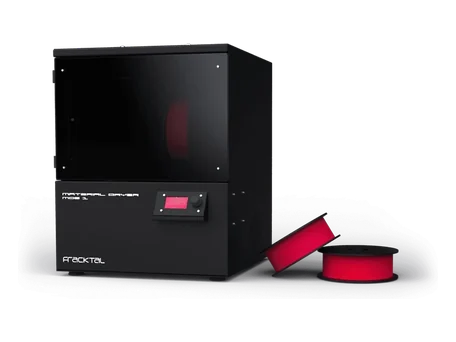
A chamber at 45–60 °C keeps the whole part near its softening point while it is being built, so there is no cold top fighting a hot base. It is the single biggest lever on ABS, ASA, PC, PC-ABS and PP. It does not have to be engineered — a box over the printer works, as long as the electronics and power supply stay outside it.
02 · Run the bed hot, for the whole print
Hold the base above or near the material’s glass transition and it relieves stress instead of storing it. ABS and ASA want 95–110 °C, PC-ABS 100–115 °C, Polycarbonate up to 120 °C. Do not drop the bed after layer one — a habit carried over from PLA profiles that reliably produces corner lift on anything that shrinks.
03 · Turn the part cooling fan off
Zero per cent on ABS, ASA, PC, PC-ABS and PP. Cooling exists to sharpen overhangs on PLA and PET-G; on a shrinking polymer it freezes each layer at a different temperature from the one below it and builds exactly the stress you are fighting. Slow the overhangs down instead.
04 · Take the corner away
Round or chamfer the base corners. A 3 mm fillet removes the stress concentration that makes a sharp corner peel first. Add a brim of 5 to 8 mm to borrow surface area from outside the part. Where the design allows, split a long flat plate into two shorter ones and join them afterwards.
05 · Kill the draught
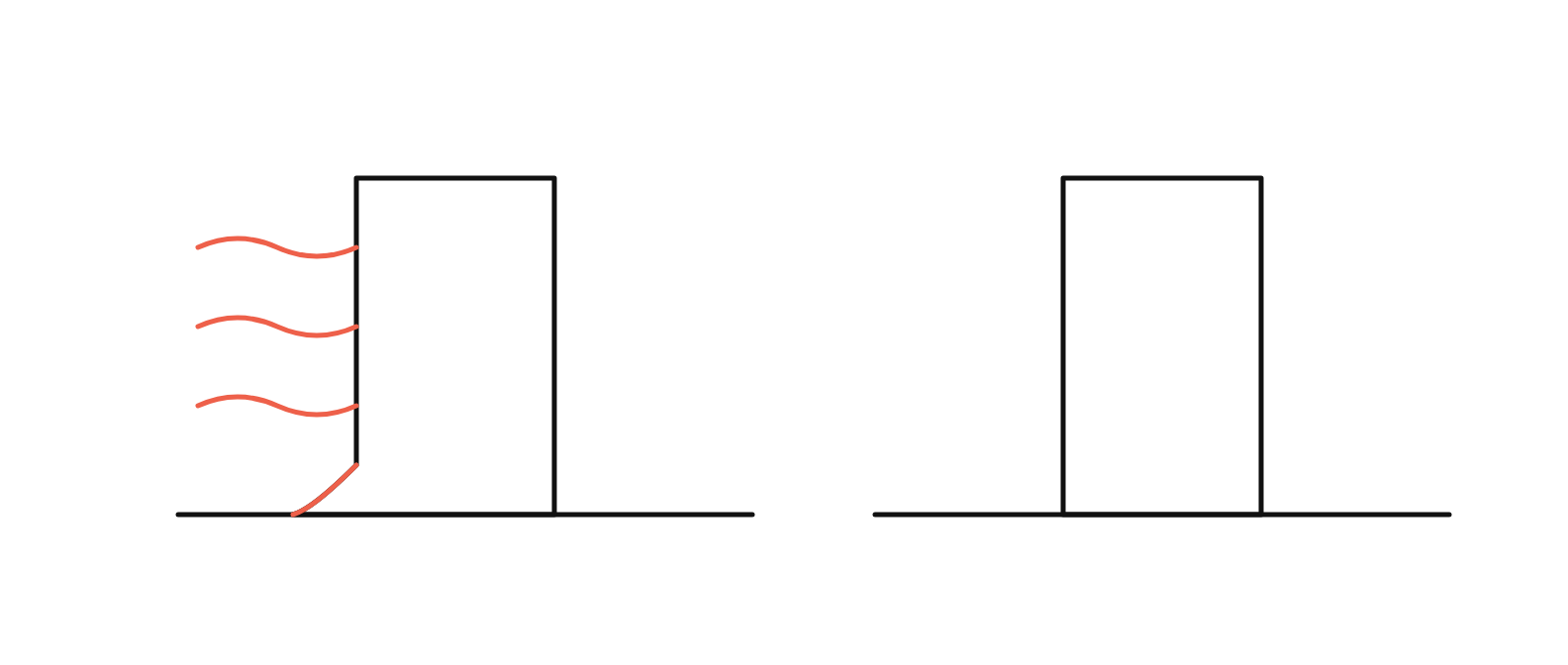
An air conditioner, an open window or a fan across the room will warp a large part on an open machine even in a warm room, because it cools one side faster than the other. This is the cause people find last, and it costs nothing to rule out.
Last · Then hold the base down
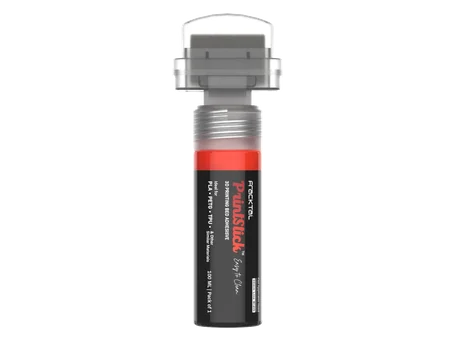
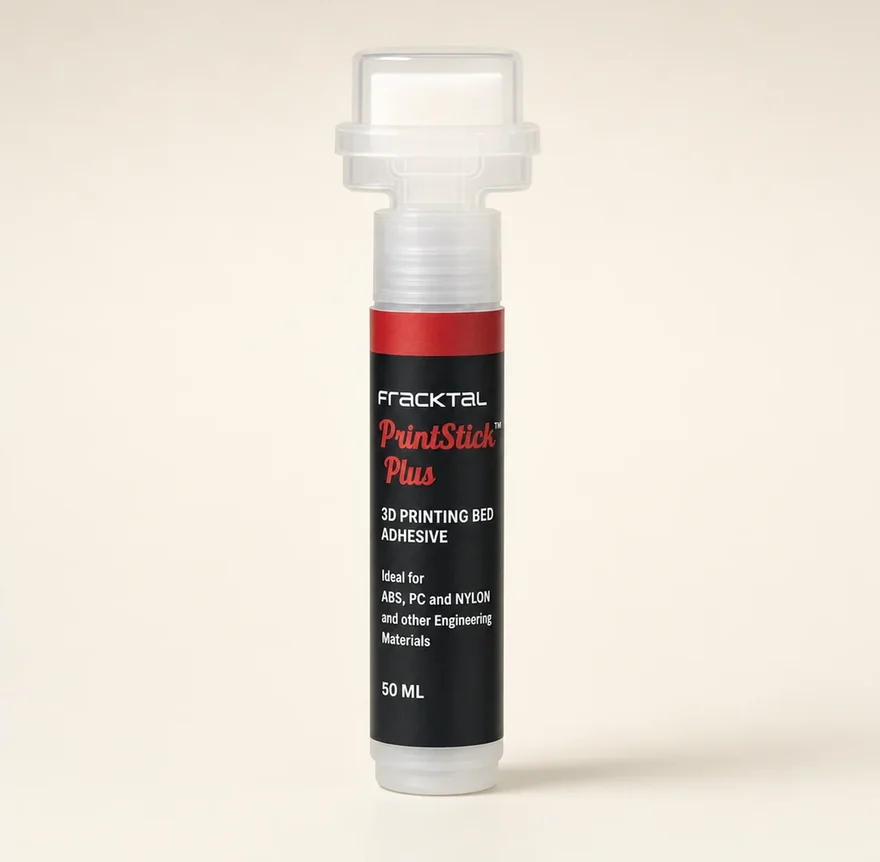
With the force reduced, the adhesive’s job is to keep the base still while the rest does the work. On a plate at 80 °C and above, a paper glue stick softens and lets go at the worst moment; PrintStick Plus is formulated for that range and releases on its own as the plate cools.
A Draught Warps One Side and Not the Other
Warping Risk by Material
| Material | Warp risk | Bed | Enclosure | Part cooling | Adhesive |
|---|---|---|---|---|---|
| PLA | Very low | 0–60 °C | Not needed | 100 % | Rarely needed |
| TPU 95A | Very low | 0–60 °C | Not needed | Low | Standard |
| PET-G | Low | 60–85 °C | Not needed | 30–60 % | Release layer |
| CF-PET-G | Low | 70–85 °C | Optional | 30–60 % | Standard |
| Nylon PA12 | Medium | 60–100 °C | Helps on large parts | 0–20 % | Plus |
| CF-PA | Medium | 80–110 °C | Required | 0 % | Plus |
| ABS | High | 95–110 °C | Required | 0 % | Plus |
| ASA | High | 95–110 °C | Required | 0 % | Plus |
| PC-ABS | High | 100–115 °C | Required | 0 % | Plus |
| Polycarbonate | High | 80–120 °C | Required, heated | 0 % | Plus |
| PP | Very high | 80–100 °C | Required | 0 % | PP tape only |
Polypropylene warps more than anything else on this list and does not respond to adhesives at all, because almost nothing bonds to it. PP sticks to PP: use a dedicated PP build sheet or packing tape made of the same polymer. No bed adhesive, ours included, will hold it.
Why a Paper Glue Stick Gives Up at 100 °C
PVA glue sticks are made for paper at room temperature. On a plate at 95–110 °C the binder softens, the film goes tacky and then bakes hard, and it tends to release at precisely the moment a shrinking part pulls hardest. It also has to be scraped off, which is how PEI sheets acquire scratches.
PrintStick Plus is a different chemistry for that range. It holds while the plate is hot, lets go as the plate cools so the part lifts by hand, and washes off with plain water. For the low-temperature materials — PLA, PET-G, CF-PET-G and TPU, all below 80 °C — Standard is the cheaper and equally capable formula.
Questions About Warping
What causes 3D prints to warp?
How do I prevent warping?
Which filaments warp the most?
Does a brim stop warping?
Will a bed adhesive stop my prints warping?
Why does only one corner lift?
The Rest of the Guide
Enclosed Machines, Built in Bengaluru
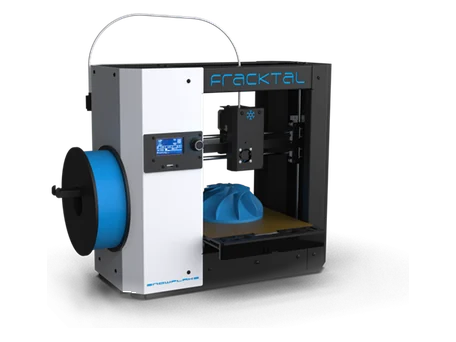
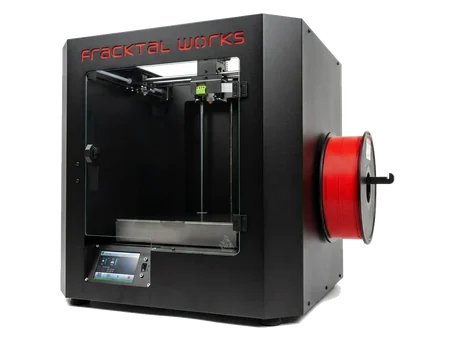
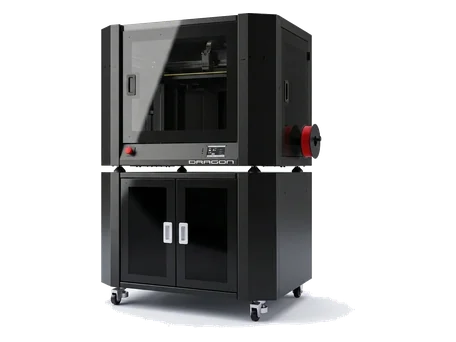
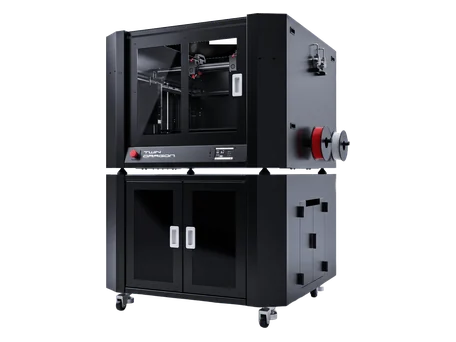
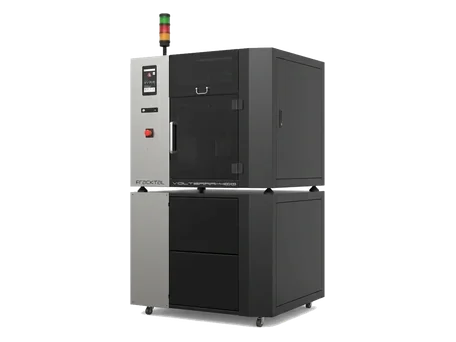
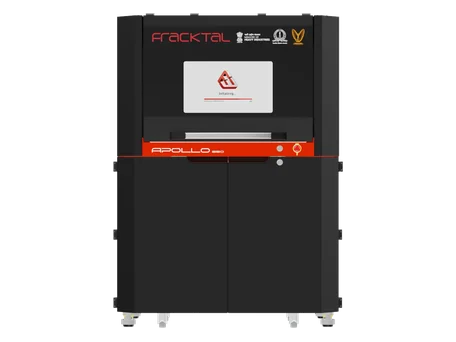
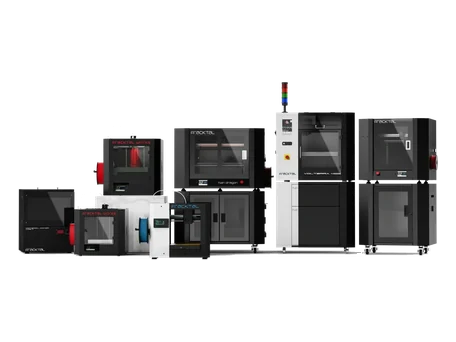
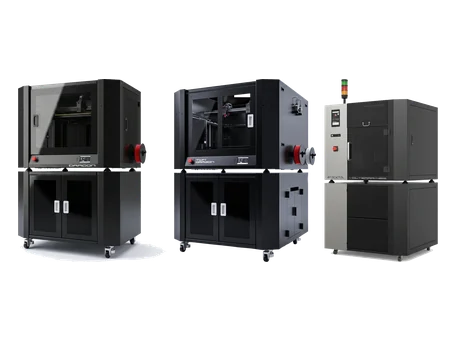
The first lever on this page is a chamber. Fracktal builds enclosed printers for exactly the materials that need one — ABS, ASA, PC and Nylon — and supports them here rather than through a distributor.