











Why ABS Warps and Lifts at the Corners
ABS shrinks roughly 0.8 % as it cools from 100 °C to room temperature, and that contraction has to go somewhere. In a flat part it concentrates at the corners, where there is least material to resist it, so the corners peel first. The fix is a chain, not a setting: keep the whole part hot (enclosure), keep the base hotter (bed at 100–110 °C), stop cooling it (fan off), give the force less to grip (round the corners, add a brim), and then hold the base down chemically.

It Is Shrinkage, Not Adhesion
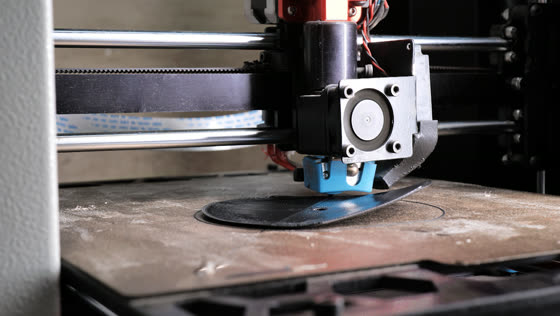
ABS leaves the nozzle at about 240 °C and ends up at room temperature. Amorphous polymers contract as they cool, and ABS contracts about 0.8 % along each axis — on a 200 mm part that is 1.6 mm of length the part no longer has. If the base is stuck fast and the top is free, the part has to bend to absorb it, and the bend shows up as corners lifting off the plate.
That is why this is not really a bed-adhesion problem, even though it presents as one. A stronger bond does not remove the force; it just decides whether the corner peels off the plate or the part cracks internally instead. Everything below works by reducing the temperature difference across the part, which is what generates the force in the first place. The adhesive is the last line, holding the base still while the rest of the chain does the real work.
Five Things That Actually Stop ABS Warping
The first one is worth more than the other four together. If you print ABS regularly and have no enclosure, that is the project.
01 · Enclose the printer
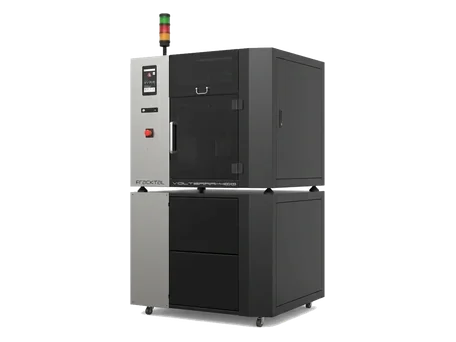
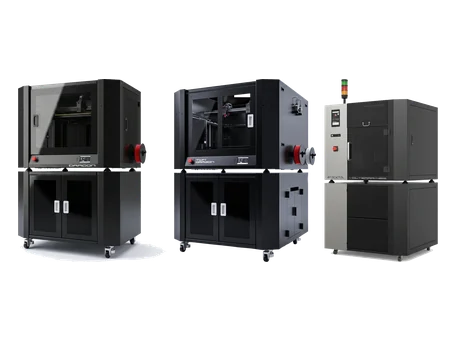
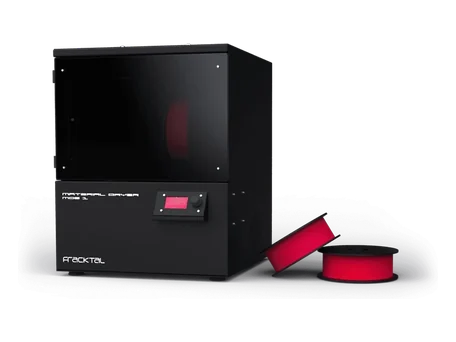
A chamber at 45–60 °C keeps the whole part near its softening point while it grows, so there is no cold top fighting a hot base. This is the single biggest lever on ABS, ASA, PC and PC-ABS, and a cardboard box over the machine demonstrably works — it is the still, warm air that matters, not the material it is made of. Leave the electronics and the PSU outside it.
02 · Bed at 100–110 °C, all the way through
ABS has a glass transition around 105 °C. A bed at 100–110 °C holds the first few millimetres of the part soft enough that it relieves stress instead of storing it. Do not drop the bed after layer one — a common profile habit from PLA that guarantees corner lift on ABS.
03 · Part cooling off
Zero per cent, for the whole print, on ABS and ASA. Cooling is for overhang quality on PLA and PET-G; on a shrinking polymer it freezes each layer at a different temperature from the one below and builds the stress you are trying to avoid. Accept slightly softer overhangs and print them a little slower instead.
04 · Change the geometry at the corners
Warping force concentrates where the base corner is sharpest. A 3 mm fillet on each base corner spreads it. A 5–8 mm brim multiplies the bond area exactly where it is needed and peels off afterwards. Mouse ears — small thin discs at each corner — do the same job on a part whose shape you cannot change.
05 · Hold the base with a hot-plate adhesive
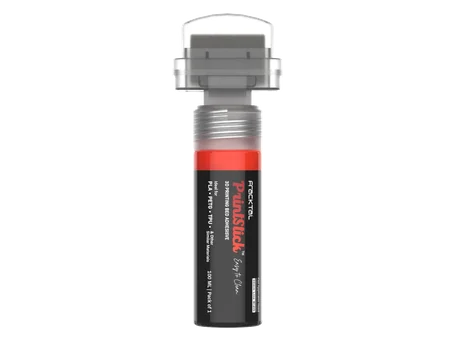
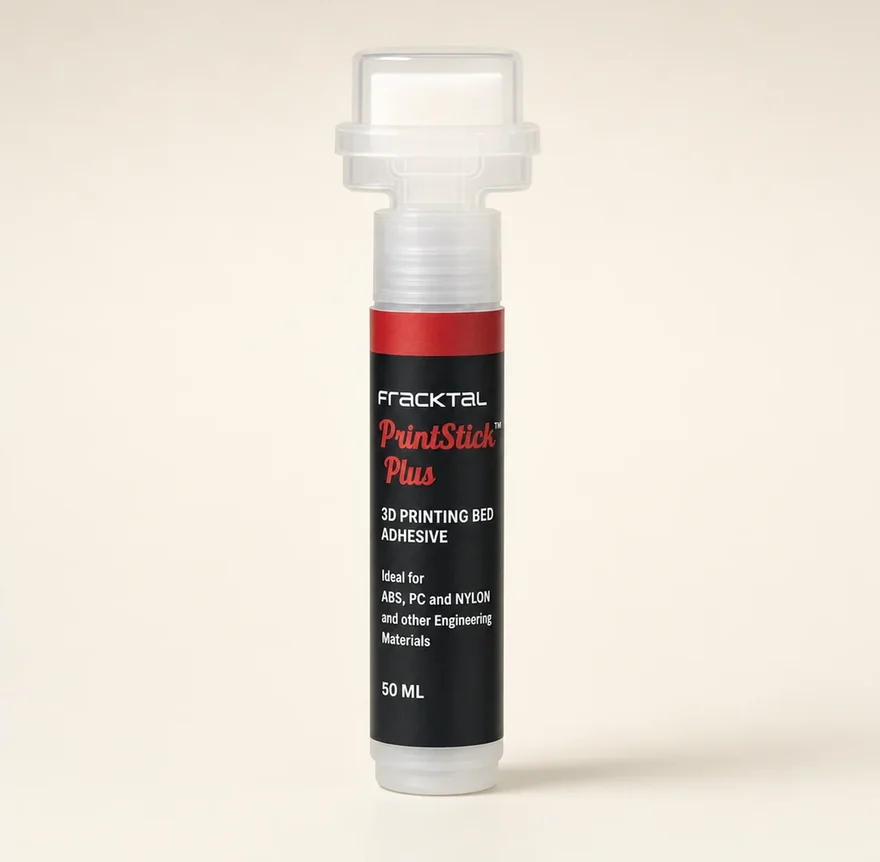
With the chain above in place, the remaining force is small enough for chemistry to hold. PrintStick Plus is formulated for beds at 80 °C and above, which is where a general-purpose glue stick softens and lets go. One pass of the felt head across the footprint before the print starts.
Not: a bigger brim on its own
A 20 mm brim on an unenclosed ABS print does not stop warping; it gives the warp something bigger to peel. If the brim itself is lifting at the edges, the problem is upstream of adhesion and more brim will not reach it. Fix the thermal chain first.
ABS, ASA, PC and PC-ABS — Bed and Chamber
| Material | Bed | Nozzle | Enclosure | Part cooling | Adhesive |
|---|---|---|---|---|---|
| ABS | 95–110 °C | 220–250 °C | Required | 0 % | Plus |
| ASA | 95–110 °C | 240–260 °C | Required | 0 % | Plus |
| PC-ABS | 100–115 °C | 250–275 °C | Required | 0 % | Plus |
| Polycarbonate | 80–120 °C | 265–310 °C | Required | 0 % | Plus |
| PET-G, for comparison | 60–85 °C | 225–250 °C | Not needed | 30–60 % | Release layer |
| PLA, for comparison | 0–60 °C | 190–220 °C | Not needed | 100 % | Rarely needed |
ABS is only mildly hygroscopic, but PC, PC-ABS and Nylon are not — and wet filament prints a broken, popping first layer that cannot bond whatever you do to the plate. If the nozzle is crackling or the extrusion looks foamed, dry the spool before you change any other setting: 70 °C for four hours for ABS and ASA, 90 °C for PC-ABS, 120 °C for PC.
Why a Normal Glue Stick Fails on a 110 °C Plate
PVA glue sticks are made for paper at room temperature. On a plate at 100–110 °C the binder softens, the film goes tacky and then bakes, and it releases at exactly the moment the shrinking part pulls hardest. It also has to be scraped off afterwards, which is how PEI sheets get scratched.
PrintStick Plus is a different formula for exactly this range. It stays firm while the plate is hot, releases as the plate cools so the part comes off without a scraper, and washes away with plain water. One 50 ml bottle is over fifty applications, and a pass lasts five to ten prints — a few rupees a print on a machine that costs far more than that per hour to run.
Questions About ABS Warping
Why does ABS warp and lift at the corners?
Do I really need an enclosure to print ABS?
What bed temperature should I use for ABS?
Should the part cooling fan be on for ABS?
Will a glue stick hold ABS on a 110 °C bed?
Does ABS slurry work better than an adhesive?
Why is my ABS part cracking between layers instead of lifting?
The Rest of the Guide
- ABS, the full material pageMeasured properties and settings
- ASAABS that survives sunlight
- Nylon will not stay downMoisture, Garolite, hot plate
- Print not sticking to the bedThe eight causes, in order
- Print came loose mid-jobWhen a warp finally wins
- Why 3D prints warpShrinkage by material, five levers
- Brim, raft or skirtWhich one actually helps
- PrintStick PlusThe hot-plate formula
Engineering Parts, Printed Properly
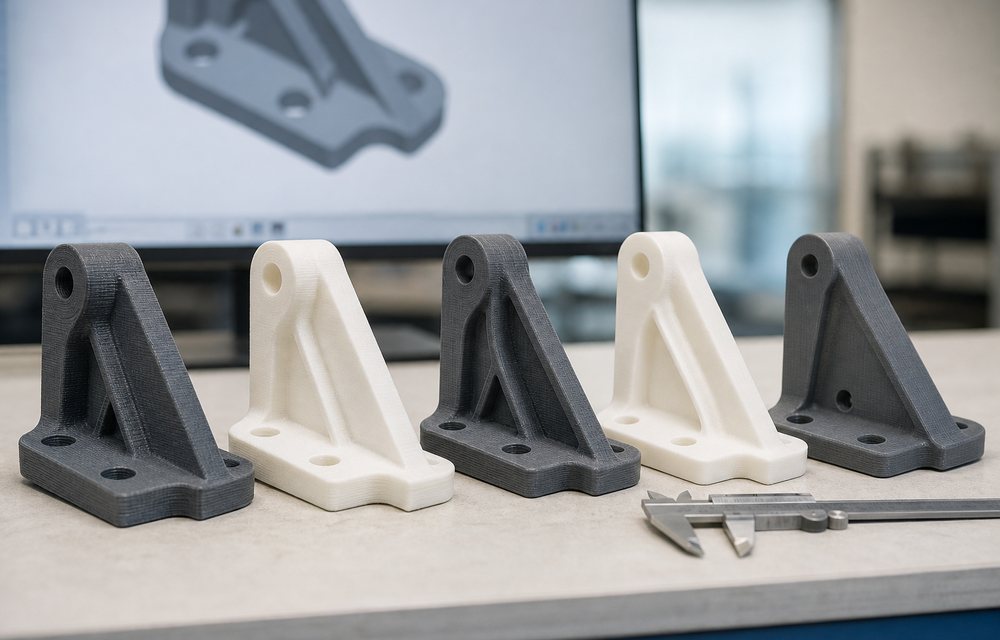
ABS, ASA, PC and Nylon in an enclosed machine, on Fracktal’s own floor in Bengaluru. If the part has to work rather than look right, send us the file.