










3D Printing in Healthcare: Models, Guides, Devices, Implants

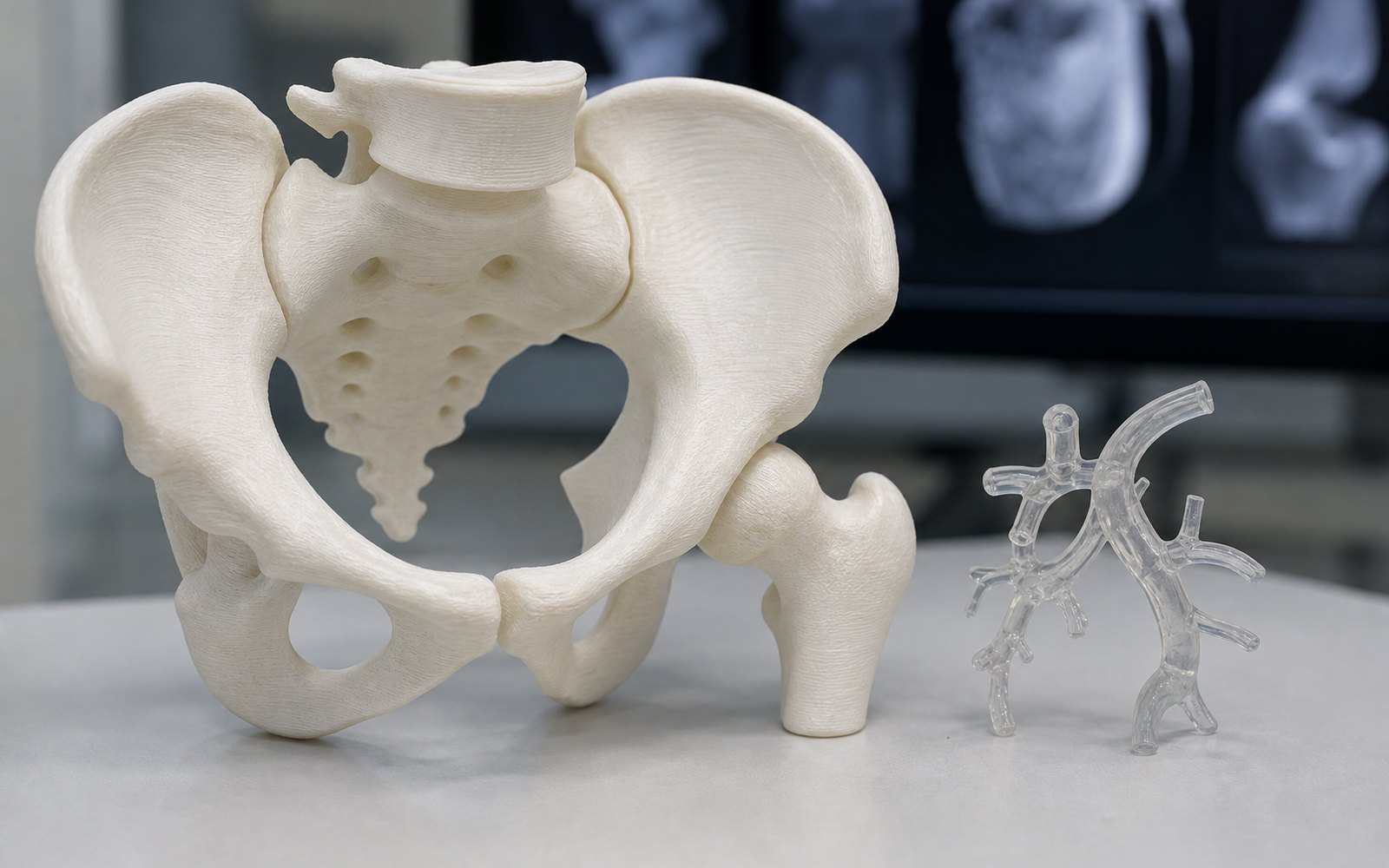
3D printing in healthcare divides into four things, and it helps to keep them apart: anatomical models that surgeons plan on, guides and instruments used in a procedure, devices and their housings, and implants that stay in the body. The first two are routine in Indian hospitals today and are polymer parts we print every week. The last two are regulated products with a longer road. This article covers all four, with the regulatory position stated plainly.
Anatomical models for planning and consent
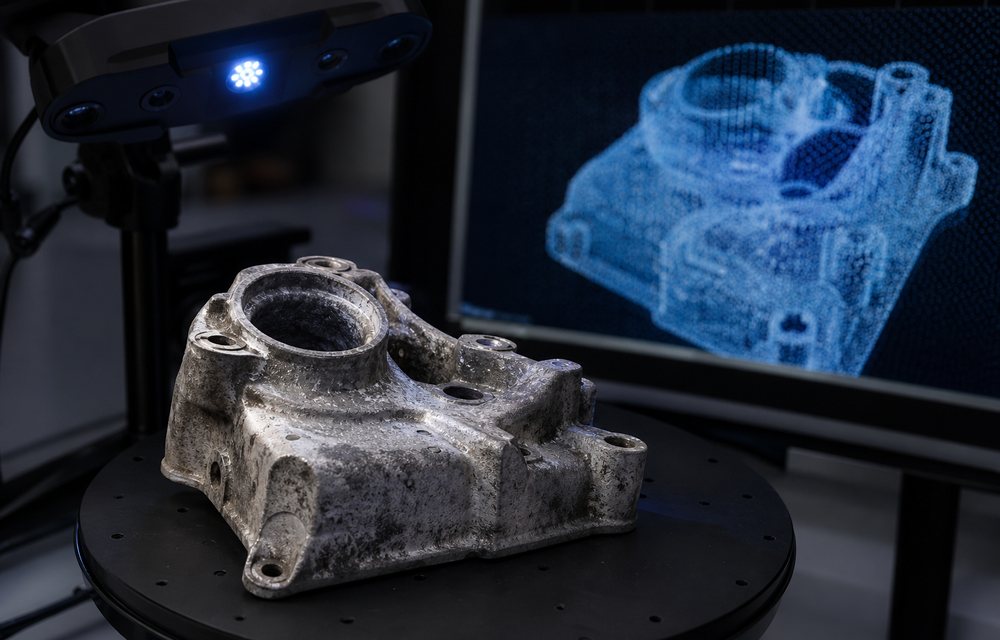
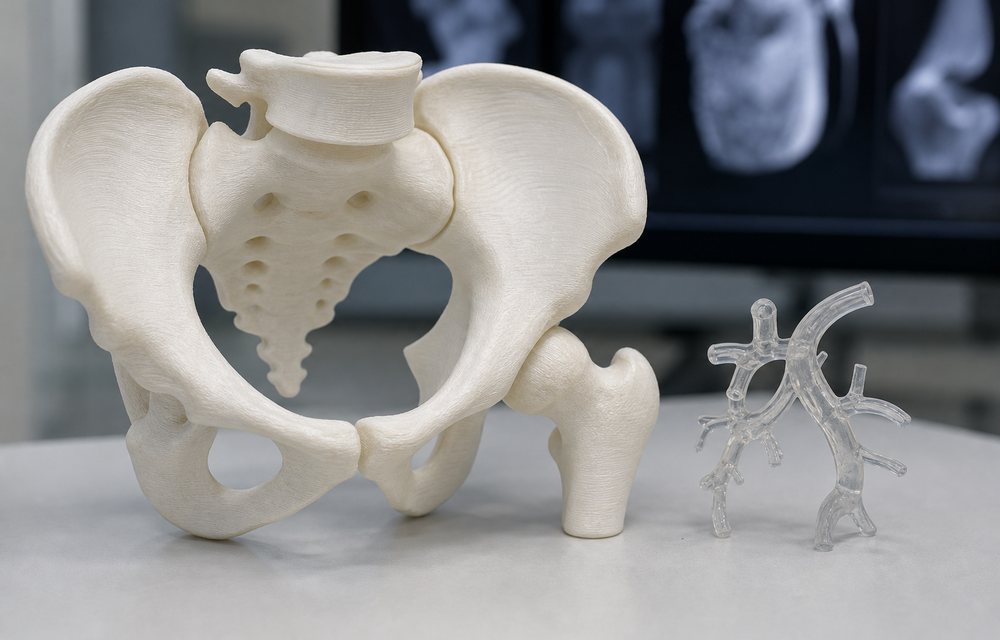
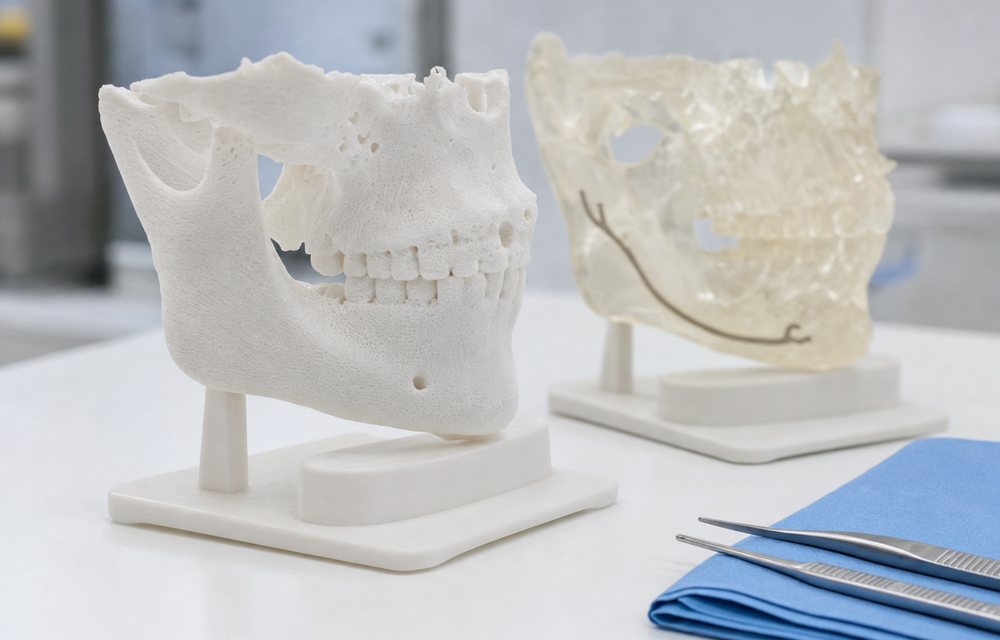
A patient’s CT or MRI scan becomes a 3D model, and the model becomes a printed replica of the pelvis, skull, heart, kidney or spine that the surgeon can hold. Surgeons use them to plan an approach, rehearse an osteotomy, choose and pre-bend a plate, and explain the procedure to the patient. The literature consistently reports shorter operations and fewer surprises when a complex case has been planned on a model; our preoperative planning article goes into the workflow, the cost and the evidence.
The models are printed in FDM when the question is shape and size, and in SLA resin when fine detail or translucency matters, for example a vascular tree inside a translucent organ. Our medical models page shows examples and turnaround.
Surgical guides and patient-specific instruments
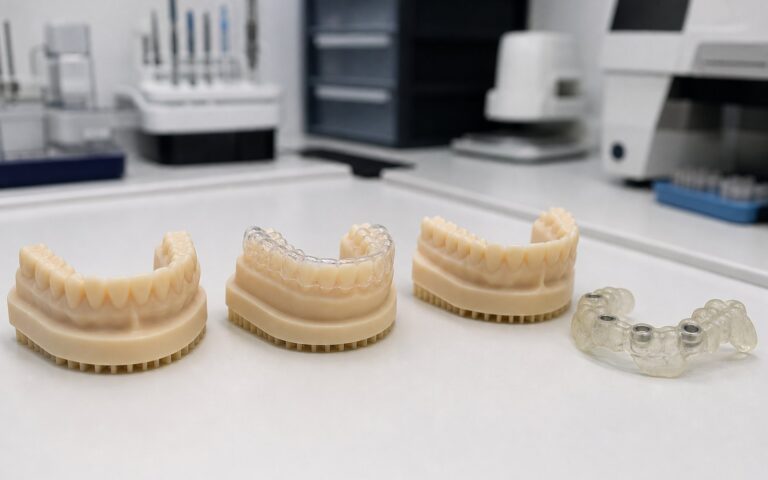
The step after the model is the guide: a printed jig that sits on the patient’s bone and directs a drill or a saw to the planned position. Dental implant guides are the commonest, followed by guides for knee and hip arthroplasty, spinal pedicle screws, and maxillofacial reconstruction. A guide is printed in a biocompatible resin that can be sterilised, from the same scan as the model, and it turns a plan into a physical constraint in the theatre. Our dentistry article covers the dental workflow, which is the most mature.
Devices, housings and training equipment
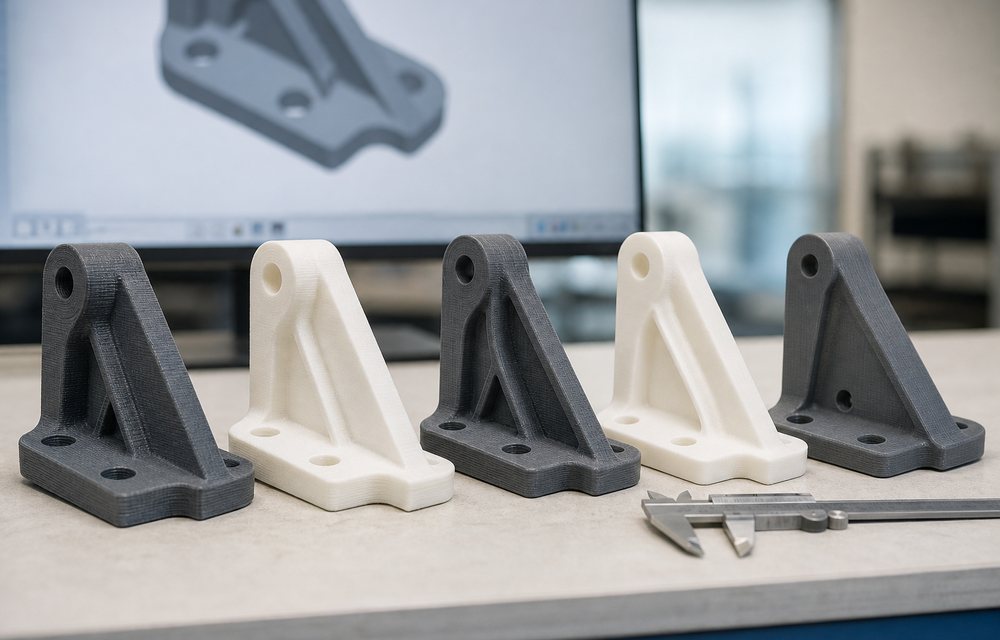
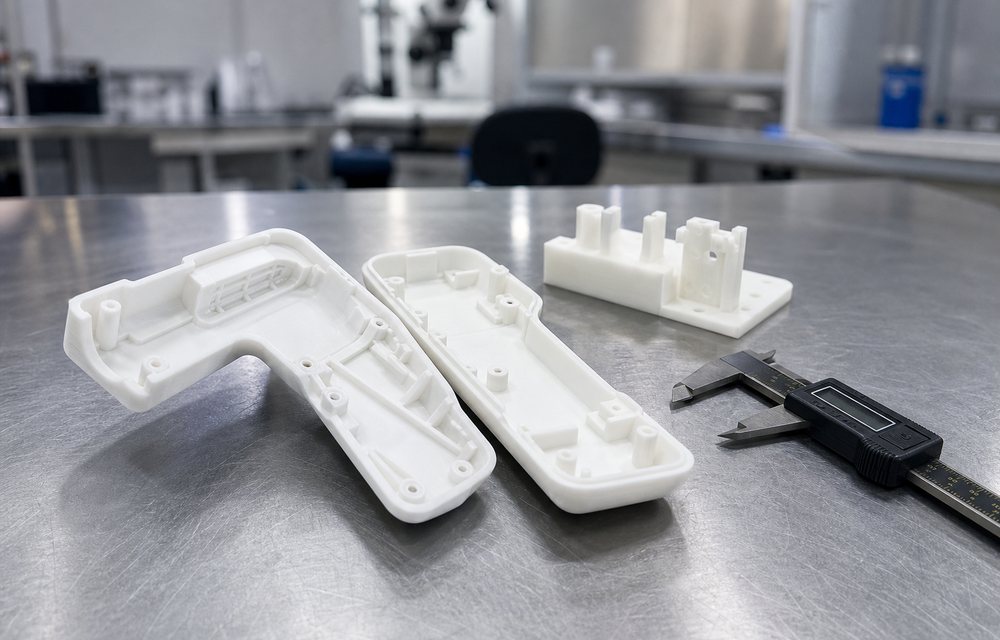
Medical device development is product development with a regulator watching, and it prints for the same reasons any product does: enclosures for monitors and diagnostic equipment, handles and grips for instruments, cassettes and cartridges for point-of-care tests, fixtures for device assembly and test, and the many iterations before a design is frozen. Materials are chosen for cleaning and sterilisation as much as for strength; polycarbonate, PC-ABS and medical-grade resins are the usual choices, and the medical devices page maps them to parts.
Training equipment is a large and unglamorous category: anatomical models for teaching, simulators for procedures, and task trainers for nursing and paramedic courses, printed in numbers by SLS so every student has one.
Prosthetics and orthotics
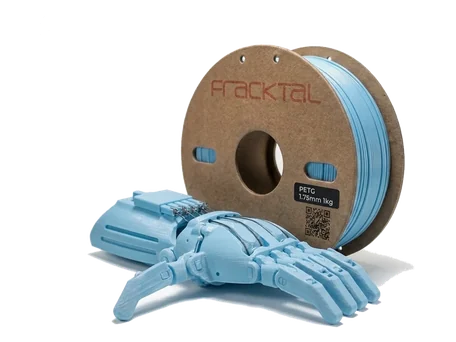
Printing has changed what a prosthetic limb or a custom orthosis costs, especially for children who outgrow them. A scanned limb becomes a socket or a brace that fits, printed in nylon or PETG, in days. Open-source designs and Indian clinics have made upper-limb prosthetics available at a small fraction of the previous cost, and the same workflow produces custom insoles, splints and helmets. These are typically Class A or B devices, where the regulatory burden is manageable for a clinic or an NGO.
Implants: real, and regulated
Patient-specific implants are printed today: titanium cranial plates, acetabular cups and spinal cages by metal powder-bed fusion, and PEEK cranial and maxillofacial implants by high-temperature polymer printing. They are also Class C and D medical devices under India’s Medical Devices Rules, 2017, which means design controls, biocompatibility testing, a quality system and a licence before a part goes into a patient. The U.S. FDA’s guidance on additively manufactured devices is the reference most manufacturers work to.
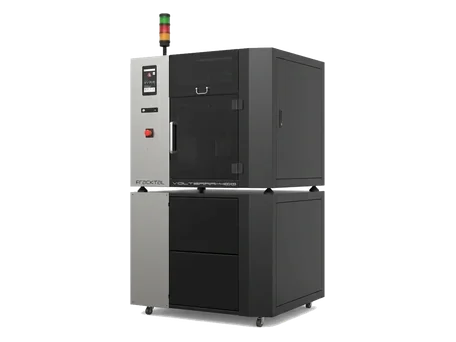
This is the road Fracktal is on: the high-temperature capability of the Volterra exists partly to print PEEK, and the company’s stated direction after its 2024 seed round includes personalised PEEK implants for orthopaedic and dental use. We say “road” deliberately. A printed implant is a regulated product, and the printing is the easy part.
What a hospital or a device company needs from a printing partner
- Turnaround. A planning model is useless after the operation. We print models within days of receiving the segmented file, faster when the case is urgent.
- The segmentation step. A DICOM scan has to be converted into a printable model. We work with the hospital’s radiology team or with the free 3D Slicer software, and we say when a scan’s slice thickness is too coarse to trust.
- Materials with paperwork. Biocompatible resins and medical-grade polymers, with datasheets and lot numbers, and a measurement report for anything with a tolerance.
- Confidentiality. Patient data handled under a written agreement and deleted after the job.
Starting a case
For a planning model, send the segmented STL or the scan through the quote page with the date of the procedure. For a device or a guide, send the CAD and the sterilisation method. For an implant, talk to us first: the conversation is about the regulatory route before it is about the part. The healthcare industry page is the place to start.