











How to Clean a Build Plate Properly
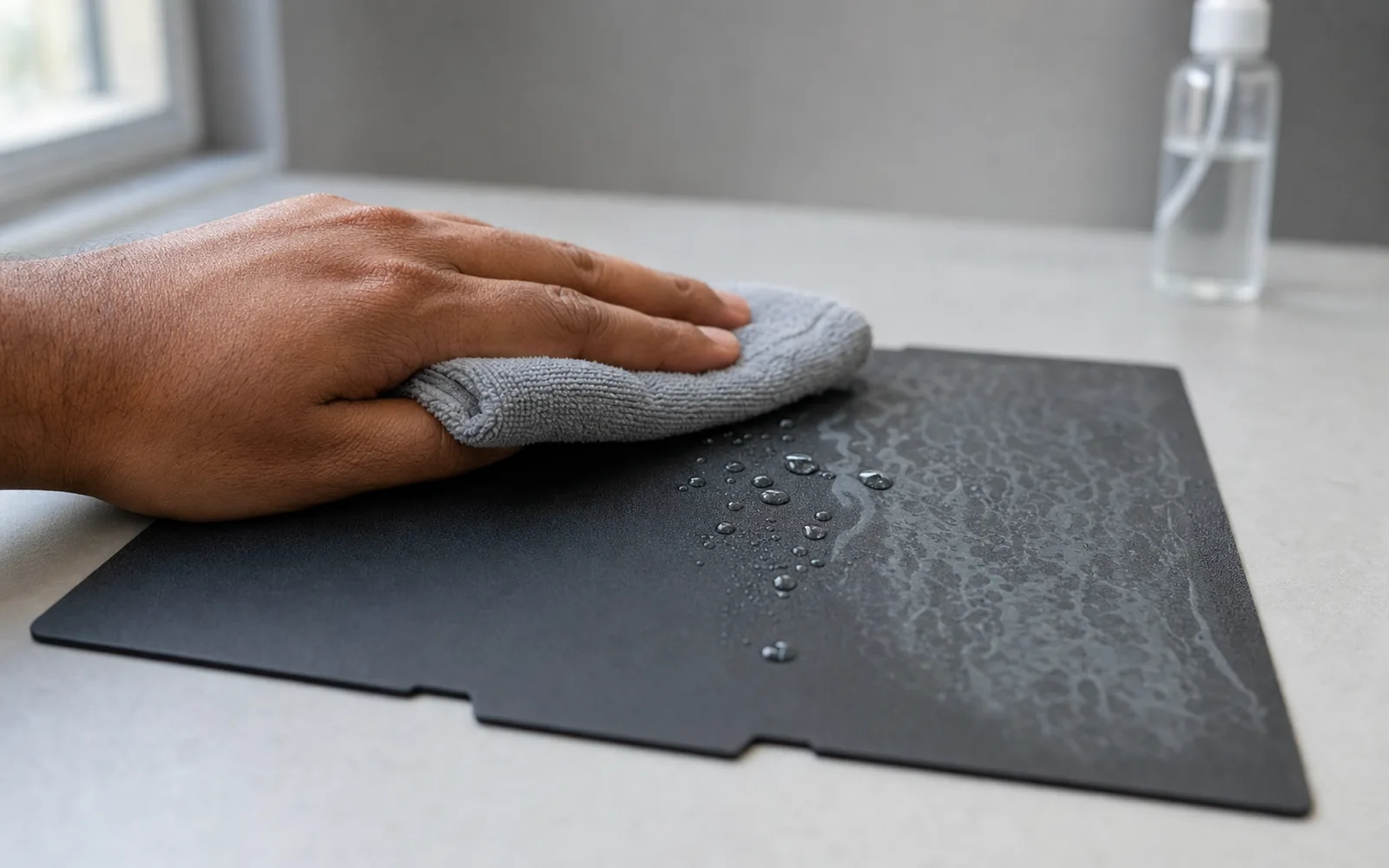
The most common cause of a first layer that will not bond is a plate that looks perfectly clean. Skin oil transfers from one fingertip in a fraction of a second, spreads into a patch several centimetres across, and is invisible. It is also the cheapest fix in the whole of 3D printing: a cloth, some isopropyl alcohol, and ten seconds before each print.
A Fingerprint Is a Release Agent
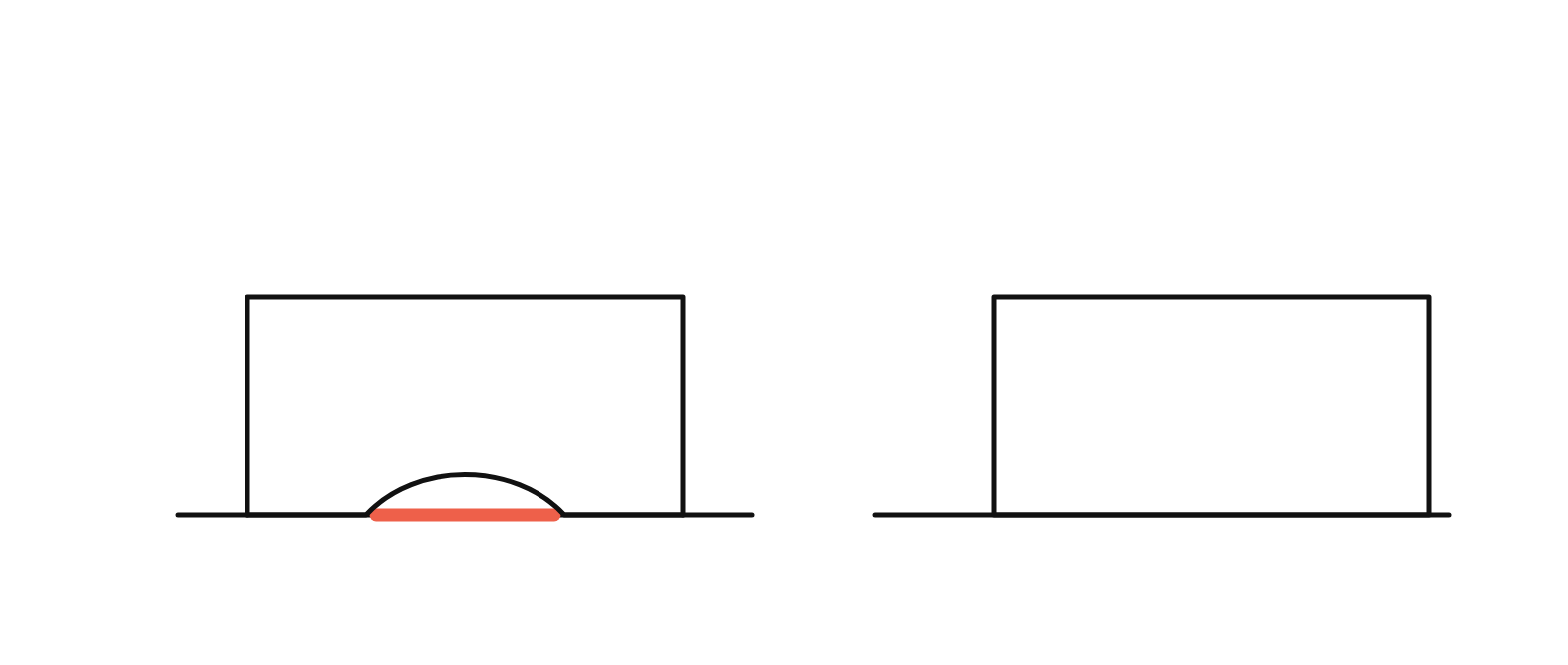
Adhesion at the first layer is a wetting problem: molten polymer has to flow into the microscopic texture of the plate and stay there. A film of skin oil sits between the two and stops it, in exactly the way a release agent is meant to. The part then bonds everywhere except that patch, and lifts from the patch outward — which reads as random, intermittent adhesion failure and sends people to reprofile a machine that was fine.
The giveaway is a failure that moves. If the same plate holds a part in one position and not another, and the pattern changes between prints, suspect contamination long before you suspect flatness. A bowed plate fails in the same place every time.
Each Plate Wants Something Different
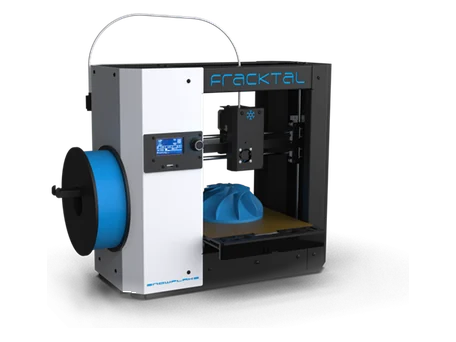
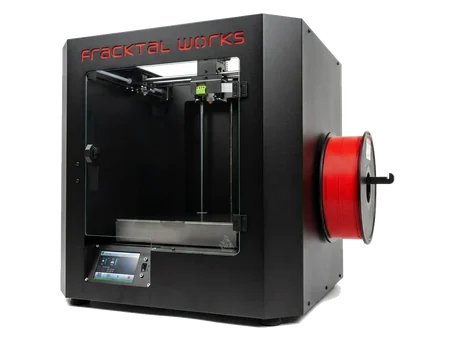
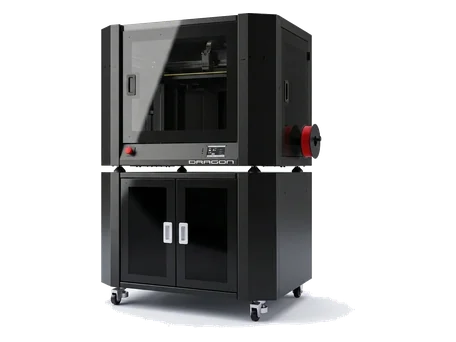
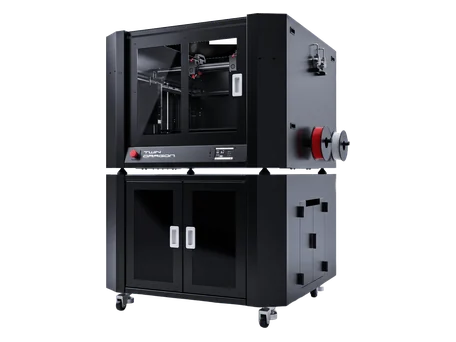
Fracktal publishes a recommended surface per material; these are the four you are likely to own.
Smooth PEI
Isopropyl alcohol on a lint-free cloth before every print. Every few weeks, wash it with warm water and dish soap, rinse and dry fully — IPA lifts fresh oils but leaves behind old adhesive residue and filament dust, which build into a polished glaze. If a sheet has gone shiny and stopped gripping after a few hundred prints, a very light scuff with 2000-grit wet-and-dry restores the texture. Never acetone.
Textured PEI
Same routine, but the texture traps residue in its valleys, so the soap-and-water wash matters more and wants a soft brush. Textured PEI holds parts by mechanical key rather than chemistry, which is why it fails on tall narrow parts with little footprint, and why scrubbing the key clean is the fix rather than adding heat.
Glass
The most forgiving to clean and the least forgiving to print on bare. Soap and water, or IPA, or a glass cleaner with no added wax or polish — the wax in some household sprays is a release agent in its own right. Glass is flat and durable but chemically inert, so most materials want a film of something on it rather than the bare surface.
Garolite G10
The recommended surface for Nylon PA12 and CF-PA. Wipe with IPA; do not soak it, because G10 is a laminate and prolonged wetting can lift the surface ply. A light scuff with fine abrasive is normal maintenance on Garolite and restores the tooth that Nylon keys into.
How Often, and With What
| When | What | Why |
|---|---|---|
| Before every print | IPA on a lint-free cloth, whole plate | Removes skin oil, the commonest cause |
| Every few weeks | Warm water and dish soap, dry fully | Removes residue IPA leaves behind |
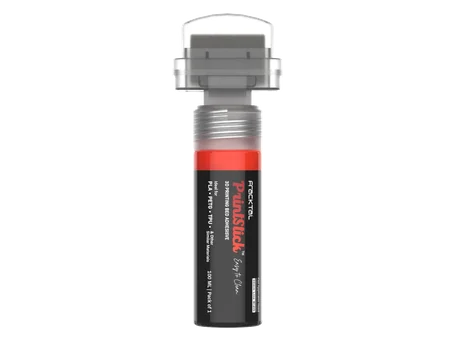
| After an adhesive print | Damp cloth while the plate is warm | PrintStick washes off with water |
| When grip drops off | Light scuff, 2000-grit, PEI or G10 | Restores surface texture |
| Always | Handle flex sheets by the edges | Stops the problem happening |
Two Things That Damage Plates
Both are common advice somewhere on the internet, and both cost sheets.
Acetone on PEI
PEI is attacked by acetone. It hazes, softens and loses the surface that does the gripping, and the damage is not recoverable. Acetone has a legitimate place in ABS smoothing and in making ABS slurry for a Kapton plate — it has no place on a PEI sheet. Isopropyl alcohol is the correct solvent.
Metal scrapers, used hard
Most gouges in a PEI sheet come from prising off a part that was stuck too well rather than from cleaning. The fix is to stop the part bonding that hard — PET-G against bare PEI is the classic case, and it needs a release layer between the two. If a part will not come off, let the plate cool completely first; most releases happen on their own at room temperature.
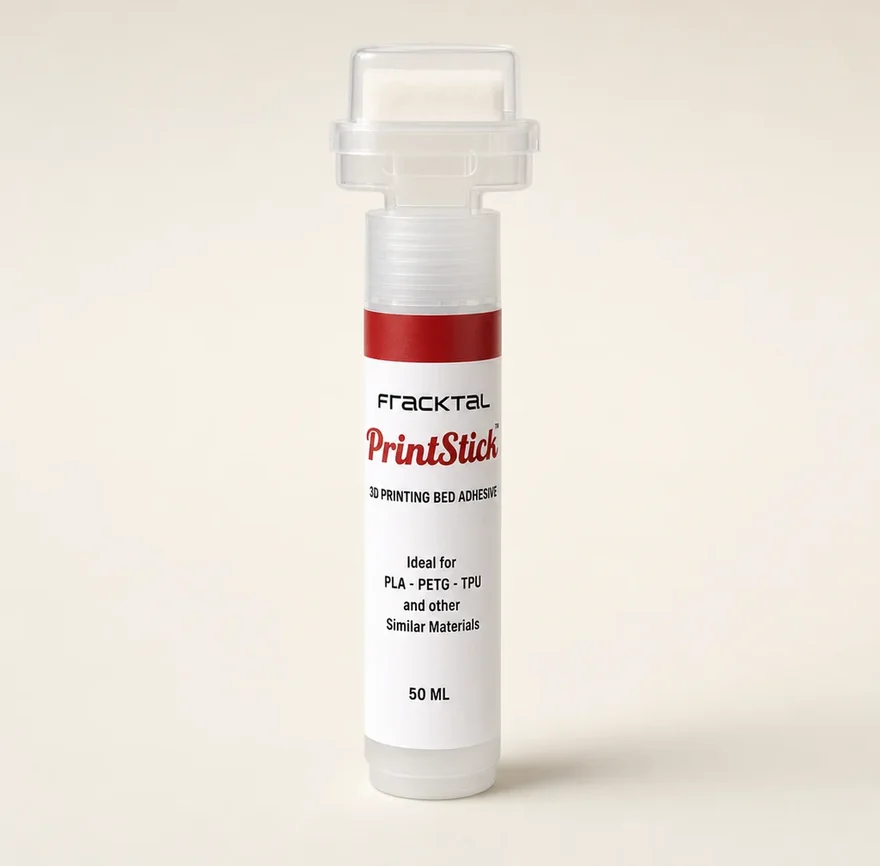
An adhesive that needs scraping off is a plate-damage problem waiting to happen. PrintStick is water-soluble by design: a damp cloth lifts the film straight off a warm plate, with no scraper, no isopropyl bath and nothing baked onto the underside of the part.
A Clean Plate Is the Free Fix. Sometimes It Runs Out.
Most adhesion complaints end here, and that is the point of putting this page in the guide. A wiped plate, a correct nozzle gap and a bed at the right temperature hold PLA and PET-G without anything else, and none of it costs money.
Where it runs out is predictable: a large flat footprint on a shrinking material, a smooth PEI sheet worn glassy, textured PEI under a tall narrow part, PET-G that bonds to bare PEI hard enough to chip it, or anything printed above 80 °C. Those are the cases for an adhesive — Standard below 80 °C, Plus above it — applied to a clean plate, not instead of one.
Questions About Cleaning a Build Plate
How do I clean a 3D printer bed?
Can I use acetone on a PEI sheet?
Why does my print stick in some places and not others?
My PEI sheet has stopped gripping. Is it worn out?
How do I remove a print that is stuck to the bed?
The Rest of the Guide
Printers Supported Where They Are Built
Plates, sheets and spares for Fracktal machines come from Bengaluru, not a six-week import. If a surface has reached the end of its life, we can replace it.