











PET-G Sticking Too Well — and Chipping Your PEI
PET-G and PEI are chemically close enough that at a hot bed temperature they do not just grip, they fuse. When you lever the part off, the weakest thing in the joint gives — and that is the PEI sheet, not the part. You get a crater in the plate and a disc of PEI stuck to your print. Drop the bed to 70–75 °C, let the plate cool completely before removing anything, and put a release layer between the two.
How to Keep the Plate
This is the one adhesion problem where the answer is less bond, not more.
01 · Bring the bed down to 70–75 °C
The published range is 60–85 °C and the top of it is where the trouble lives. At 85 °C PET-G and PEI are both soft enough to interdiffuse at the interface. At 70–75 °C the part still holds perfectly well and comes off cleanly. If your first layer fails at 70 °C, that is a Z-offset problem wearing a temperature costume.
02 · Wait for the plate to go cold
PET-G releases on its own as the plate drops through about 40 °C. Removing a part from a warm plate is where sheets get damaged — the bond is still near its strongest and you are applying a lever. On a flexible sheet, wait, then flex; on glass, wait, then the part often falls off by itself.
03 · Put a release layer in between
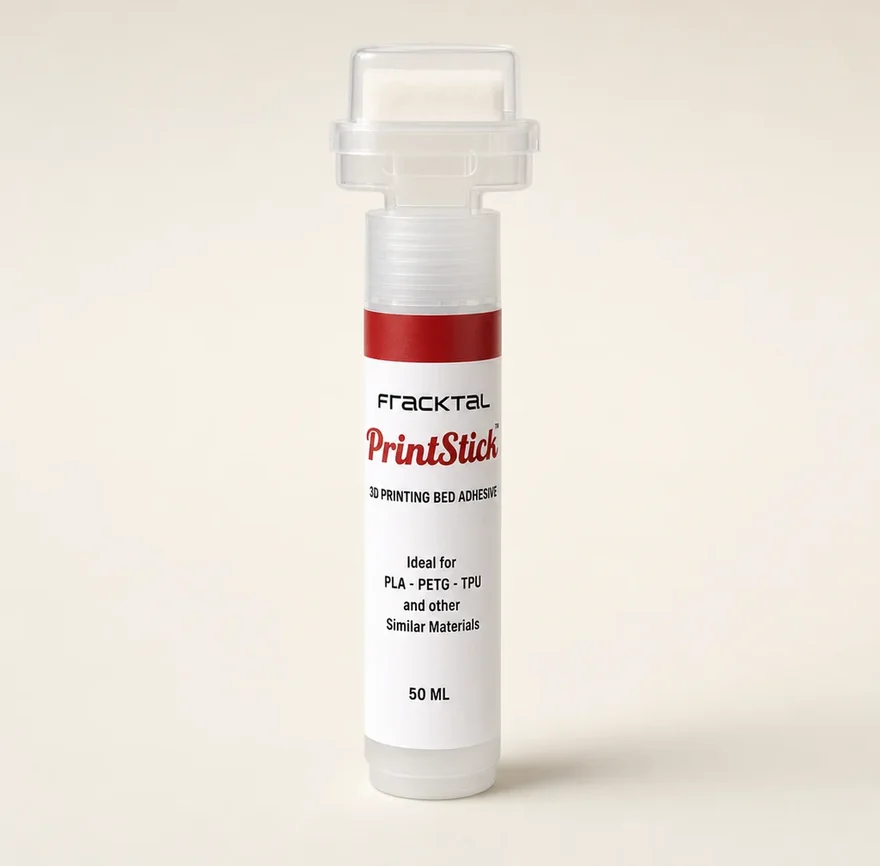
A thin film of bed adhesive is not there to hold PET-G down — it holds fine. It is there so the polymer bonds to the film instead of to the sheet, and the film washes off with water. This is the single reliable way to keep a PEI sheet usable while printing PET-G regularly.
04 · Or change the surface
Textured PEI is more forgiving than smooth PEI because there is less continuous contact area, though it can still take damage. Glass with a release layer is the safest combination. Garolite and BuildTak both handle PET-G without fusing. What you must not do is print PET-G on bare smooth PEI at 85 °C and hope.
PET-G Takes the Sheet With It
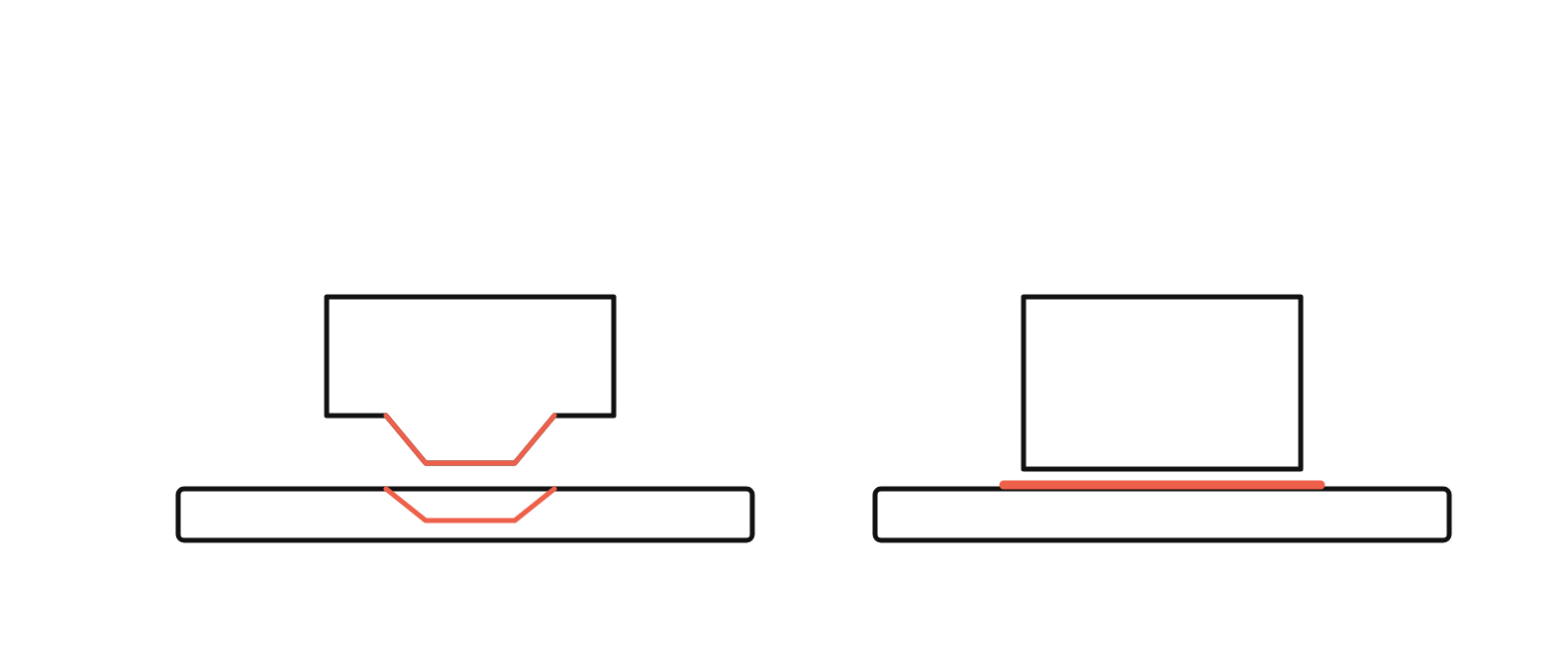
A PEI sheet with a crater in it is not repairable, but it is still usable outside the damaged area, and a release layer stops it getting worse. Do not try to sand the crater flat — you will thin the PEI locally and the next part will lift there instead. Reposition prints away from it and replace the sheet when the damage reaches where you need to print.
PET-G and CF-PET-G Settings
| Setting | PET-G | CF-PET-G | Note |
|---|---|---|---|
| Bed temperature | 60–85 °C | 70–85 °C | Aim at 70–75 °C on PEI |
| Nozzle temperature | 225–250 °C | 240–265 °C | CF needs a hardened nozzle |
| Recommended surface | PEI | PEI with adhesive | Release layer on both |
| Part cooling | 30–60 % | 30–50 % | Less than PLA; PET-G strings when cold |
| Drying | 65 °C / 4 h | 65 °C / 6 h | Mandatory for CF-PET-G |
| Enclosure | Not needed | Not needed | PET-G barely shrinks |
| First-layer height | 0.32 mm | 0.32 mm | 0.8 × a 0.4 mm nozzle |
| Adhesive | As a release layer | Standard formula | Not for grip — for separation |

The Same Bottle, Doing the Opposite Job
Every other page in this guide is about holding a part down. This one is about letting it go. It is the same product either way: a thin, controlled interface between the part and the plate, which is exactly what you want when the two would otherwise bond to each other permanently.
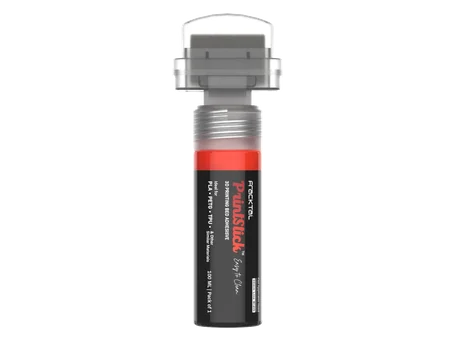
PrintStick Standard covers PET-G and CF-PET-G along with PLA and TPU. One pass of the 30 mm felt head across the footprint, print as normal, let the plate cool, lift the part — and the plate wipes clean with water. The PEI stays where it belongs, which is on the sheet.
Questions About PET-G and PEI
Why does PET-G stick so hard to a PEI bed?
What bed temperature stops PET-G damaging PEI?
How do I get a PET-G part off without pulling out the PEI?
Does a bed adhesive help with PET-G, or make it worse?
Is textured PEI safer than smooth PEI for PET-G?
Can I print PET-G on glass?
The Rest of the Guide
- PET-G, the full material pageMeasured properties and settings
- CF-PET-GStiffer, and needs a hardened nozzle
- Build plate guidePEI, glass, BuildTak, flex
- Print not sticking to the bedThe opposite problem, in order
- Glue stick vs hairspray vs adhesiveWhat each one leaves behind
- Elephant’s footBonded too well, too soft
- How to clean a build plateThe most-skipped free fix
- PrintStick StandardThe PET-G formula
Keep the Plate, Keep the Part
Fracktal designs and builds its FDM machines in Bengaluru, and prints PET-G on them every week. Ask us anything about a material and a plate that are not getting on.