











PVA: A Brief Introduction
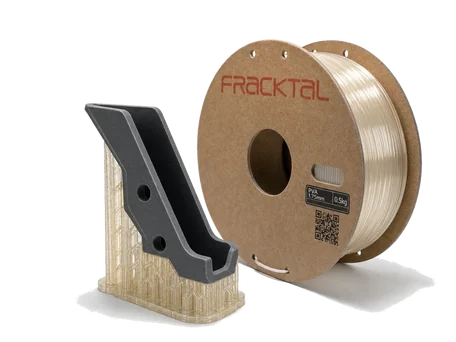
PVA is a water-soluble material that is often used as a support material with no need to add any chemicals or special treatment. Leave the part in a warm water bath to dissolve faster. After dissolution, there is no residue on the model surface with a smooth effect; it can be worked with PLA, TPU, PA(nylon), and other consumable materials to print extremely complex shapes or support materials with a partially closed cavity model. It’s also a good choice to work for multi-nozzle printers.
Sellingpoint
Water soluble.
Support material.
| Filament Properties Table | |
|---|---|
| 3D PRINTING FILAMENT | PVA |
| Density(g/cm3) | 1.25 |
| Heat Distortion Temp(℃,0.45MPa) | / |
| Melt Flow Index(g/10min) | / |
| Tensile Strength(MPa) | 22 |
| Elongation at Break(%) | 360 |
| Flexural Strength(MPa) | / |
| Flexural Modulus(MPa) | / |
| IZOD Impact Strength(kJ/㎡) | / |
| Durability | 7/10 |
| Printability | 5/10 |
| Recommended printing parameters | |
| Extruder Temperature(℃) | 180 – 230℃ Recommended temperature:190℃ |
| Bed temperature(℃) | 45 – 60°C |
| Fan Speed | 100% |
| Printing Speed | 20 – 50mm/s |
| Heated Bed | Required |
| Recommended Build Surfaces | Masking paper, PEI |
| Feature | |
| Flexible | √ |
| Elastic | —— |
| Impact Resistant | —— |
| Soft | √ |
| Composite | —— |
| UV Resistant | —— |
| Water Resistant | —— |
| Dissolvable | √ |
| Heat Resistant | —— |
| Chemically Resistant | —— |
| Fatigue Resistant | √ |
| Need drying | √ |
| Heated Bed Required | √ |
| Print recommend | Drying at 45℃/>10h, Short-range extruder, slow printing. |