












TPU: A Brief Introduction
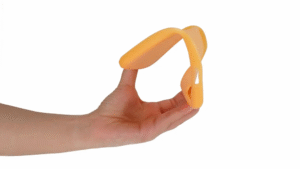
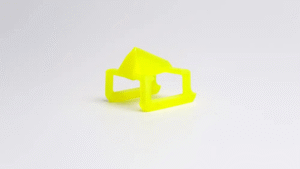
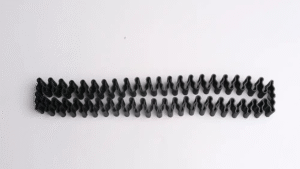
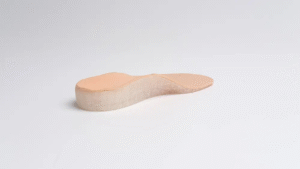
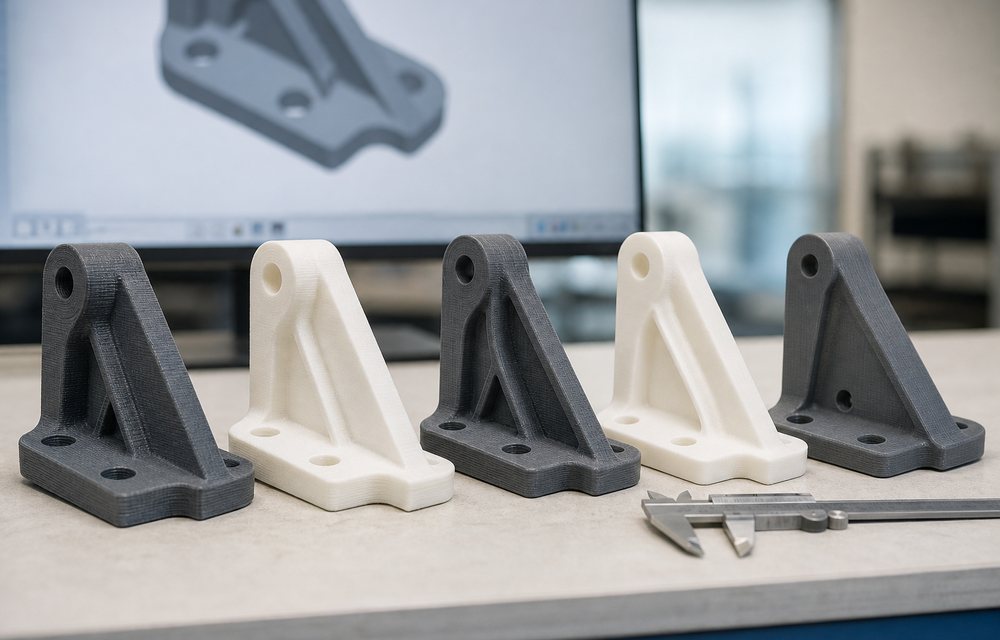
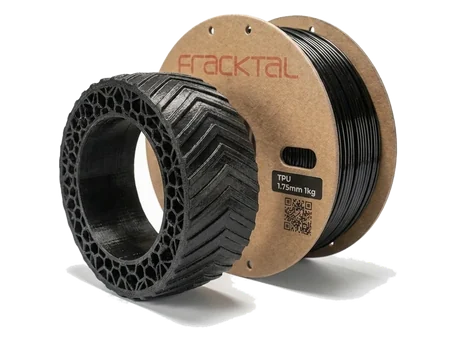
eTPU-95A has good flexibility with a hardness of 95A, easy to print, and can quickly print large, complex and accurate prototypes of elastomer parts; excellent elasticity, printed products are not easy to deform; good flexibility, high tear resistance and wear resistance and cut resistance, sturdiness and durability; high hardness and good resilience, can be used for insoles and other applications.
Product Specification:
| Filament Properties Table | |
|---|---|
| 3D PRINTING FILAMENT | eTPU-95A |
| Density(g/cm3) | 1.21 |
| Heat Distortion Temp(℃,0.45MPa) | / |
| Melt Flow Index(g/10min) | 1.2(190℃/2.16kg) |
| Tensile Strength(MPa) | 35 |
| Elongation at Break(%) | ≥800 |
| Flexural Strength(MPa) | / |
| Flexural Modulus(MPa) | / |
| IZOD Impact Strength(kJ/㎡) | / |
| Durability | 9/10 |
| Printability | 6/10 |
| Recommended printing parameters | |
| Extruder Temperature(℃) | 220 – 250℃ Recommended temperature:240℃ |
| Bed temperature(℃) | 45 – 60°C |
| Fan Speed | 100% |
| Printing Speed | 20 – 50mm/s |
| Heated Bed | Optional |
| Recommended Build Surfaces | Masking paper, PVP solid glue, PEI |
| Feature | |
| Flexible | √ |
| Elastic | √ |
| Impact Resistant | √ |
| Soft | √ |
| Composite | —— |
| UV Resistant | —— |
| Water Resistant | —— |
| Dissolvable | —— |
| Heat Resistant | —— |
| Chemically Resistant | —— |
| Fatigue Resistant | √ |
| Need drying | —— |
| Heated Bed Required | —— |
| Print recommend | Drying at 55℃/>4h, short-range extruder, slow printing |