














Stringing and Oozing: Causes and Fixes
Stringing is the fine hairs of plastic left between features of a print, where the nozzle travelled across a gap and oozed on the way. It is the most common cosmetic defect in FDM printing, and it has exactly two causes: the filament was wet, or the retraction settings let the nozzle ooze. Check them in that order, because wet filament produces stringing that no retraction setting can cure.
1. Dry the filament first
Nylon, PETG, TPU and the carbon-fibre composites absorb moisture from the air within days; even PLA strings when it has been on an open shelf for a month. Moisture boils in the hotend and pushes molten plastic out of the nozzle during travel moves, which appears as stringing, popping sounds and a rough surface.
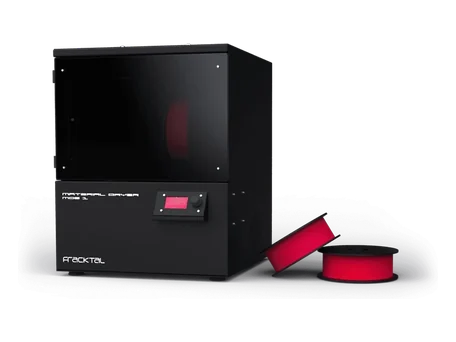
The test is simple: if the strings appear together with tiny bubbles or an occasional hiss, the spool is wet. Dry it (typically 50–70 °C for 4–8 hours depending on material; the MDS1 material dryer holds spools dry while they print) and the stringing usually disappears without touching a single setting. Storage discipline stops it recurring: the filament storage SOP covers it.
2. Then tune retraction
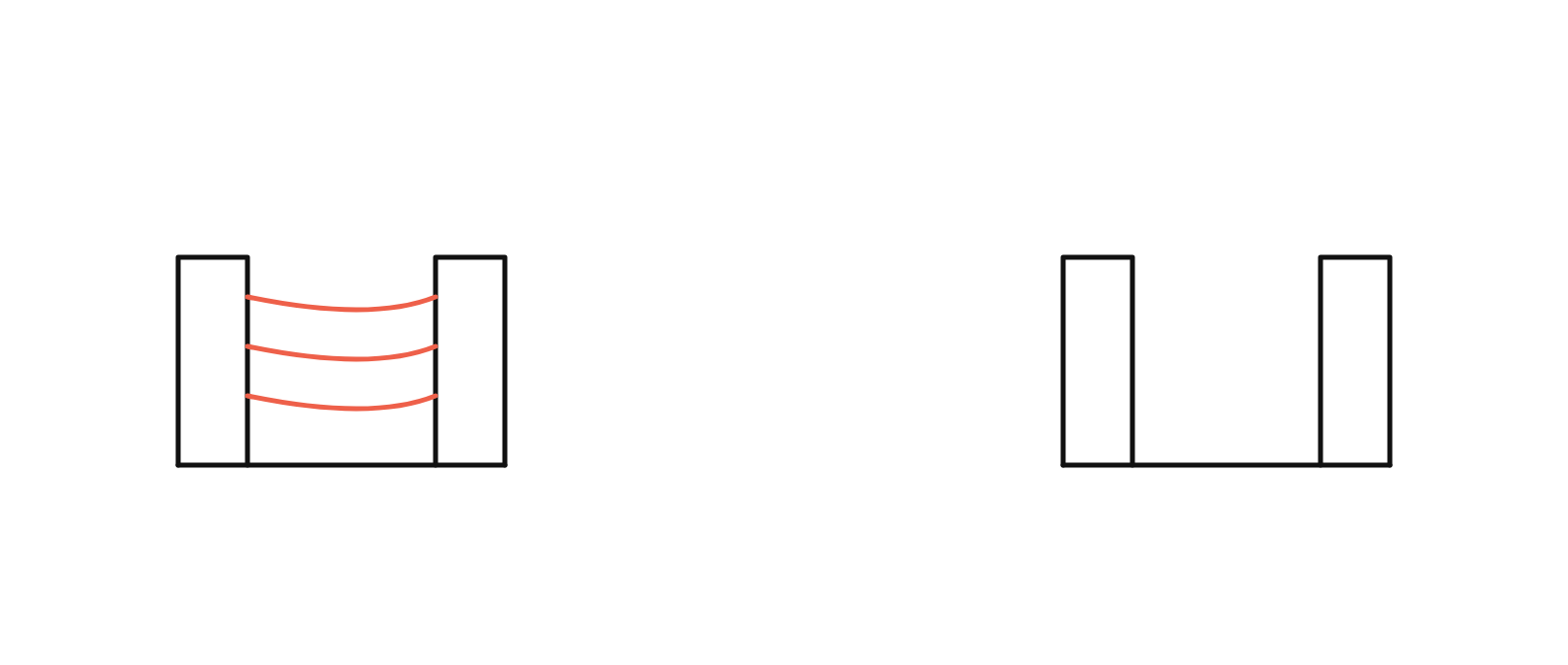
Retraction pulls the filament back a short distance whenever the nozzle travels without printing. Too little and strings bridge every gap; too much and you invite clogs and blobs at restart.
- Distance: start at 0.8–1 mm on a direct-drive extruder, 4–6 mm on a Bowden. Adjust in 0.2 mm steps.
- Speed: 30–40 mm/s. Faster is not better; the filament tears.
- Temperature: a nozzle 5–10 °C too hot oozes more. Print a temperature tower and use the lowest temperature with good layer bonding.
- Travel: enable “avoid crossing perimeters” (fewer trips across open gaps) and “z-hop” only if parts are being knocked; z-hop itself can add fine stringing.
- Test print: two towers 30 mm apart is the standard stringing test. Change one setting per print.
Material notes
PETG and TPU string more than PLA by nature; expect to run slightly cooler and slightly higher retraction, and accept that a light fuzz on PETG is often easier to remove than to prevent — a pass with a hot-air gun or a quick flame lick takes it off. The starting values per material are in our FDM print settings guide.
If stringing appears suddenly on settings that were fine last month, it is the spool, not the machine. Dry it before touching the slicer.